Contemporary Realism and the Mirror of Time
18th ARC Salon – 33PA Catalogue
Introduction by Dr. Samuel Peralta
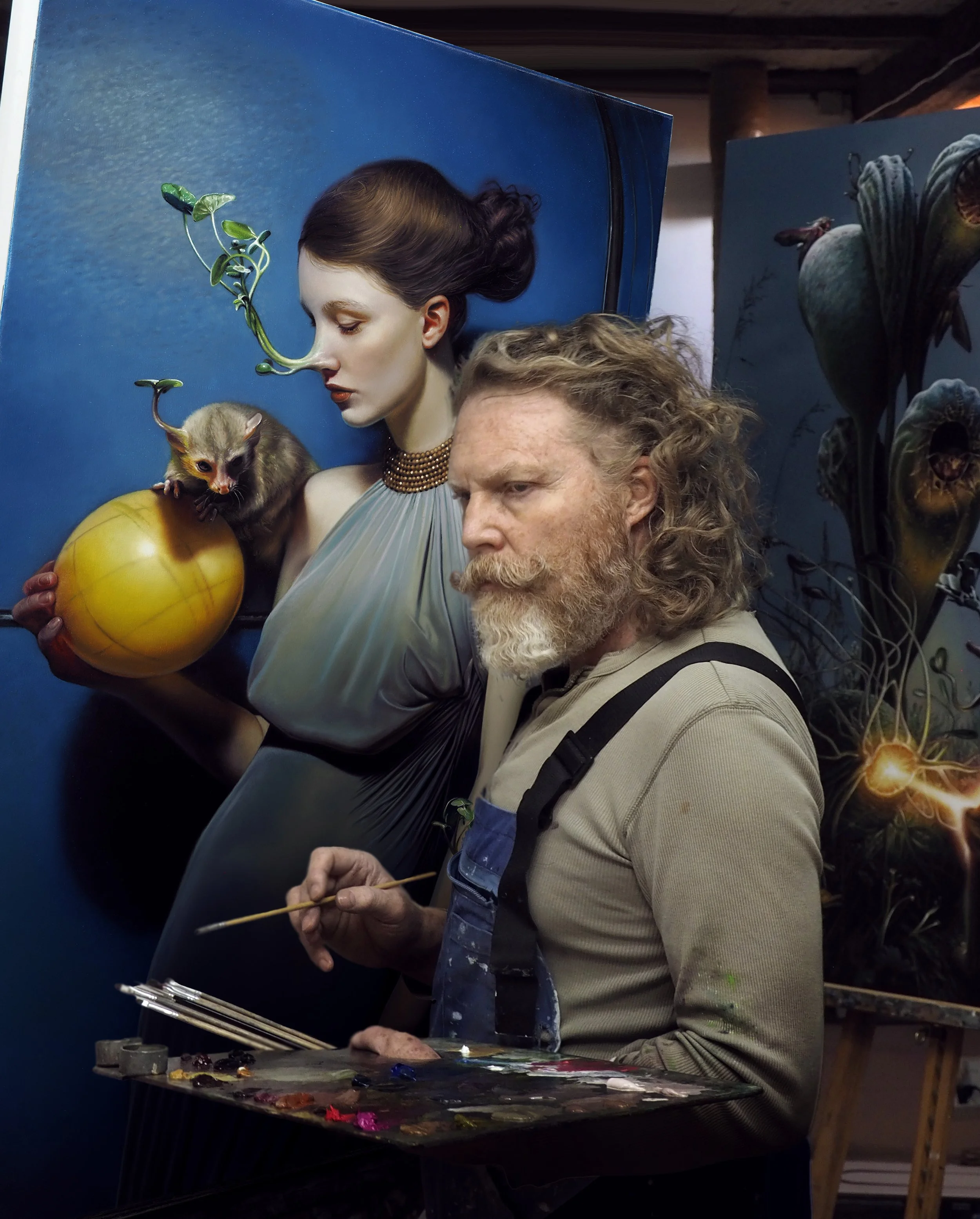
Medardus Hagner | Acrobats, 2023 | 115 x 70 cm | 45 1/4 x 27 1/2 in | Oil on canvas
Awards| 33PA Publishing Prize
The audience for a work of contemporary realism engages, often unwittingly, in a quiet act of defiance against the blurring speed of this modern age. In an era defined by the transient, the ephemeral—defined by the flickering pixels of social media and the planned obsolescence of our electronic devices—the realist painter stands as an agent of deliberation, purposely focusing the viewer on a singular moment.
This collection gathers the selected works of some who have mastered that art of arresting time’s arrow, capturing the texture of the now with a fidelity that transcends mere photographic documentation. We are not merely looking at pictures; we are viewing a the contents of a biological hard drive, etched in pigment and framed by the bounds of our shared human experience and emotion.
Historical realist art is often viewed as one of our most vital links to the past. The classicists are the memoirists of that time; they tell us not just who lived and what happened, but how the light hit the ceramic curve of a pitcher, the weight of a velvet cloak, the weariness in a farm laborer’s eyes. They are the primary source documents of the human soul. When we stand before Vermeer’s Milkmaid, we are not just observing a woman pouring milk; we are inhaling the atmosphere of 1658. We comprehend the temperature of the room, understand the tactile reality of the stoneware, anticipate the taste of freshly-baked bread.
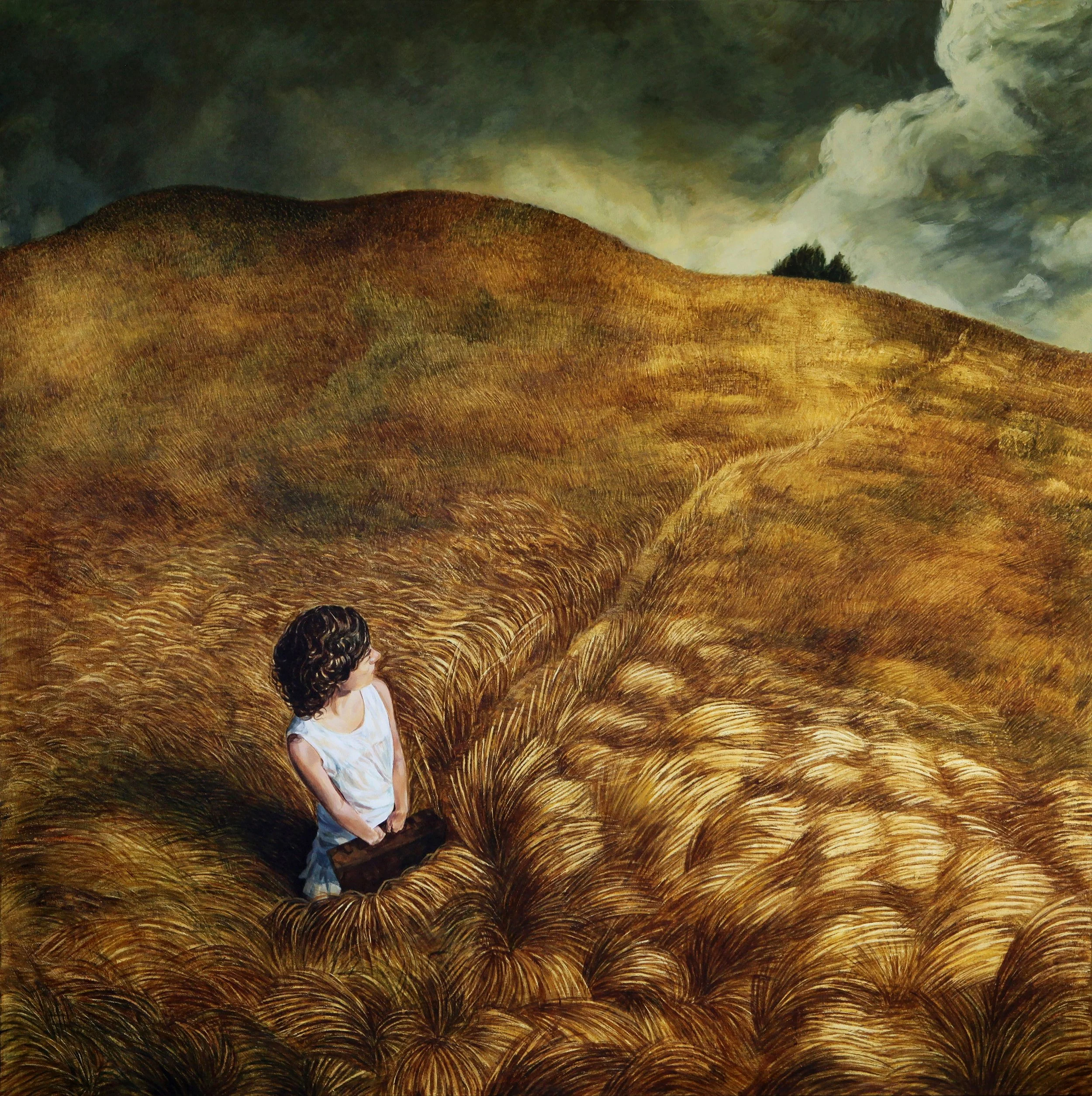
However, we rarely pause to consider that the contemporary realism of today is the historical record of tomorrow. When an artist meticulously renders thee equipment of a young backpacker, flanked by birds, as in Waking World, or a woman surrounded by nature-felled sheaves of wheat, her home in the distance, as in How Wild the Wind Blows, or the architectural trigonometry of exterior stairwells and their shadows outside an apartment, as in Shadow Play, they are archiving the present for a future audience that will one day find our contemporary world as intricate and curious as we find the Renaissance.
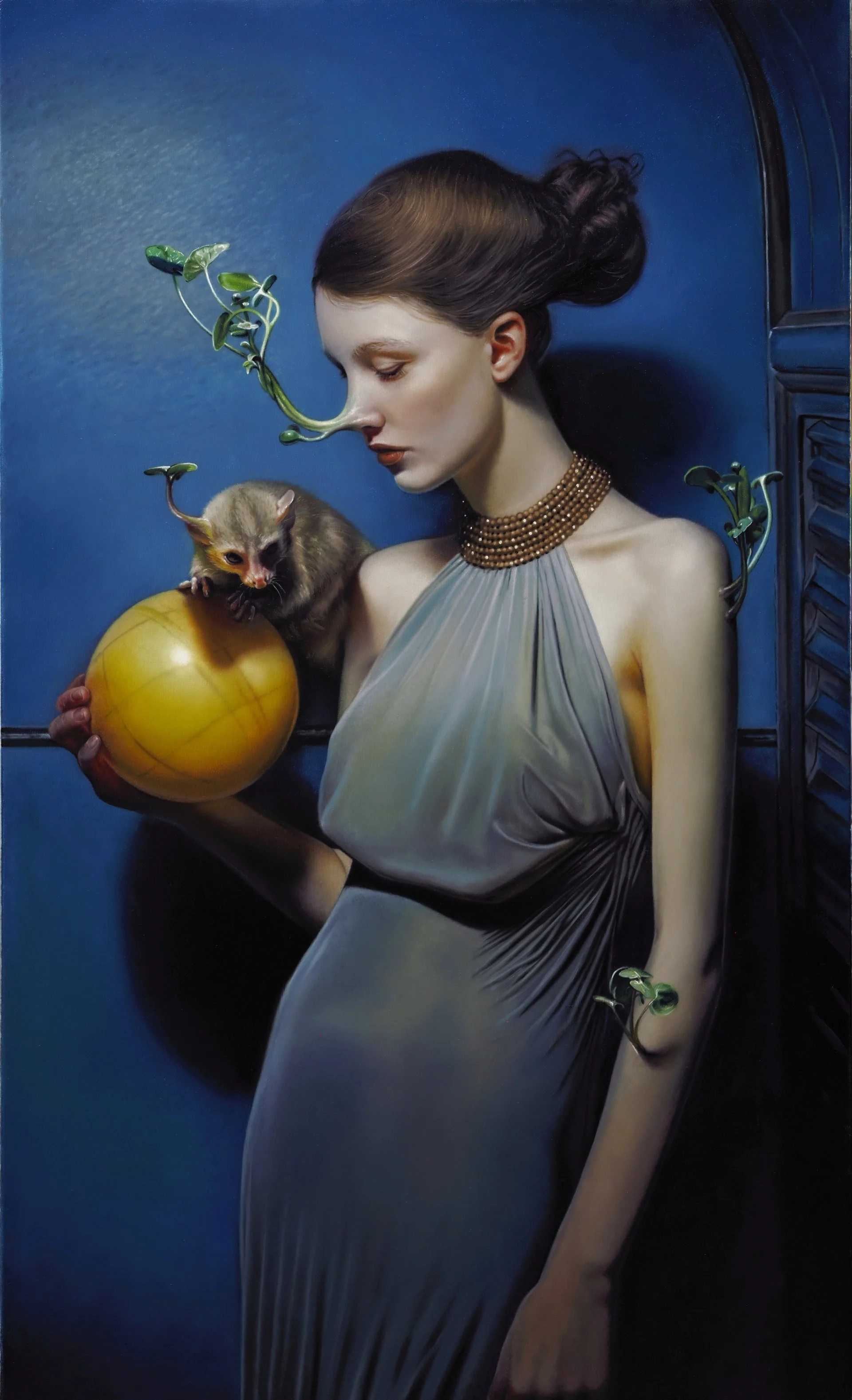
The record is not just of the world as it is, but of the world as it may be imagined. Technology, artificial intelligence, science fiction and fantasy, all these and more have given contemporary artists the ability to render metaphorical and fantastical ideas with the realist precision of the classicists. This unique perspective is spotlighted by this collection in its realization that realism is not limited to the literal. Many of the artists included here utilize a hyper-refined, realistic technique to depict worlds and creatures that do not exist in our physical plane. By rendering the impossible with the weight and light of the possible, they create powerful metaphors for the human condition.
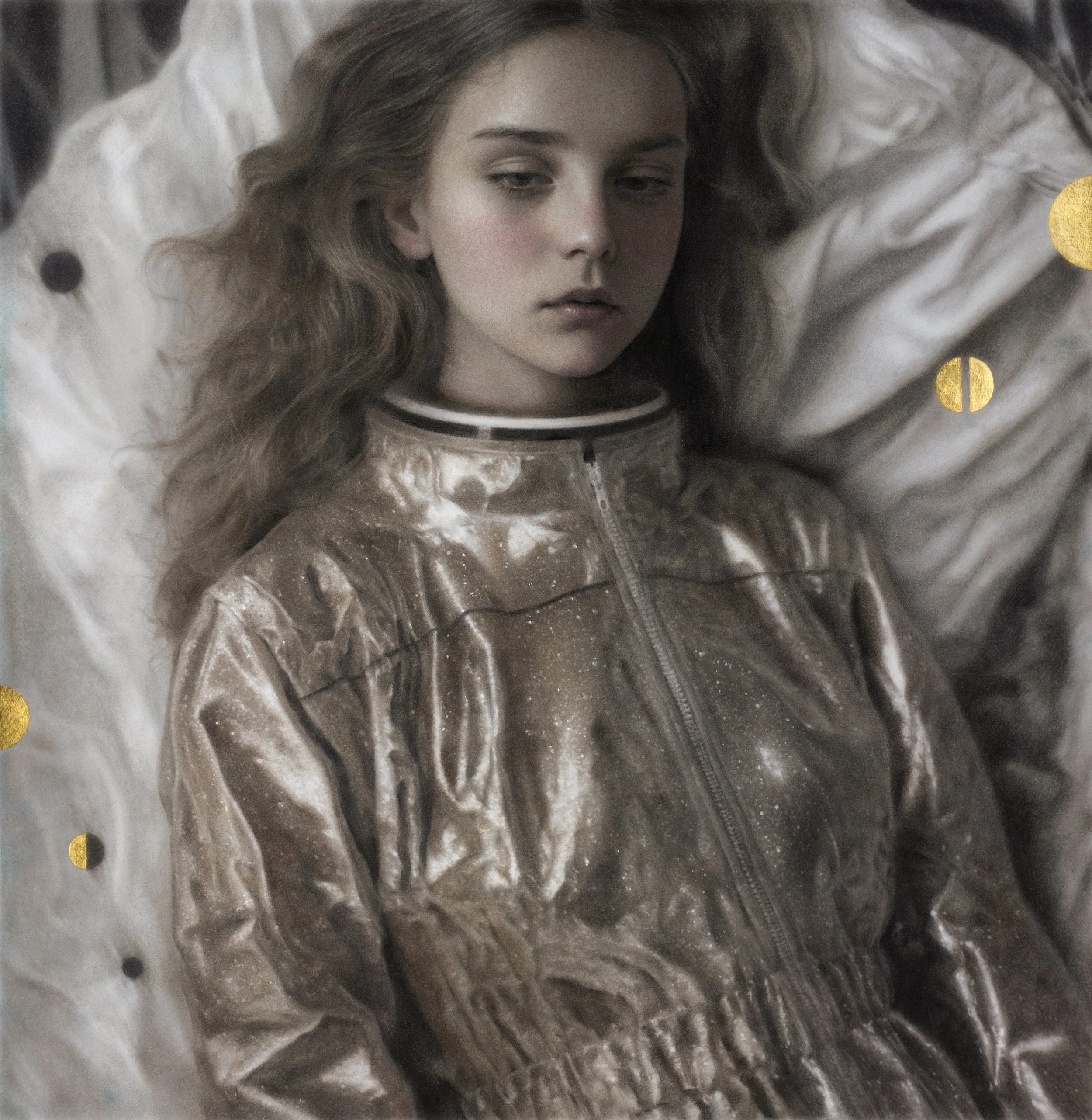
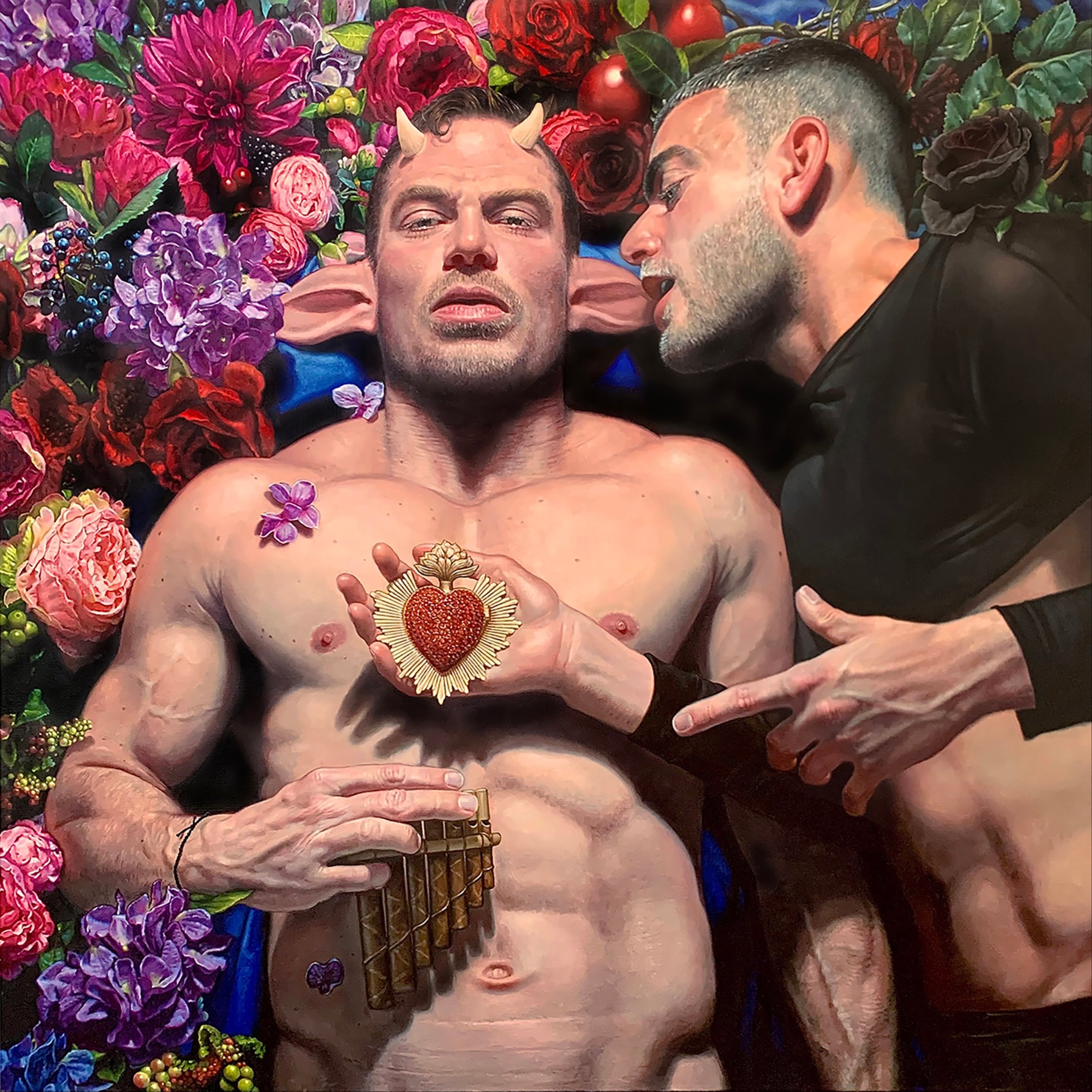
In The Death of Pan, we see the mourning of the wild, a Greco-Roman archetype used to comment on our modern ecological anxieties. By giving the mythic god a tangible presence, the artist forces us to confront the literal loss of nature. Lost in the Cosmos depicts an ethereal woman in what could be an astronaut’s suit of silver, un-helmeted, surrounded by a floating dream of orbs and planetoids. Similarly, Acrobats and Blue Bird utilize the precision of realist brushwork to capture a sense of precarious balance and fleeting hope—depicting scenes that feel like dreams, but that still carry the emotional weight of a lived memory. These are not escapes from reality; they are heightened interpretations of it.
The collection also explores the darker, more predatory aspects of our social and psychological landscapes. Night Hunt and The Outcast use realistic depictions of shadow and form to archive the human experience of anticipation, foreboding, isolation. These pieces serve as a record of primal instincts, preserved in a format that will remain legible to any future civilization that understands fear and belonging. This is contrasted by the quietude of Peace, where the artist uses light through the facets of a stained-glass window to depict, perhaps, the multifaceted nature of faith.
As you navigate through this collection, you are invited to view these works through the lens of a future historian. Recognize that you are standing before a series of portals, each frame a message-in-a-bottle cast into the sea of time, ensuring that the light, the shadows, and the very spirit of our generation—both its literal truths and its metaphors—will remain accessible to the archivists, the audiences, of the next thousand years. They ensure that when the future looks back at us, they will see more than just data; they will see our dreams, our struggles, and the very texture of our souls.
Samuel Peralta | Toronto, Ontario, Canada | February 2026