Moments of Gesture | Tracey Ellis Haynes
Notes on Tracey Ellis Haynes Painting
by John Hughes
Painting in figurative representational terms today has emerged as if out the other end of phases of pure abstraction in the later 20th century (roughly paralleling the time period when jazz music also drifted into pure abstraction in the 1950s and 60s), of post-modernism in the 1980s (in which representational and abstract elements were blended) and genres like photorealism (which were organically reactive against the saturation of culture with the lens-mediated image, photography, movies, TV).
Figurative painting has persisted to now achieve surprisingly powerful effects. One strong current has been for lack of a better term, feminism, or in any event, a space opening up to allow a greater proliferation of artists whose orientation is not male. (I don’t trust my own distance from the male gaze).
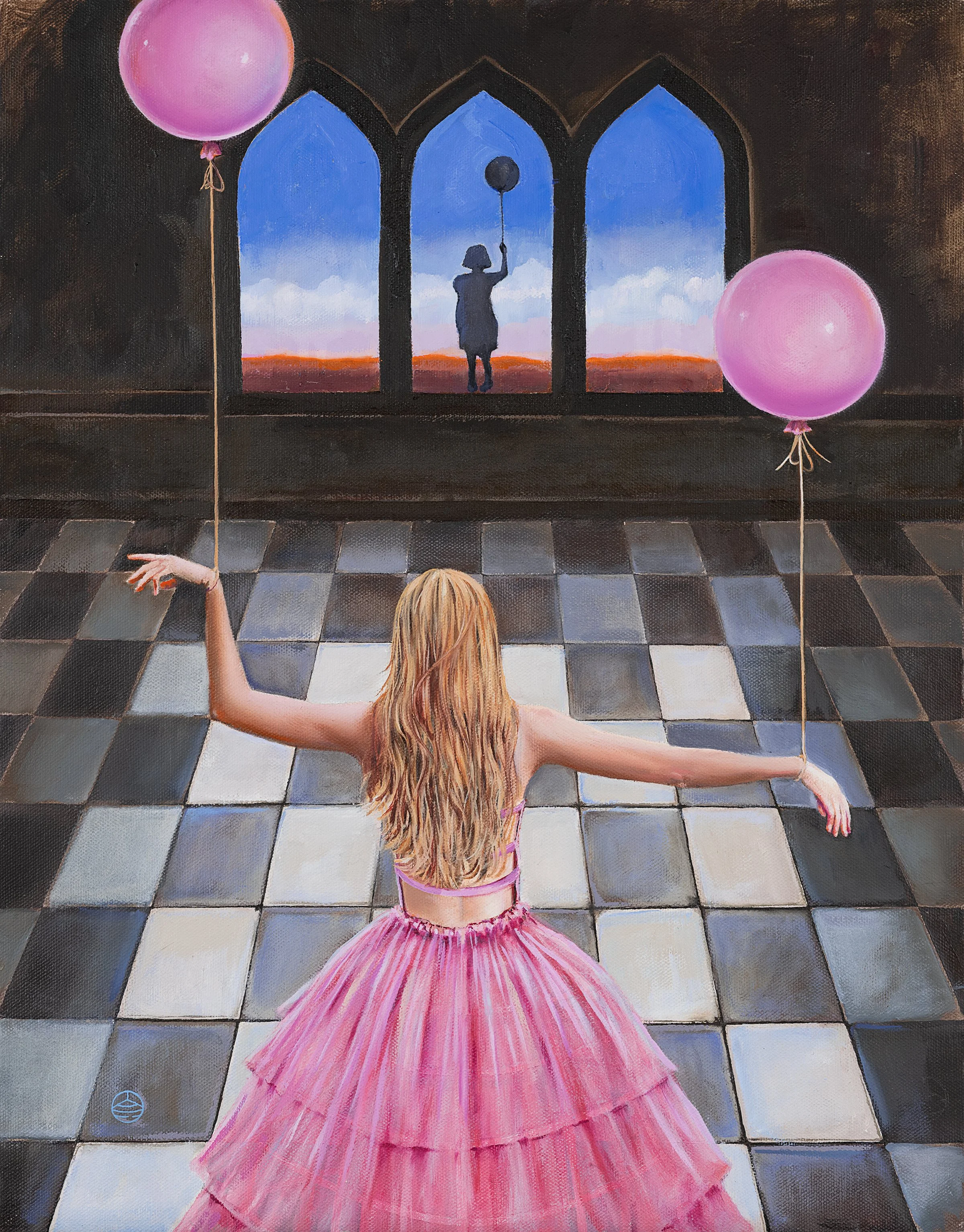
But the point is a ton of the good painters now are female. And as source they have things to say profoundly original and yes, previously suppressed. And the figuration in the painting of our current moment is compelling with invitations to absorption and the uncanny. By absorption I mean that sheer feeling of joy, calm, pleasure, interest, in looking for a while at a painting, in falling into its world. By uncanny I mean, a painting of this nature is uncanny because what it partly shows is the materiality of its creation, which is e.g. oil paint, or pastel, or watercolor, or tempera, or whatever medium is used; again the materiality of the surface, be it canvas, paper, wood, metal. But it also partly dissolves into mimesis. It partly shows not the paint but the image, as it were. Partly what the eye of the audience will see is not the paint, but the projection of the image – for example if we look at the paintings of Tracey Ellis Haynes, each painting immediately provides or allows a psychological space in which the viewer can say, “it is a girl in a pink ballerina dress with balloons on her wrists,” versus saying, “it is a square surface painted with pink and blue.”
This way in which the figurative and representational image pulls us into seeing it as image, as “what it is,” rather than “what it is made of,” is one of the most vital tensions of painting as art. If either polarity – the pole of the paint declarative of itself as something which could only be, as it, as paint, not as a balloon – or the pole of the balloon as an illusionistic image, almost floating free of its materiality – if either polarity is lost, the tension collapses. If it was purely a photo it would lose the vibrancy, the ambiguity, crated by the medium. If it was purely globs of pink and blue pigment, without figurative or representational form, then something again is lost – that leap into the illusionistic seen thing, that magic of mimesis. Gestural freedom in the moment of the painting uses this praxis.