5 Questions For Simon Dinnerstein
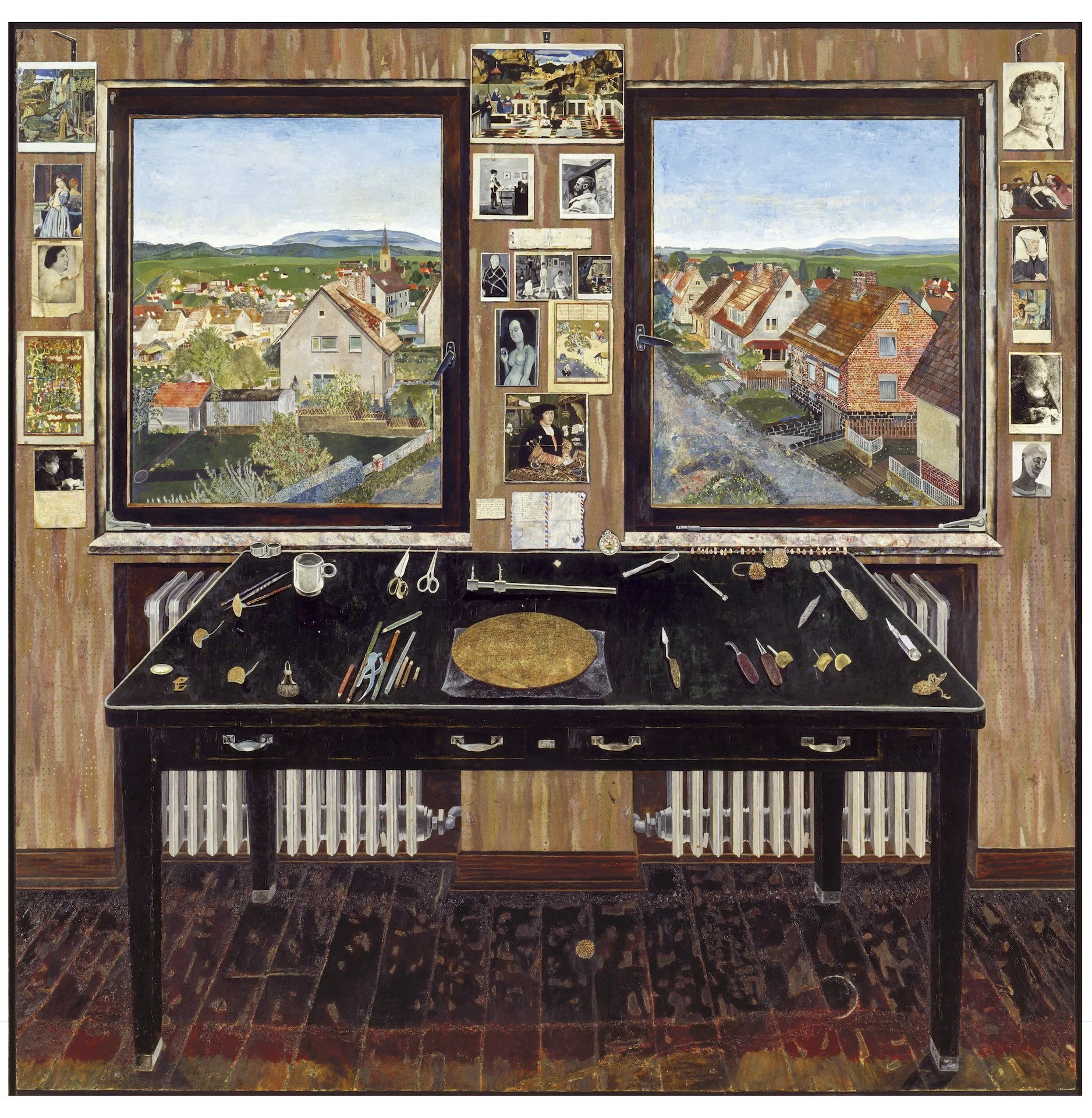
Simon Dinnerstein's painting, The Fulbright Triptych, will be on exhibit in the Ned A. Brokloff Gallery, Palmer Museum of Art, Penn State University, State College, PA, through December 20, 2026.
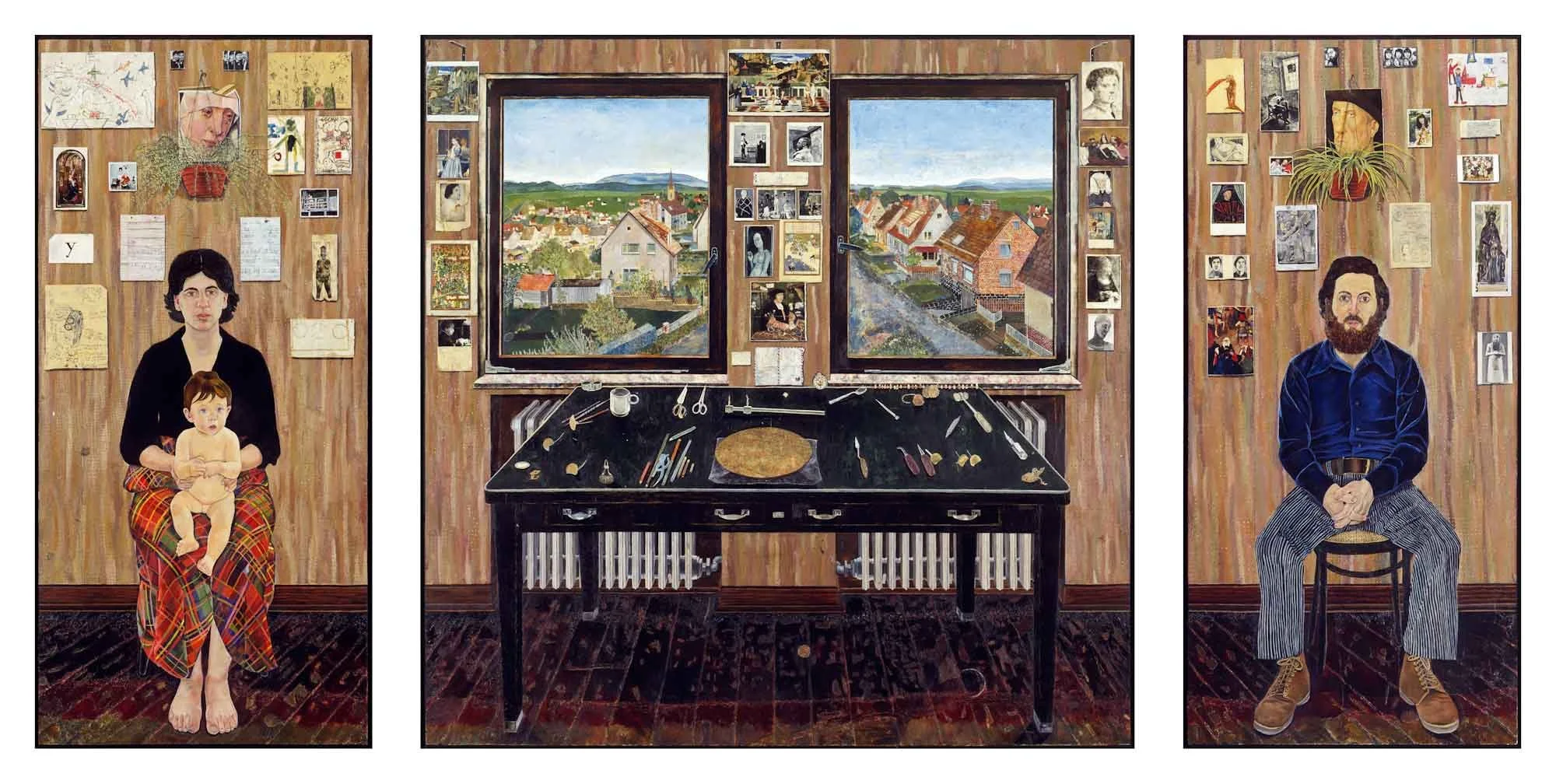
Simon Dinnerstein, The Fulbright Triptych, 1971-1974, oil and gold leaf on wood panels, 14 feet in width. | Palmer Museum of Art, Penn State University, State College, PA
Roberta Smith of The New York Times called The Fulbright Triptych a "masterpiece of 1970s realism." At a time when abstract expressionism and conceptual art dominated the New York scene, how did you find the conviction to stick so fiercely to hyper-detailed figurative realism?
I think that I had and have a naive belief in art and its power to transform and transcend. As with many of my paintings and drawings, The Fulbright Triptych began with something I actually observed. This vision was then altered and transformed into another image, something I saw in my mind. This painting, and other works, give the appearance of being figurative, but through their use of collage-like imagery, children's art, contemporary design, surrealism, the images transcend a straighter and more naturalistic realism.
My work was always going to be figurative. However, I believe that the figurative tradition was strong enough to include artists of greatly varying sensibilities. I strive for an art that somehow combines a traditional direction with one that is more modern or modernist. Early on, I felt a real connection with the art of Gregory Gillespie and Antonio Lopez Garcia. Their work possesses a caressing sense of detail, an intense reality, but also something else, something more visionary, a kind of strangeness, a standing apart that appeals greatly.
I like and greatly admire a certain obsessiveness in art. For example, I am a fan of the art of Ivan Albright.
I often find myself channeling a vision that has to be carried out in a particular way. This compulsion is an attempt to reach through a portal to find something. This search is for a sense of mystery, humanity, life force, buzz. The subject calls out and I am trying to give it the justice it deserves.
Yes, it is hard to do this, when so much around us pushes in a non-objective or conceptual direction. I try to stay true to the generality of beliefs that I have. It is rewarding when good tidings come in the direction of awards, exhibits, sales or critical responses. However, much of this is quixotic. More important is a kind of belief structure, a vision, that I try to adhere to.
What a strange world we are in where representing aspects of the figurative condition is a transgressive idea. Even more, looking in vain in the contemporary section of major museums, one rarely finds a human presence represented on the gallery's walls. One could argue, ironically, that even the most animated, pulsing and intense direction in figurative art is almost avant-garde, when seen in juxtaposition with the latest trends in abstract or abstract-expressionist directions.
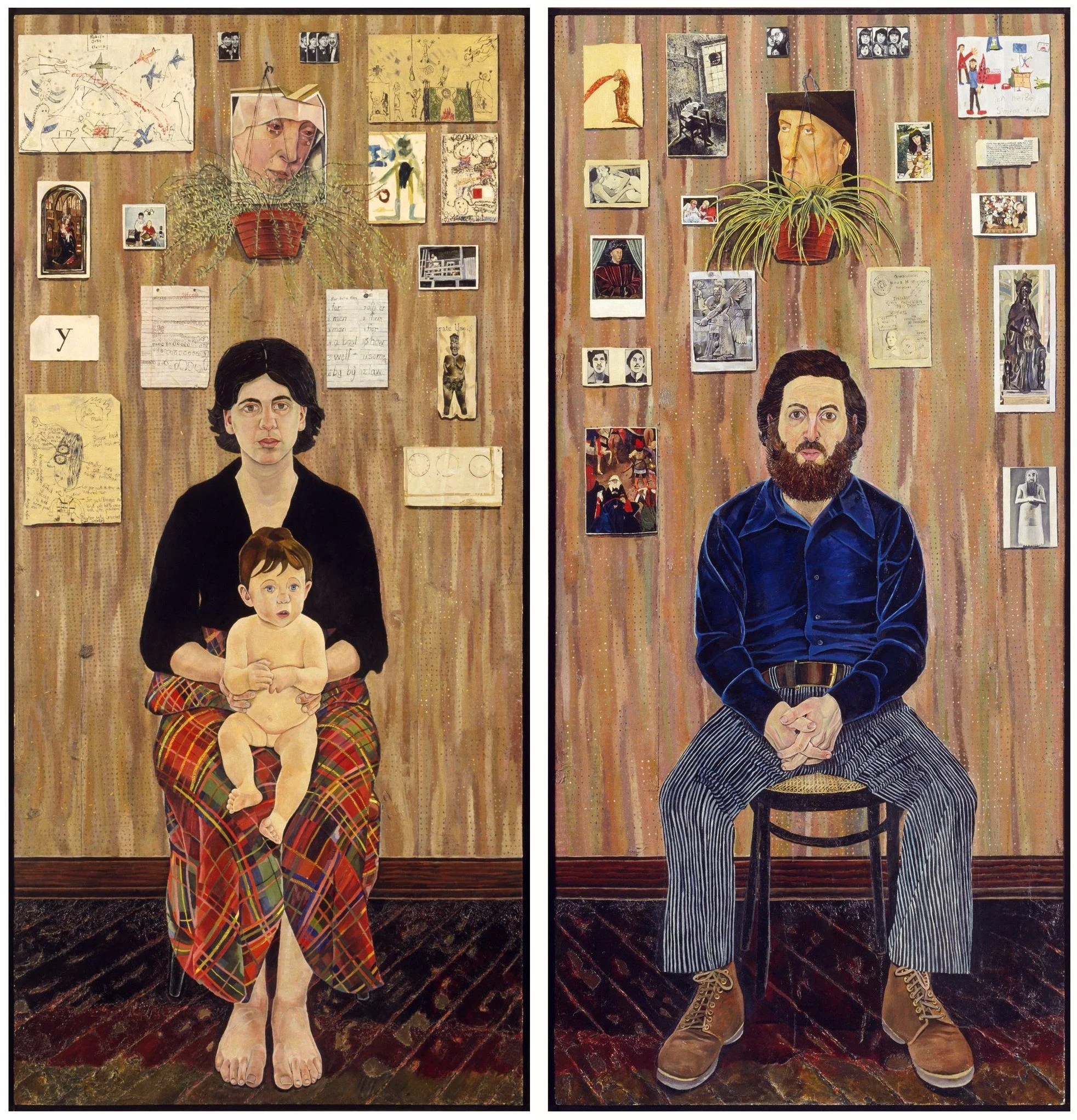
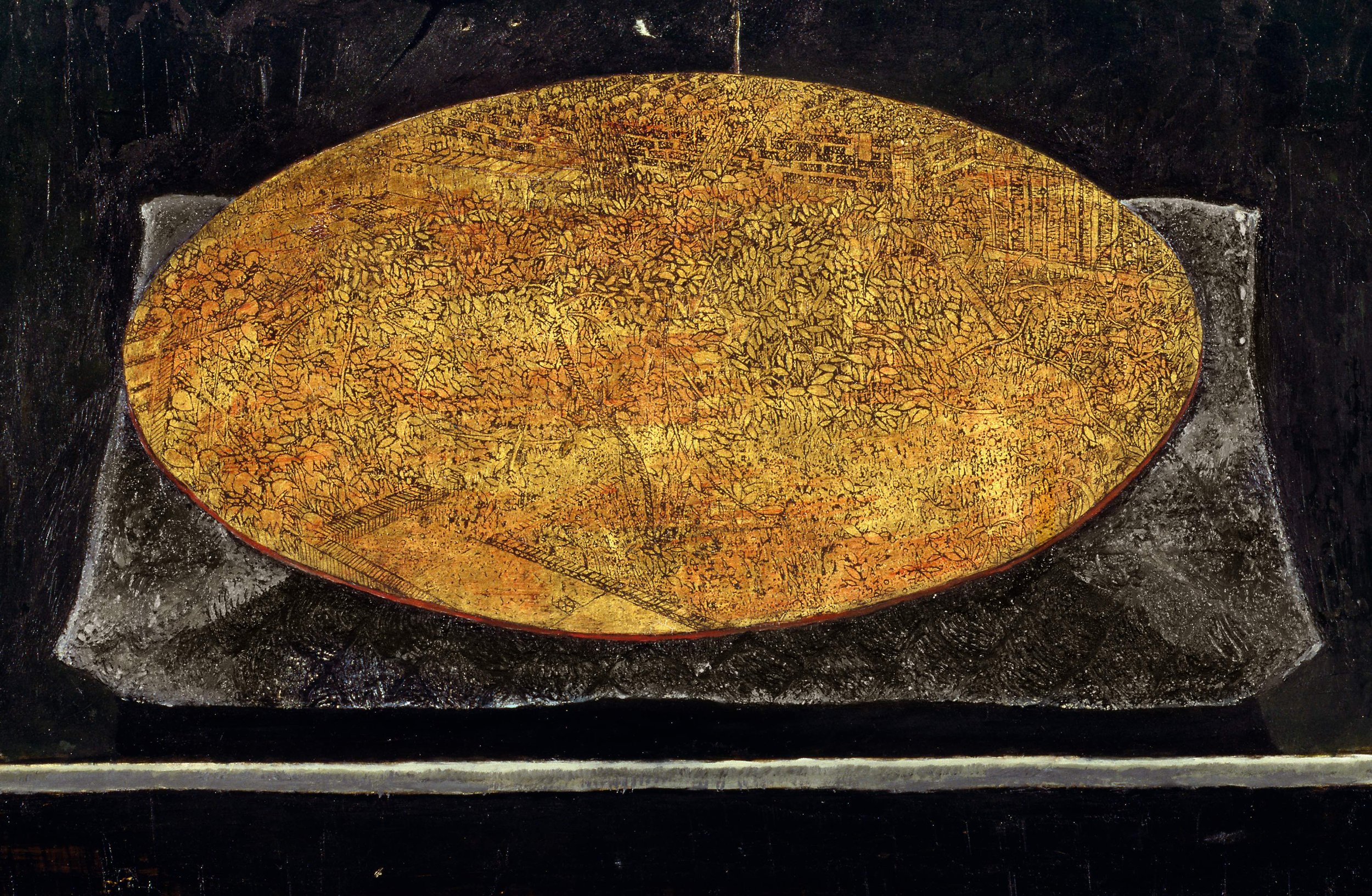
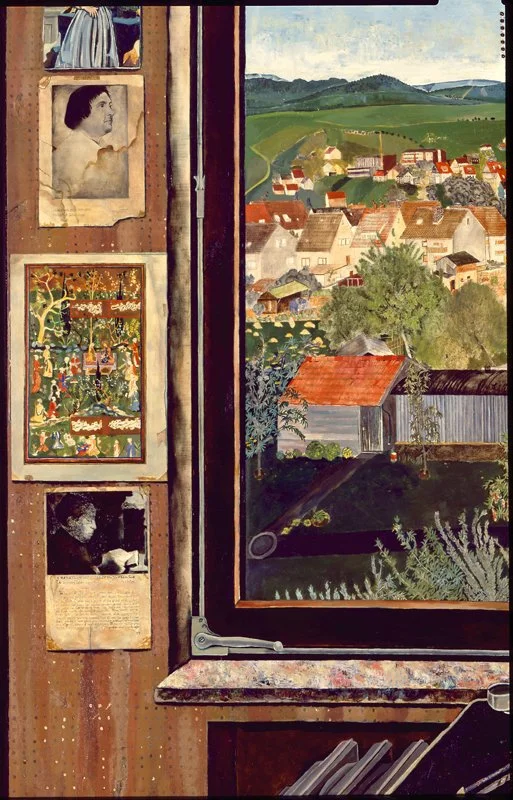
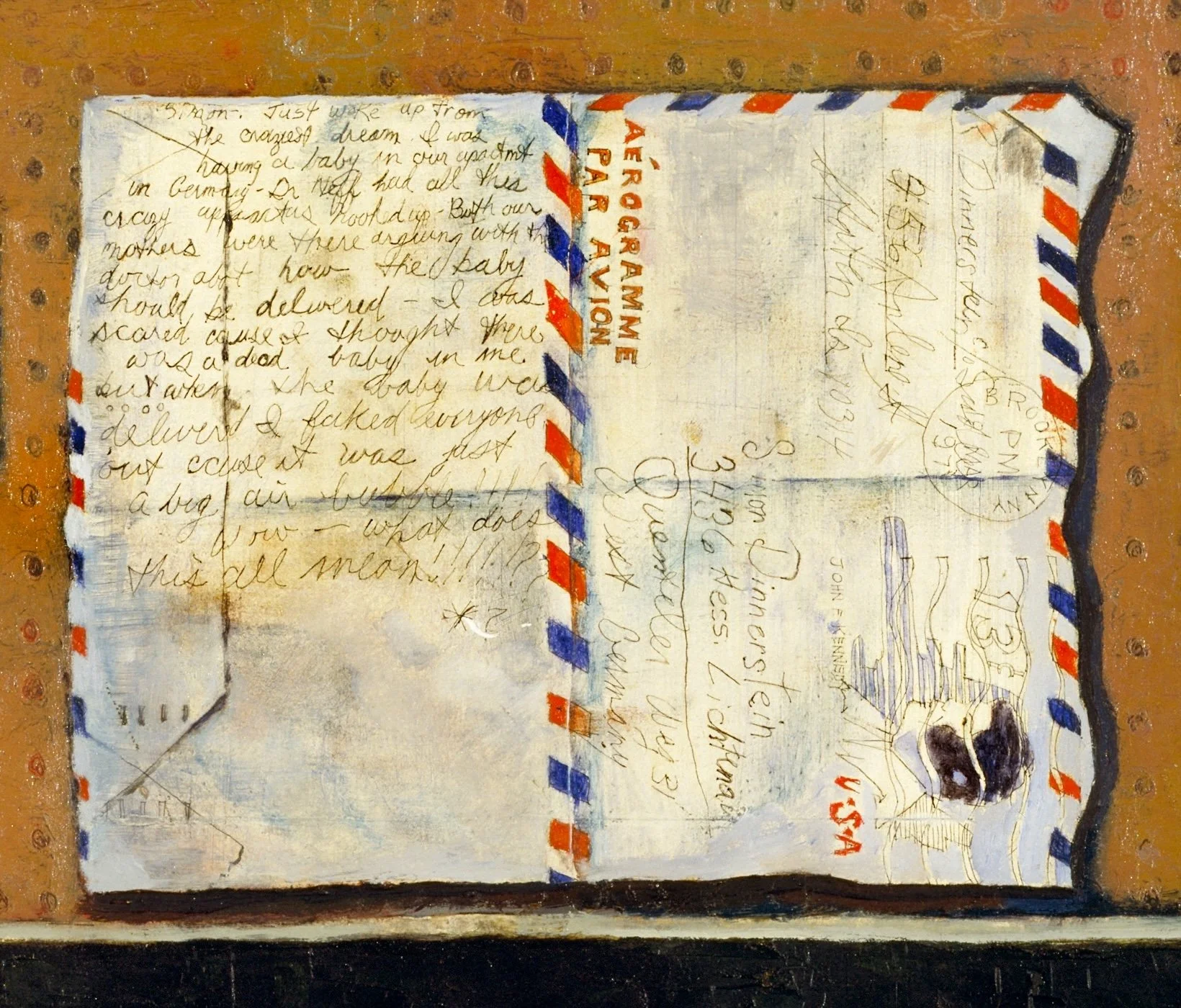
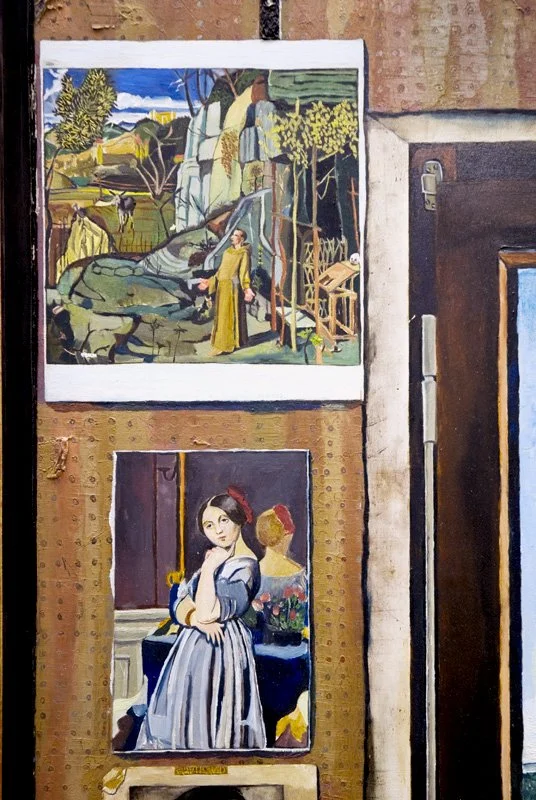
If you were to make a reprise of The Fulbright Triptych today, what story would it tell and what images, postcards, or digital artifacts would occupy that space in 2026?
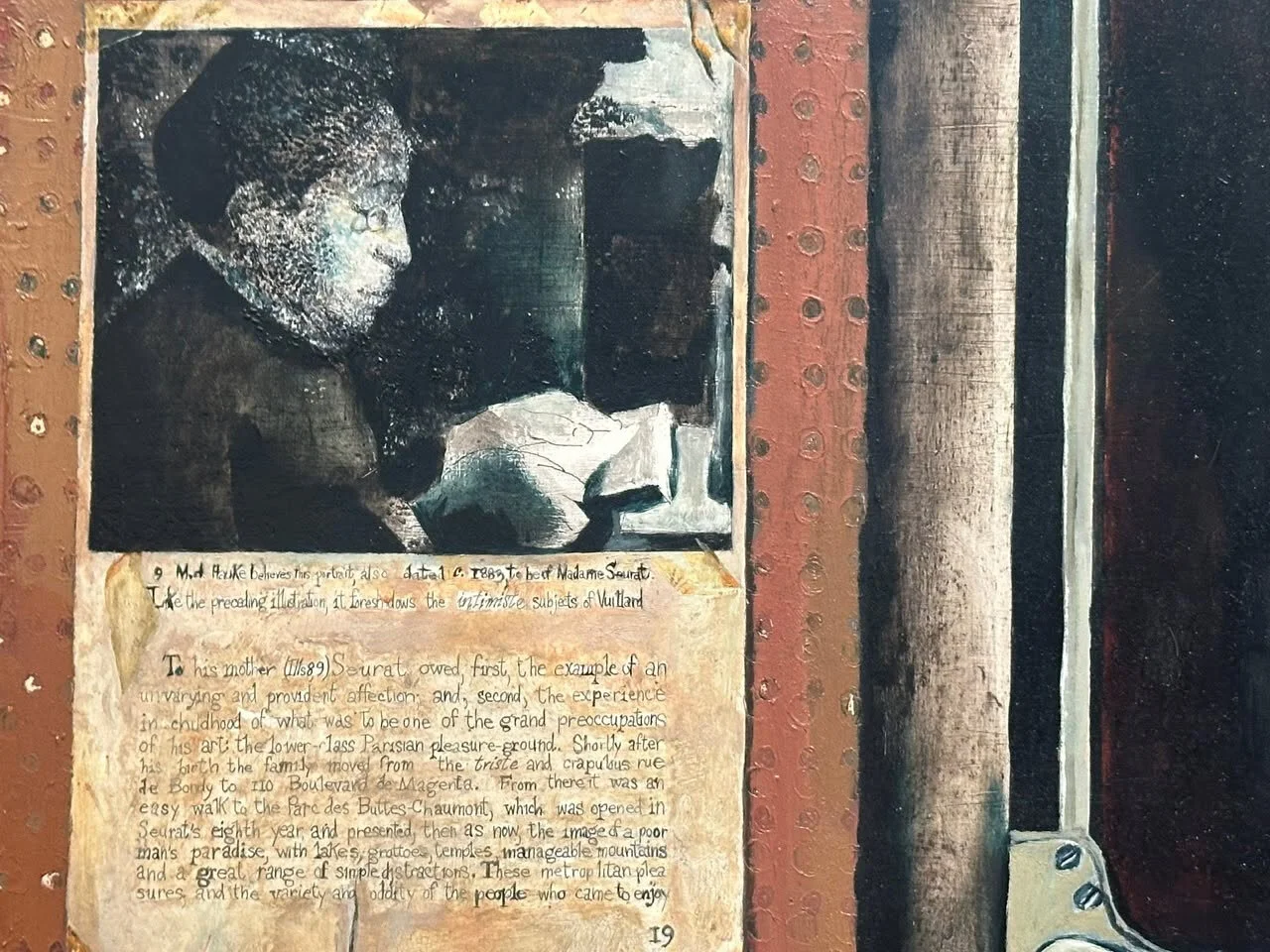
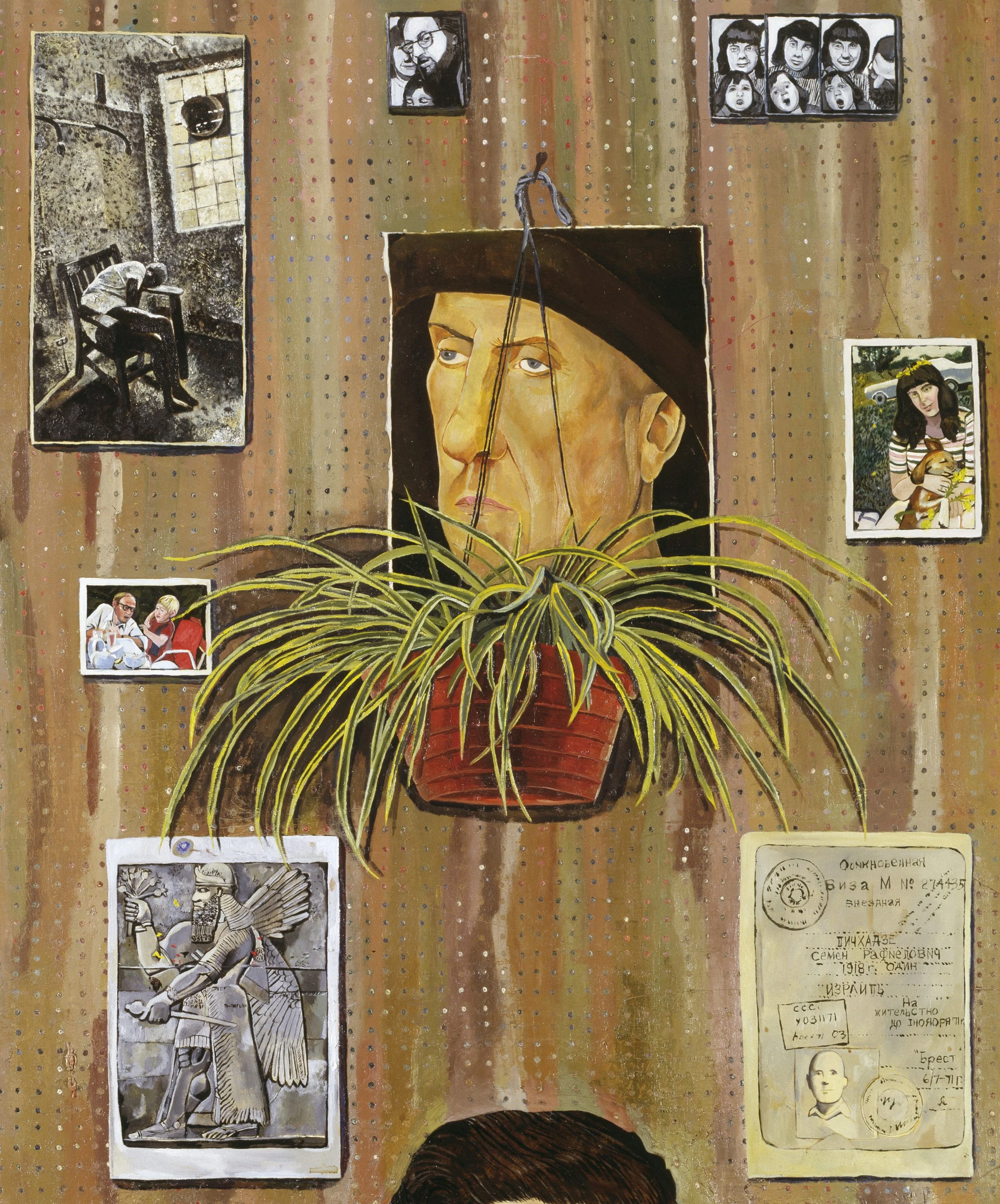
The cards, reproductions, letters, children's art in The Fulbright Triptych were collected willy nilly over quite a few years. There wasn't a "program" to this presentation. They were the kind of things that you might see on bulletin boards on studio walls. They weren't collected to be used in a painting. It is up to the viewer to make sense of all of this, to locate the matrix, to find the axis of the individual creating this map. If I had worked up a strategy for the placement of images, it would have seemed clearly purposeful and would have undermined the painting. It would have appeared pre-planned and this would have conflicted with the innocence that manifests itself in the Triptych.
If I was re-doing this field of interest, I would add works that show my change in the direction of the figurative impulse. This would echo my own voyage. Over the years I have become greatly interested in Cezanne, in his idea of process and quest. Balthus and Lucian Freud have loomed large in my thoughts.
Also, Giacometti and Beckman are very important, as well as Anselm Kiefer and William Kentridge.
These artists contain a ferocious energy which seeks to be human and modern at the same time. Of course, I wouldn't want to leave out Munch, Schiele, Chagall, Picasso, Matisse, Alice Neil and Helene Schjerfbeck.
Yet, when I rotate back to my bulletin board of 1971-1974 and see images of the world of Van Eyck, I find myself thinking that we haven't really progressed, artistically, much beyond this great Flemish artist.

Simon Dinnerstein, The Fulbright Triptych, Looking closely-Nevada Museum of Art
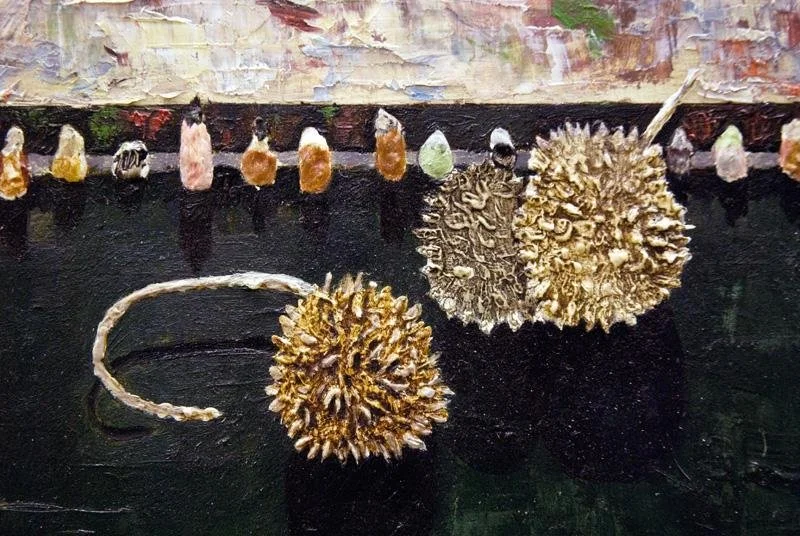
In an era where so much art consumption happens on social media, what do you think is lost when people cannot see the physical, layered texture of your oil paint in person?
I teach a class in Art Appreciation via Zoom, Art and Visual Perception. We use very fine slides which I obtain through internet sites. As good as this information is, what is lost in the reproductions of paintings and drawings is the surface, the scale, the texture. Even more, the insistence, the electricity of the work, its pulse and scale are missing. My own work reproduces well. Viewing a 6 inch wide reproduction of The Fulbright Triptych looks quite good. However, in person, at 170 inches in width, it becomes a completely different painting.

Simon Dinnerstein, Flower Market, Rome
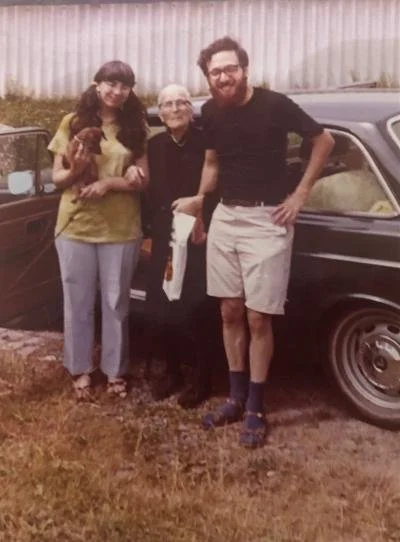
Renee Dinnerstein, Marie Bilderl, Simon Dinnerstein, in Germany, 1971
How did the years of living and working in Germany and Italy permanently alter your worldview and artistic trajectory?
I had the good fortune of living in Germany on a Fulbright Grant and in Italy on a Rome Prize to the American Academy in Rome. It was a gift to be able to experience living abroad. Even more, I developed an understanding of the differences between the north and south or Europe. I felt a sense of the long and great tradition of figurative art. These experiences allowed me to hold onto the important traditions of the past as I moved forward artistically into the present and the future.
It was amazing to see works of art up close and in person. The rich texture and presence of these works were amazing to behold. No reproduction comes close to the view in person. Highlights of the two periods abroad were a retrospective of the work of Albrecht Durer; Giotto's extraordinary chapel in Padova; Grunewald's Isenheim Altarpiece in Colmar, France; Van Eyck in Ghent; Bruegel and Schiele in Vienna. Deeply stunning were the work of Signorelli in Orvieto and Michelangelo's Sistine Chapel in Rome.
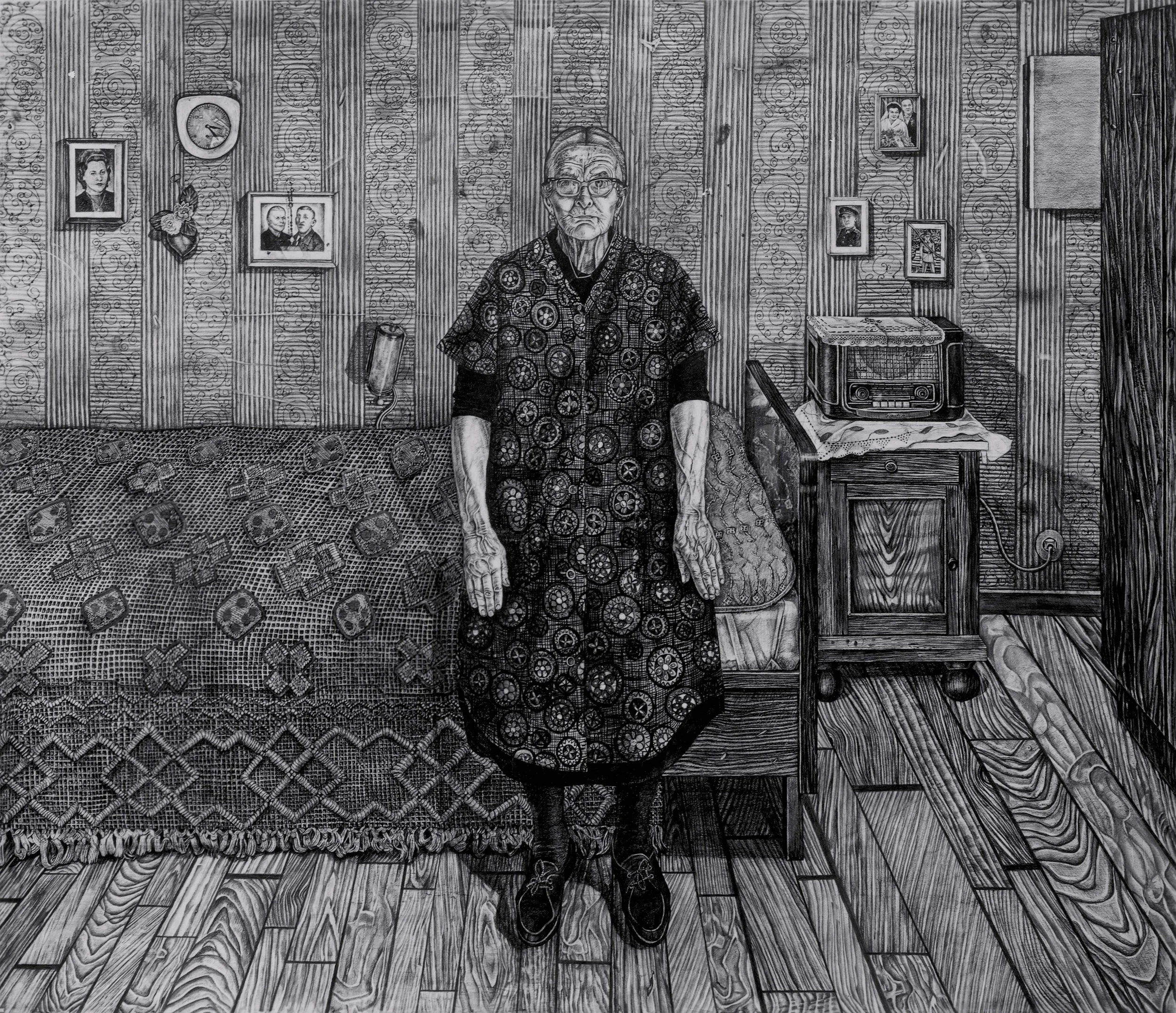
Simon Dinnerstein, Drawing of Marie Bilderl.
What advice would you give to young figurative and realist artists today who are trying to find their voice in an art world increasingly dominated by digital media and AI-generated imagery?
My suggestion is to spend a good deal of time drawing and painting from the real world. Try to hone your skills of looking and perception. Visit as many exhibits as you can, in person. Find the direction or point of view that best echoes some inner axis that you have.
The hardest time you will have will be the 3-5 years after art school. You will need to work alone in order to find your voice. A teacher or school won't be telling you what to do. This can be difficult. For many super talented students, this might be the breaking point.
Keep your act together, read good books, see fine plays and films. View Bergman and Tarkovsky. Find your axis. As Hesse writes in Siddhartha, "put your ear to the ground and listen."
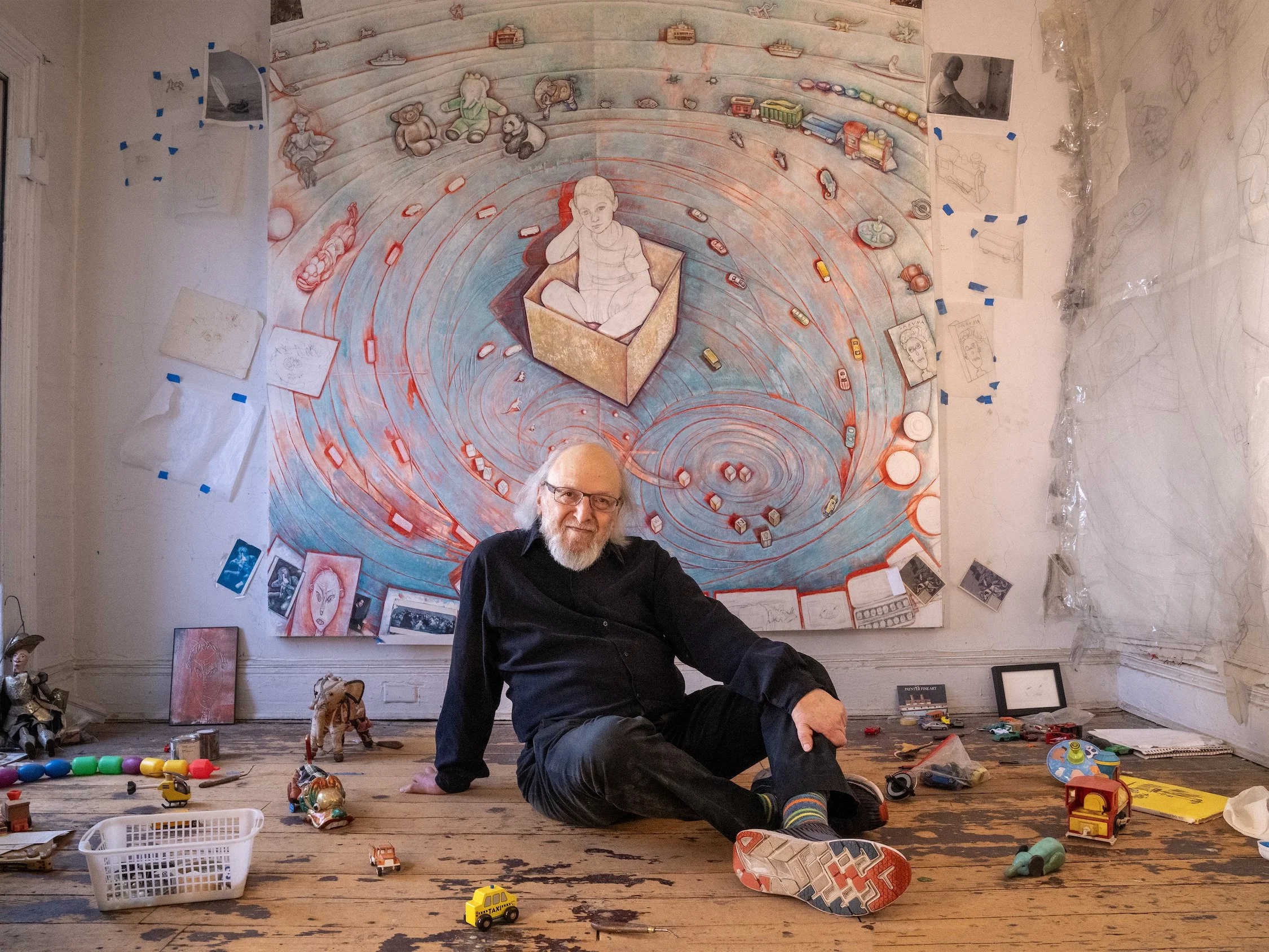
"Voyage," in process, photo by Richard Termine.
The Fulbright Triptych
Excerpted Commentaries on The Fulbright Triptych
Essays, articles, interviews, videos.
Large-scale image of The Fulbright Triptych
Website: www.simondinnerstein.com/art.html
Simon Dinnerstein is an acclaimed American figurative painter and graphic artist, widely celebrated for his monumental realist masterpiece, The Fulbright Triptych. Born in Brownsville, Brooklyn, in 1943, his work merges strict precision reminiscent of Northern Renaissance art with personal and psychological introspection.