5 Questions For Emma Kalff
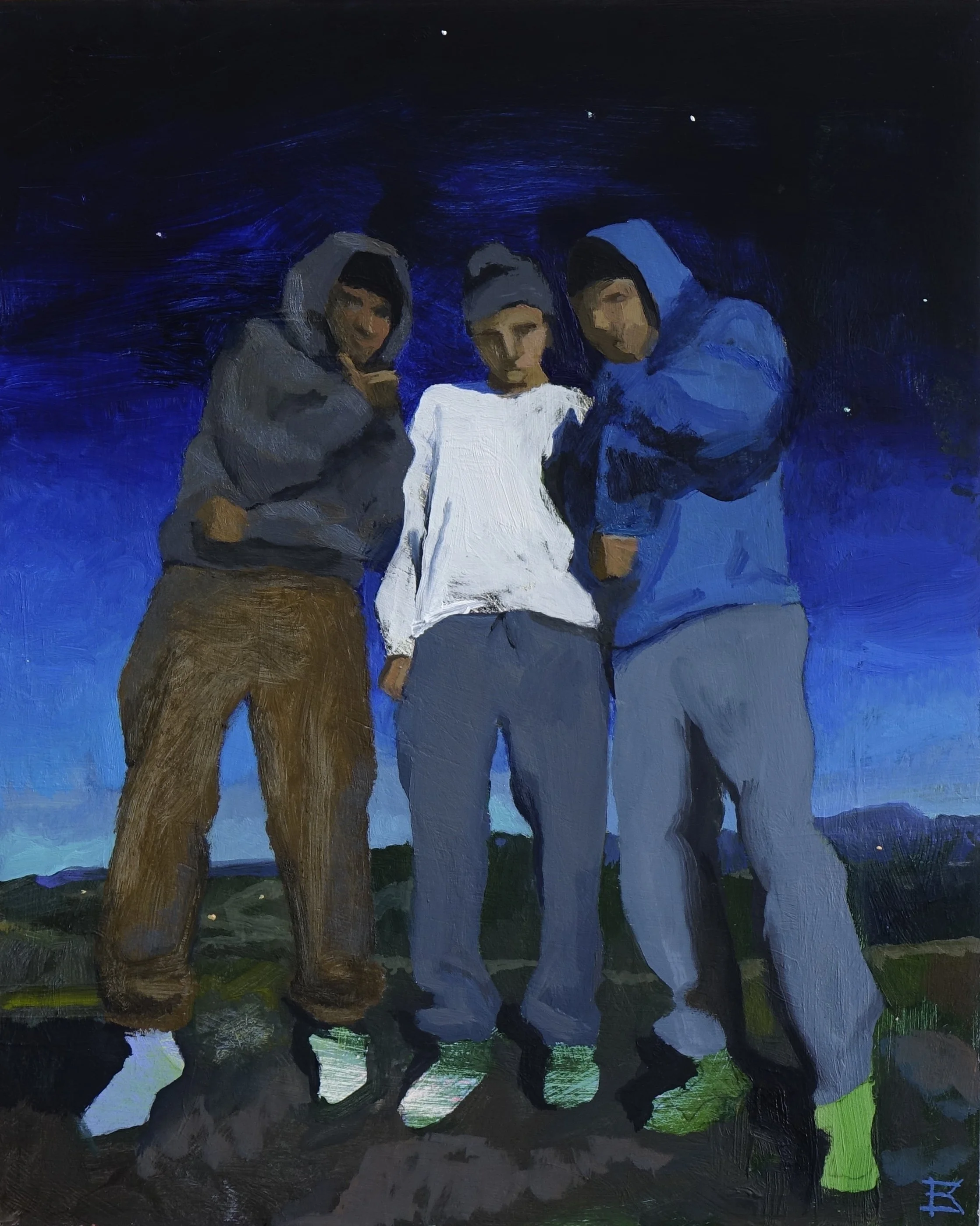
Emma Kalff | Diesel Girl Summer, 2026 | Oil on panel | 10 × 8 in | 25.4 × 20.3 cm
Your early work focused extensively on plein air landscapes, but has since evolved into dreamlike, layered oil paintings that collage photographs with dramatic scenery. What triggered this stylistic shift, and how does your process of "collaging" concepts unfold organically on the canvas?
I was out in the desert a few years back, and I painted this haunted dry riverbed I was camping near. It was a pretty scary experience actually. I went home and I thought, it would be cool to layer an old train into this picture. I brought the canyon painting to the old train depot in my town and layered it into the painting. That’s how it all started. I’m fascinated with things that are just slightly surreal. I’m interested in what happens when you push reality one degree to the left, or to the right. That’s why I layer scenes in my work.
Reviewers note that you excel at painting the "liminal beauty" of dusk and capturing specific emotional landscapes. Technically speaking, how do you handle oil paint and wood/linen layers to produce that specific, hazy, dreamlike atmosphere?
It all comes down to color, really. I’ve been exploring blue for about three years now and I’m just starting to get a handle on it. Wood and linen both have great qualities that allow you to leave certain layers of the painting showing through. For example, if I paint a base layer of strong blue, and then come over it with a more tonal color, the effect becomes a sort of blue that shines through the tone. That’s what produces the atmospheric effect in my work.
You studied classical painting under American realist Auseklis Ozols at the New Orleans Academy of Fine Arts. He famously taught the sacred importance of working from life and maintaining high professional discipline. How do you balance those rigid, classical principles with the surreal, non-linear themes in your modern work?
Auseklis was and still is the biggest influence on my work. He taught us the physical skill of looking at any scene in the world and being able to paint it. This is so much more valuable than a teacher who guides you along a self-directed creative path without teaching you any concrete skills. Painting is a visual language, and as an artist you need to learn to speak it. He taught all of his students still life, landscape, figure painting, and color theory so that we would be well-rounded. In contrast to Auseklis’ rigid classical training, I had another, more contemporary painting teacher, Gus Hoffman. He taught us that it was okay to layer scenes together and to deconstruct reality on the canvas. I’m so grateful every day to have been able to study under these two incredible painters. Their generosity and vision helped shape the painter I am today.
You are vocal about the fact that art is as much a business and craft as it is a creative pursuit. What does your daily structure look like when balancing pure studio time with marketing, newsletters, Patreon, and outreach?
My practice generally comes down to this: for every hour I paint, I spend an hour on the business side. This keeps me from leaning too much in one direction versus another. I usually work for six hours per day. I don’t have a rigid start and end time; I just find that after six hours I’m pretty much done working.
Your work is represented across multiple regions, including Abend Gallery in Denver, Milk Moon Gallery in Telluride, Corbeau Gallery, and 33 Contemporary. What advice do you have for independent artists trying to diversify their income streams and capture the attention of distinct regional galleries?
I’ve done a lot of different things – reaching out to galleries across the country I thought were well-suited to my work, inviting local gallery owners to my studio, going regularly to local art walks. It’s all about people. I would practice talking about my work to strangers at the bar. I just kept doing it until I felt comfortable. Now it doesn’t feel weird anymore; it’s fun.
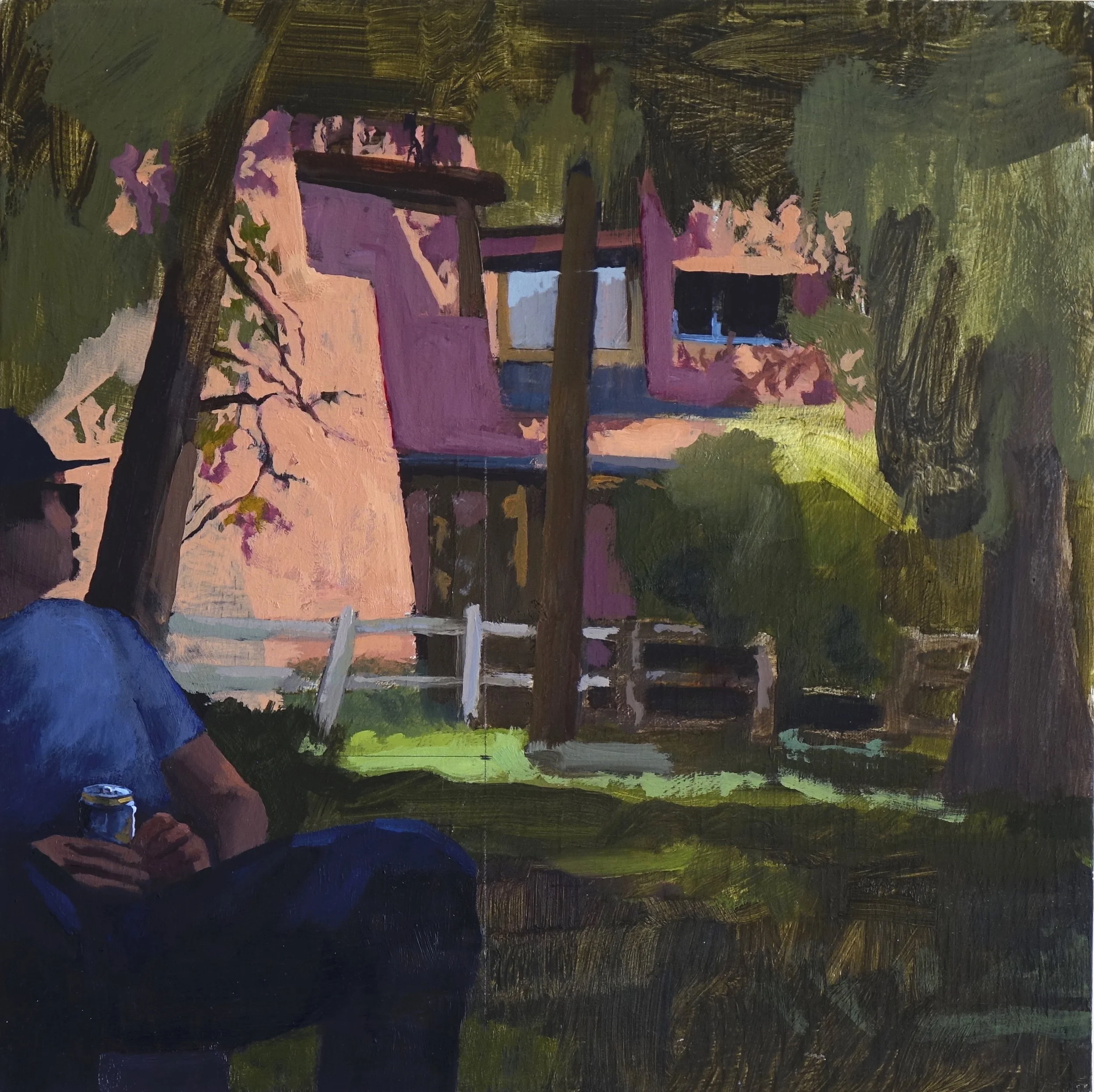
Emma Kalff | Deep Summer, 2024 | Oil on panel | 12 × 12 in | 30.5 × 30.5 cm
BIO
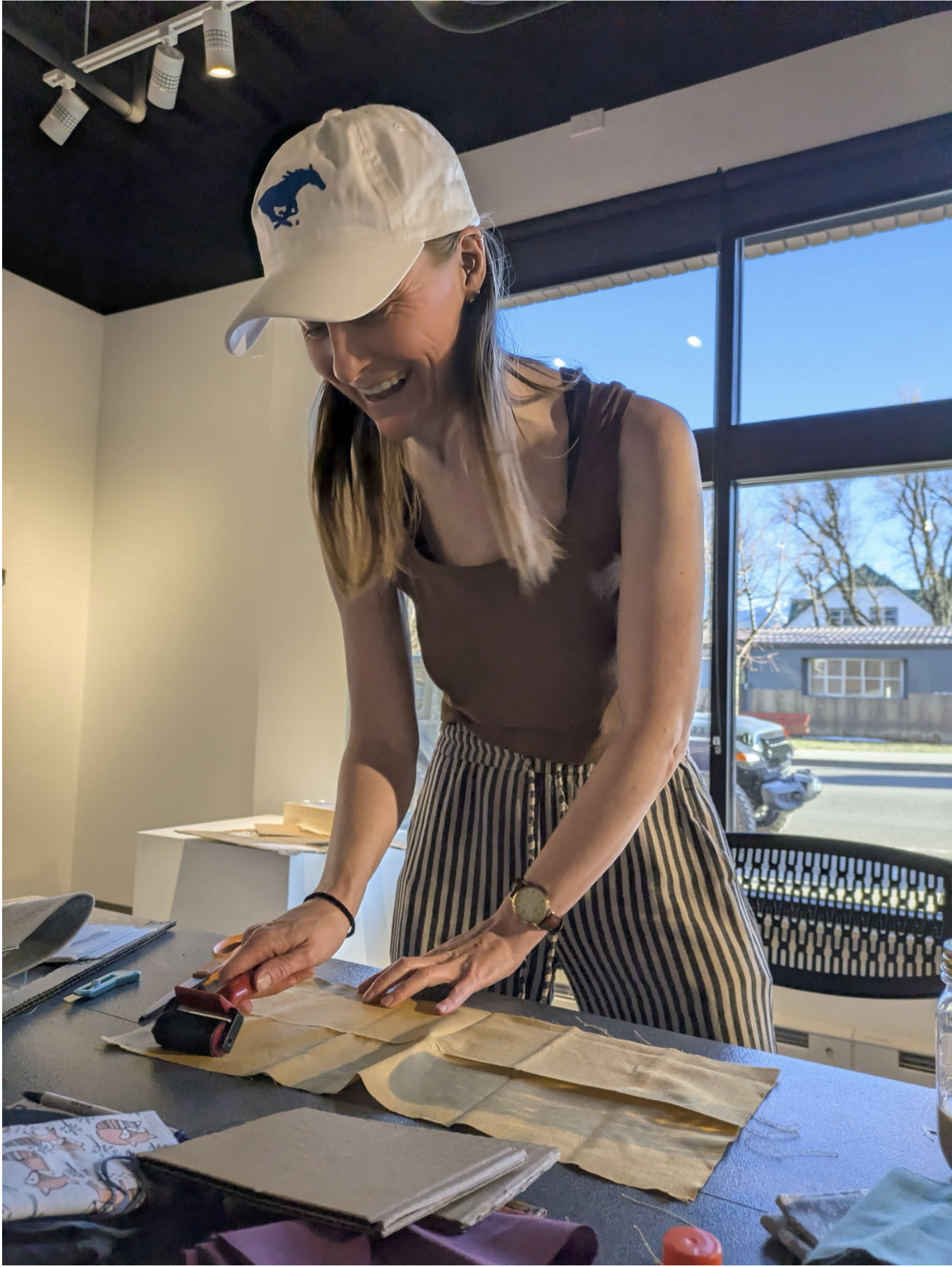
Emma Kalff is a Dutch-born, American representational oil painter currently based in the western slope region of Colorado (specifically Ridgway). She is best known for creating layered, dreamlike compositions that sit on the boundary between realism and surrealism.
Kalff’s signature style explores themes of memory, impermanence, and the unseen emotional landscapes underlying ordinary, daily life. Her subject matter often involves candid, intimate snapshots of everyday life—such as friends gathering, talking, or sharing a quiet moment—which she captures via photographs.
Her process blends on-site outdoor painting (plein air) with studio work. She typically starts with a landscape, then takes it back to her studio where she layers figures, buildings, foliage, or historical symbols over the scene. By intentionally overlapping independent scenes, she introduces a subtle displacement that mimics the fragmented, fluid nature of human memory. She utilizes moody, soft, and muted color palettes, often leaning into the liminal stillness of dusk or twilight.