The Oneiric Visions of Erica Calardo

In the contemporary art landscape, few artists manage to bridge the gap between the rigorous precision of mathematical logic and the ethereal, often haunting beauty of figurative painting. Erica Calardo, an Italian artist based in the historic heart of Bologna, achieves this with a mastery that feels both timeless and profoundly modern. Her recent viewing room at 33 Contemporary on Artsy offers a captivating window into her "oneiric" world—a realm where the solitude of lost souls meets the grandeur of the Italian Renaissance.

From Logic to Linen: The Artist’s Evolution

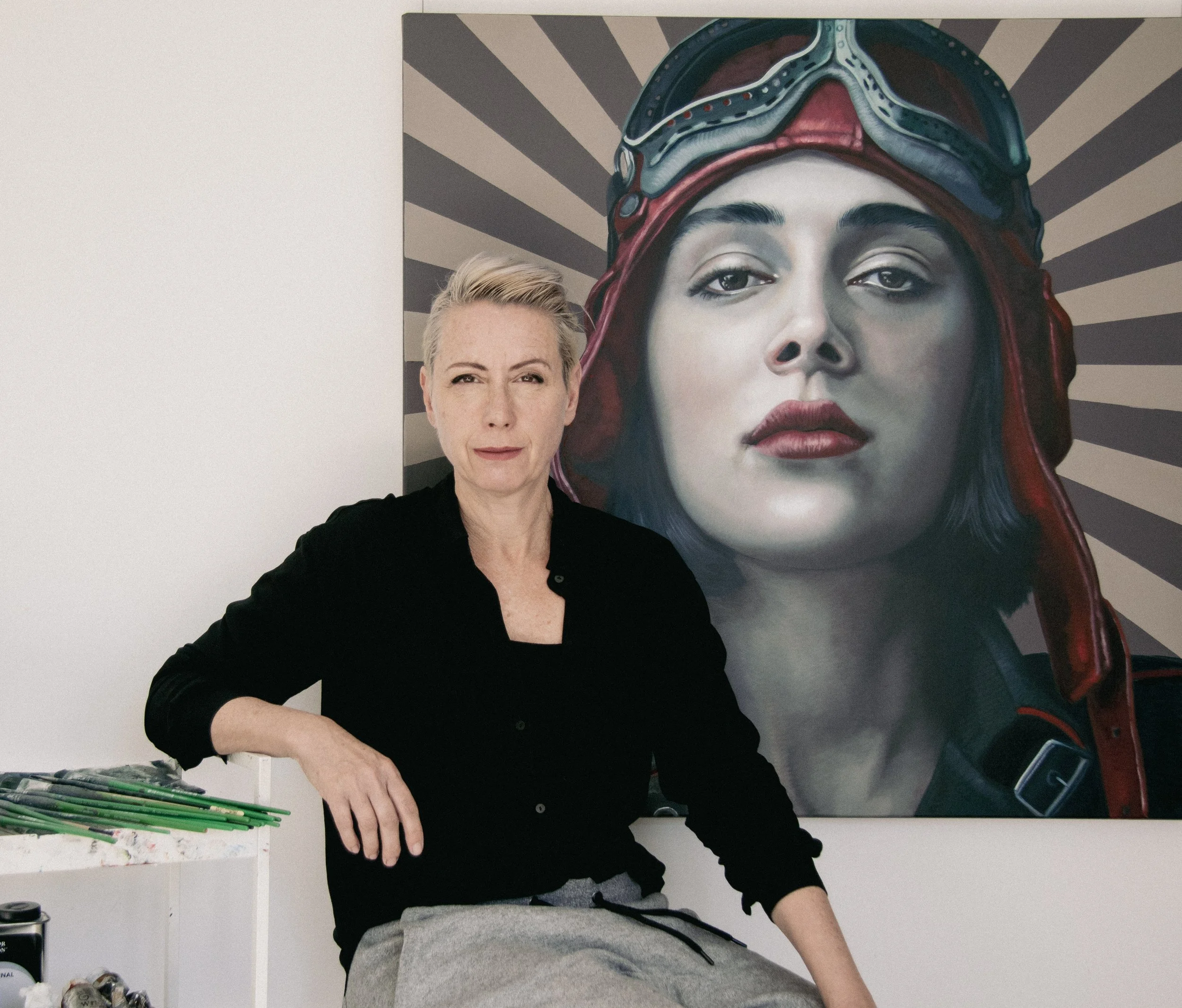
Erica Calardo’s path to the easel is as unconventional as her subjects. Born in Genoa in 1980, she spent a decade as an academic researcher, holding a PhD in mathematical logic. This background in the abstract and the structured informs the underlying clarity and symbolic depth of her work. Today, her atelier in Bologna—surrounded by ancient stones, warm colors, and the mysteries of old masters—serves as the crucible for her visions.

Calardo is largely self-taught, having honed her skills through "old dusty books" before studying under the renowned Italian master Roberto Ferri. Her technique is deeply rooted in the Italian tradition, drawing inspiration from Mannerist and Renaissance icons such as Leonardo da Vinci, Bronzino, and Lavinia Fontana.

The Aesthetic of the "Oneiric" Feminine

Calardo’s paintings are characterized by what she describes as "oneiric feminine figures." These are not merely portraits; they are windows into a timeless past, telling tales of forgotten dreams and the "solitude of lost souls." Her work explores the delicate intersection of:

  • Beauty and the Grotesque: Finding grace in the unsettling and the eerie.

  • Magic and Mystery: Infusing figurative realism with a sense of the supernatural.

  • Solitude: Capturing the quiet, introspective moments of her subjects.

Her palette often reflects the "warm colors" of Bologna, yet her subjects frequently inhabit dark, atmospheric spaces that evoke the "memento mori" of the Victorian age and the haunting atmosphere of ghost stories.

Erica Calardo

Magdalena, 2021

Oil on linen

40 × 27 1/2 in | 101.6 × 69.9 cm

A Dialogue with the Past

One of the most striking aspects of Calardo’s work is her ability to engage in a dialogue with art history. Her portraits of Leonora Carrington, Remedios Varo, and Frida Kahlo are not just likenesses; they are acts of artistic lineage. By painting these women, Calardo situates herself within a tradition of female surrealists and figurative painters who used the human form to explore the depths of the psyche.

Her work Suspirium (2020) and Magdalena (2021) further demonstrate her ability to take classical themes—the breath of life, the penitent figure—and imbue them with a contemporary, slightly punk-rock edge. This fusion of the baroque and the rebellious is what makes her work so distinctive in the current figurative scene.

Conclusion: Living in a Dream

For Erica Calardo, being an artist is "like living every day in a dream." This sentiment is palpable in every brushstroke of the works featured in the 33 Contemporary viewing room. Whether she is exploring the "solitude of lost souls" or paying homage to the giants of art history, Calardo invites the viewer to step out of time and into a world of magic, logic, and profound beauty.

To explore these works further and experience the oneiric visions of Erica Calardo, visit the 33 Contemporary viewing room on Artsy.

"When I’m painting I feel connected to my deepest nature. There is only me, my easel, my visions. The colours, the soft brushes, the scent of walnut oil." — Erica Calardo

Erica Calardo

More Notes on Moments of Gesture

Notes on Moments of Gesture
by John Hughes

Nadia Ferrante

Finally I love myself, 2026

White pastel, green pastel, charcoal on cotton paper tonalized with cadmium red

17 × 30 in | 43.2 × 76.2 cm

The work of many serious painters today—those we might loosely call representational or figurative—is aligned by their common bobbing in the same moment of the day. Alive at the same time, they inevitably survey the same interconnected cultural scenery, the same mortal and existential anxieties, and they seek similar solaces through the unique craft that is making art.

The poet Wallace Stevens once said of poetry that “it must give pleasure,” and that is one criterion here as well. Yes—simple, hedonistic pleasure: the aesthetic appreciation of something too often dismissed or mistrusted, what we call Beauty. We see this first at the most immediate level—in the colors and forms present in these works. The quality of the work one observes when looking up the artists’ names is, in one sense, overwhelming, and in another sense not.

As I confided to Didi after a first perusal: “My gosh, these are serious workers.” The obsession, the diligence, the pursuit of the art—the craft both technical and emotive—is evident everywhere. One can tangibly see how figurative realism has absorbed the lessons of photography, cinema, existential thought, psychology, and hyperrealism. All of these cultural forces are sublimated into the elemental gesture of the brushstroke as it walks the line between intention and something more Delphic—something given.

When I observe one of these paintings—say, a portrait of a face, or a study of the way light passes through a glass marble—it can feel as if the whole of contemporary consciousness is faintly implied within it. These artworks carry an awareness of the observer that is particular to our time. They have absorbed the lessons of abstraction. They are not traditional in any simple sense, yet they clearly derive from very traditional lineages. One can sound very high-minded, even philosophical, writing about these paintings. But one could also say more bluntly: in their various genres and modes, they bring pleasure.

They have no problem being as beautiful or compelling as a page from Vogue or a magazine cover. Yet they move beyond that surface appeal precisely because the abstract mechanics of paint—pigment itself, whether oil, pastel, chalk, crayon, or pen—can at any moment pierce through the illusion of representation and assert itself.

If we look at paintings such as those by Nadia Ferrante, the imagery is clearly inflected by the surrounding culture. The poses feel cinematic, almost photographic. Yet more fundamentally they are crafted out of pigment, manually, by hand and eye. In that sense the painting becomes a reclamation by the organic of the technological. Likewise, in the expressions of the faces, we can faintly detect the traces of personality—each “who they are.” Each time that implied personality leaps forth as unmistakably contemporary, belonging to the present moment.

Even the lines of a face carry the history of countless micro-expressions, sensitive reactions formed within the very situation we ourselves inhabit: the shared condition of being alive together.

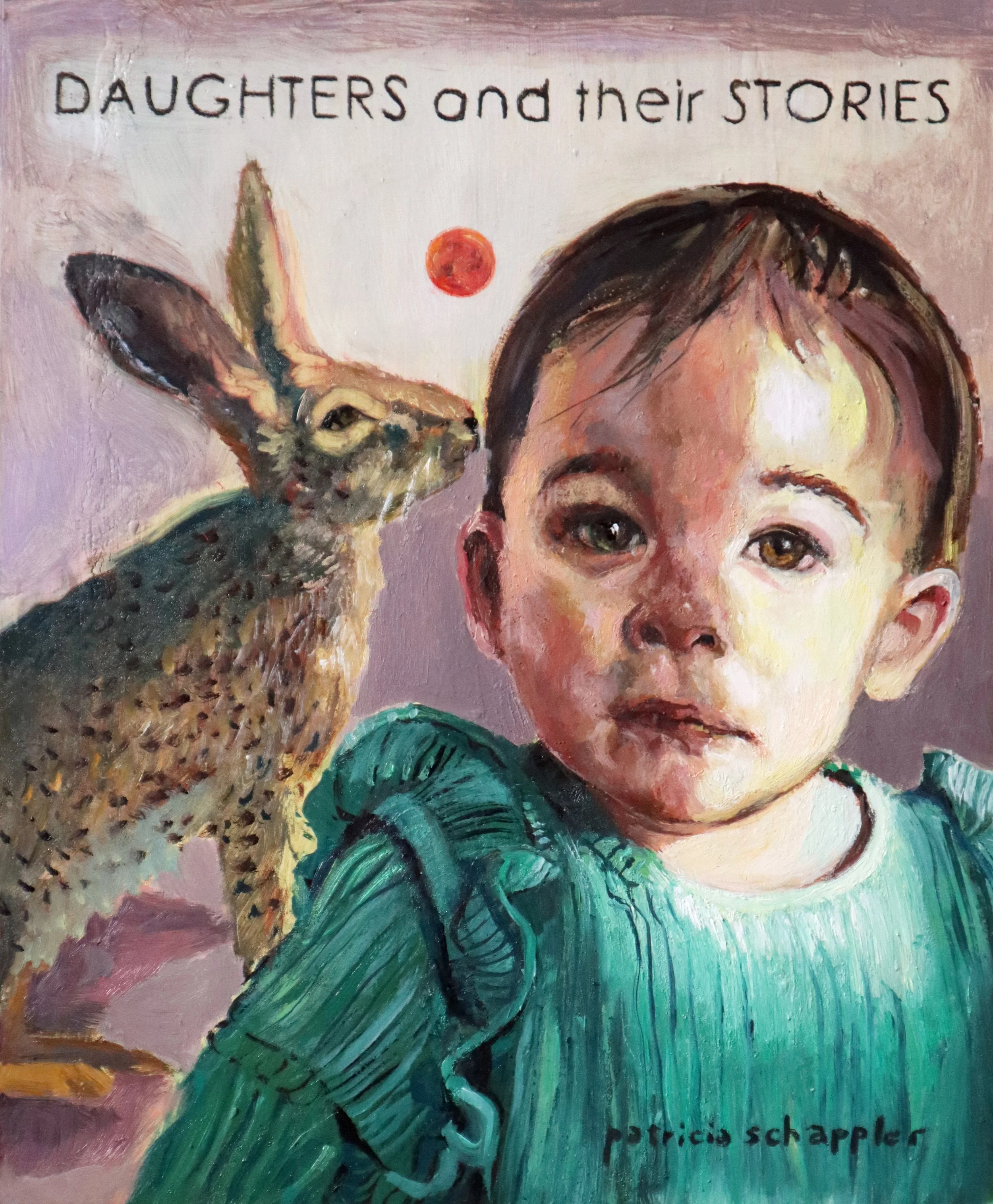
Patricia Schappler

Daughters and their Stories, 2026

Oil on board

9 3/4 × 8 in | 24.8 × 20.3 cm

A similar phenomenon appears in paintings such as those by Patricia Schappler. In the expressions of the faces there is something ineffably contemporary. We recognize these people almost unconsciously. That recognition exists entirely because of how the painter has made the face. This is craft in the service of art. It is the art of the possible, even as it hints at transcendence—or immanence (and what is the difference?).

The people are rendered in a style that understands how viewers today live amid a steady diet of media, photographs, images, and shifting valences of light and color. Through the craft of the painter, all of these visual languages are imported, reconstituted, and returned to us. In that process, the painting answers the curiosity of the viewer—their capacity to respond, to feel, to be alive. Good painting calls to life.

Erica Calardo


Erica Calardo is a figurative painter living and working in Italy. Her works in oils, watercolors, and pencils are windows on the solitude of lost souls. She explores the realm of Beauty, Grotesque, and Magic, by creating eery oneiric feminine figures who tell tales of long forgotten dreams, of an imaginary timeless past.

Deeply rooted in the Italian Tradition, her technique is inspired by the Renaissance and Mannerism old masters (Leonardo, Bronzino, and Lavinia Fontana above all). She is mostly self-taught and has learned her skills from old dusty books. She has recently studied academic painting with Italian master Roberto Ferri.

Since 2010, she has showcased her work in galleries in Italy (Mondo Bizzarro, Studio21), and abroad (La Luz de Jesus - LA, Auguste Clown - Australia, Modern Eden, Swoon, Flower Pepper, WWA, and Spoke Art, Distinction - USA, Pinkzeppelin - Berlin among others). Erica's paintings have appeared in several magazines and books, like Miroir Magazine, Beautiful Bizarre, Il Manifesto, Inside Art, Italian Pop Surrealism, Illustrati.

ADD TO YOUR ART COLLECTION @ARTSY