More Notes on Moments of Gesture

Notes on Moments of Gesture
by John Hughes

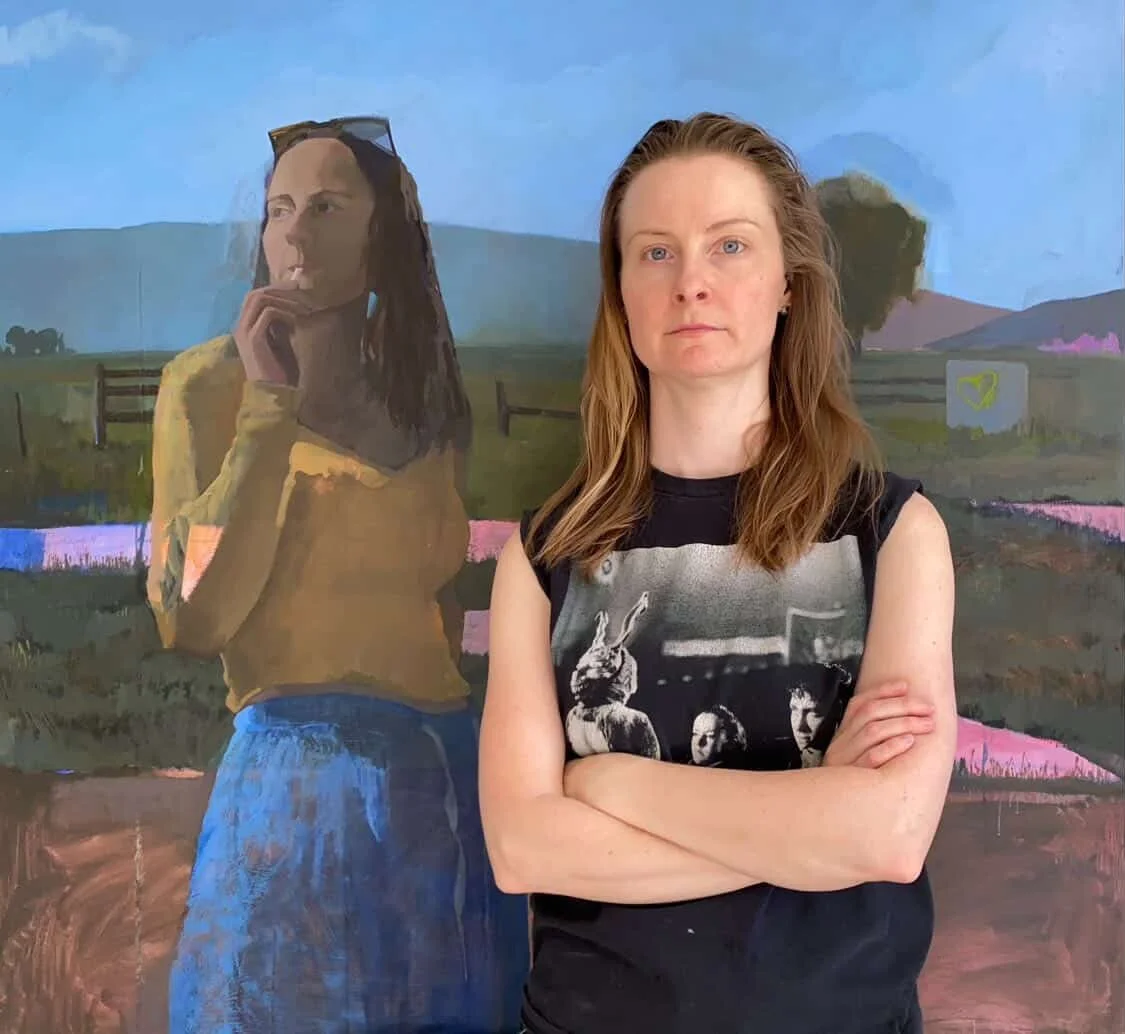
Nadia Ferrante

Finally I love myself, 2026

White pastel, green pastel, charcoal on cotton paper tonalized with cadmium red

17 × 30 in | 43.2 × 76.2 cm

The work of many serious painters today—those we might loosely call representational or figurative—is aligned by their common bobbing in the same moment of the day. Alive at the same time, they inevitably survey the same interconnected cultural scenery, the same mortal and existential anxieties, and they seek similar solaces through the unique craft that is making art.

The poet Wallace Stevens once said of poetry that “it must give pleasure,” and that is one criterion here as well. Yes—simple, hedonistic pleasure: the aesthetic appreciation of something too often dismissed or mistrusted, what we call Beauty. We see this first at the most immediate level—in the colors and forms present in these works. The quality of the work one observes when looking up the artists’ names is, in one sense, overwhelming, and in another sense not.

As I confided to Didi after a first perusal: “My gosh, these are serious workers.” The obsession, the diligence, the pursuit of the art—the craft both technical and emotive—is evident everywhere. One can tangibly see how figurative realism has absorbed the lessons of photography, cinema, existential thought, psychology, and hyperrealism. All of these cultural forces are sublimated into the elemental gesture of the brushstroke as it walks the line between intention and something more Delphic—something given.

When I observe one of these paintings—say, a portrait of a face, or a study of the way light passes through a glass marble—it can feel as if the whole of contemporary consciousness is faintly implied within it. These artworks carry an awareness of the observer that is particular to our time. They have absorbed the lessons of abstraction. They are not traditional in any simple sense, yet they clearly derive from very traditional lineages. One can sound very high-minded, even philosophical, writing about these paintings. But one could also say more bluntly: in their various genres and modes, they bring pleasure.

They have no problem being as beautiful or compelling as a page from Vogue or a magazine cover. Yet they move beyond that surface appeal precisely because the abstract mechanics of paint—pigment itself, whether oil, pastel, chalk, crayon, or pen—can at any moment pierce through the illusion of representation and assert itself.

If we look at paintings such as those by Nadia Ferrante, the imagery is clearly inflected by the surrounding culture. The poses feel cinematic, almost photographic. Yet more fundamentally they are crafted out of pigment, manually, by hand and eye. In that sense the painting becomes a reclamation by the organic of the technological. Likewise, in the expressions of the faces, we can faintly detect the traces of personality—each “who they are.” Each time that implied personality leaps forth as unmistakably contemporary, belonging to the present moment.

Even the lines of a face carry the history of countless micro-expressions, sensitive reactions formed within the very situation we ourselves inhabit: the shared condition of being alive together.

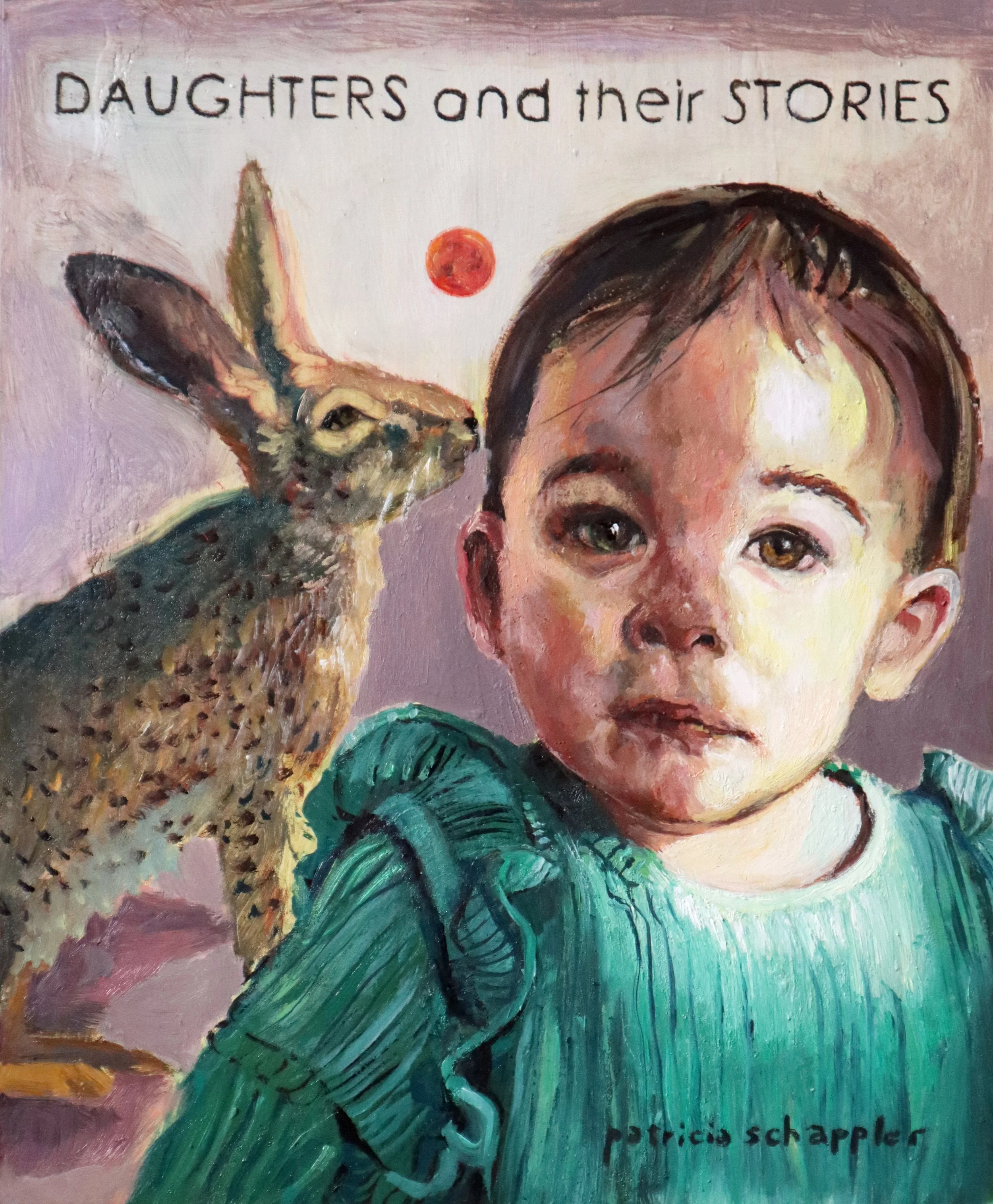
Patricia Schappler

Daughters and their Stories, 2026

Oil on board

9 3/4 × 8 in | 24.8 × 20.3 cm

A similar phenomenon appears in paintings such as those by Patricia Schappler. In the expressions of the faces there is something ineffably contemporary. We recognize these people almost unconsciously. That recognition exists entirely because of how the painter has made the face. This is craft in the service of art. It is the art of the possible, even as it hints at transcendence—or immanence (and what is the difference?).

The people are rendered in a style that understands how viewers today live amid a steady diet of media, photographs, images, and shifting valences of light and color. Through the craft of the painter, all of these visual languages are imported, reconstituted, and returned to us. In that process, the painting answers the curiosity of the viewer—their capacity to respond, to feel, to be alive. Good painting calls to life.

THE PEREGRINE COLLECTION

Viktoria Savenkova  | Experience, 2018 | Oil on Canvas | 39 2/5 × 23 3/5 in | 100 × 60 cm

Viktoria Savenkova | Experience, 2018 | Oil on Canvas | 39 2/5 × 23 3/5 in | 100 × 60 cm

Yunior Hurtado Torres CIVILIZATION, 2020 | Oil on canvas | 71 × 71 in | 180.3 × 180.3 cm

Yunior Hurtado Torres CIVILIZATION, 2020 | Oil on canvas | 71 × 71 in | 180.3 × 180.3 cm

Vicki Sullivan | Moon Goddess, 2019 | Oil on linen | 17 7/10 × 13 in | 45 × 33 cm

Vicki Sullivan | Moon Goddess, 2019 | Oil on linen | 17 7/10 × 13 in | 45 × 33 cm

Irvin Rodriguez | Woman In Black, 2015 | Oil on linen | 40 × 30 × 1 in

Irvin Rodriguez | Woman In Black, 2015 | Oil on linen | 40 × 30 × 1 in

News Release : On a Time Capsule to the Moon with 1200 Artists and One A.I.

TORONTO, ONTARIO (March 11, 2021) – The Peregrine Collection – an assembly of thousands of creative works by over 1200 creative artists and one A.I. – is headed for the Moon.

Coordinated by Dr. Samuel Peralta, the Artists on the Moon (AOTM) project is joining NASA’s scientific payloads on Astrobotic’s Peregrine Mission One, the first commercial launch in history, on a United Launch Alliance (ULA) rocket to Lacus Mortis on the lunar surface. Dr. Peralta, a physicist and entrepreneur, is also an author, whose fiction has hit the Wall Street Journal and USA Today bestseller lists, and whose poetry has won awards worldwide.

“I was fourteen on my first launch, an Antares model rocket kit by powered by an Estes solid-propellant engine the size of my thumb,” said Dr. Peralta. “Now we’re on Astrobotic’s lunar lander on a ULA Vulcan Centaur rocket headed for the Moon. Wow.”

The centerpieces of Dr. Peralta’s payload are the 21 volumes of his own Future Chronicles anthologies, all Amazon bestsellers, and 15 PoetsArtists art magazines and exhibition catalogs, one of which he helmed as guest curator for publisher and art curator Didi Menendez. Each individual volume provided scores of curated contemporary art and short stories for the time capsule.

Together with other art books, anthologies, novels, music, and screenplays - including for the short film Real Artists, which won an Emmy® Award in 2019 - he and his colleagues have digitized literally thousands of art and fiction for the trip to the Moon.

Dr. Peralta noted that between AOTM and its sister project, the Writers on the Moon group coordinated by fellow author Dr. Susan Kaye Quinn, several thousand creative artists and writers are now represented for the lunar journey.


“Our hope is that future travelers who find this capsule will discover some of the richness of our world today,” Dr. Peralta said. “It speaks to the idea that, despite wars and pandemics and climate upheaval, humankind found time to dream, time to create art.”

The Peregrine Collection represents creative artists from all over the globe, including from Canada, the US, the U.K., Ireland, Belgium, Australia, Sri Lanka, Singapore, and the Philippines. It includes a collaborative human-AI work of poetry between Dr. Peralta and OSUN, an OpenAI-based machine programmed by Sri Lankan author and researcher Yudhanjaya Wijeratne.

The Peregrine Collection is among the most diverse collections of contemporary cultural work assembled for launch into space, and is believed to be the first-ever project to place the work of women artists on the Moon.

The digitized artwork and literature files are contained in two microSD cards, encapsulated in DHL MoonBox capsules. Delivery is by Astrobotic’s Peregrine Lunar Lander, through NASA's Commercial Lunar Payload Services (CLPS) program.

Launch is scheduled in July 2021 from Cape Canaveral, Florida, and the lander will touch down in the Lacus Mortis region of the Moon, marking Earth’s return, and the first mission carrying commercial payloads, to the lunar surface.

About The Peregrine Collection:

The Peregrine Collection brings together the work of 1200 creative artists, and one A.I., on a time capsule to the Moon, via Astrobotic’s Peregrine Lunar Lander. Digitizing thousands of artworks, stories, and more, it leverages the Astrobotic/DHL MoonBox initiative to bring one of the most expansive cultural collections to space. A project of Incandence under its Artists on the Moon initiative, The Peregrine Collection is headed by payload coordinator and curator Dr. Samuel Peralta.

Website: peregrinecollection.com

About Samuel Peralta:

Physicist, entrepreneur, and storyteller, Samuel Peralta's fiction has hit the Wall Street Journal and USA Today bestseller lists, and his poetry has won awards worldwide, including from the BBC, the UK Poetry Society, and the League of Canadian Poets.

Acclaimed for his Future Chronicles anthologies, he is an art curator, an award-winning composer, and a producer of independent films, including The Fencer, nominated for a Golden Globe®, and Real Artists, winner of an Emmy® Award.

With a Ph.D. in physics and an expansive career, Samuel serves on the board of directors of several firms, and mentors start-ups at the University of Toronto’s ICUBE accelerator.

About the Publications:

The majority of the artworks being digitized and being sent to the moon are from the publications made possible from PoetsArtists creator Didi Menendez. The publishing house is GOSS183. The designers for these are April Carter Grant and/or Didi Menendez. The publications are available to download from www.iartistas.com or buy in print from Amazon, Blurb, and Magcloud.

Source: https://www.artsy.net/show/33-contemporary...