

Born in America, Sydney-based Kim Leutwyler migrated to Australia in 2012. She works in a variety of media including painting, installation, ceramics, print media and drawing. Leutwyler's current body of work features paintings exploring notions of beauty, gender and queer identity. She has come to focus on painting as a medium because of its primarily masculine history in the western art canon. Her artwork has been exhibited in multiple galleries and museums throughout Australia and the United States.
Rachel Linnemeier | Complex Figures


Rachel Linnemeier’s subject matter includes powerful women in situations that both evoke strong feelings of nostalgia and inspire narratives. The overarching theme of Rachel’s work includes tension between the idea of modern adulthood and residual childhood. Each piece is composed of bright and vivid colors creating a youthful feeling while simultaneously expressing maturity through the pose and expression of the figure. Recent works have begun to explore the addition of landscapes to create complexity in narrative.
Add to your art collection @Artsy
Ann Moeller Steverson | The Emotive Figure


Ann Moeller Steverson is an American artist known for her emotive and mood filled figurative works, primarily created with oil on copper. Her works are described as having a timeless quality which invites the viewer to create their own sensitive response and narrative through a compelling tension and sense of mystery. Through the quiet intensity of each piece she seeks to share her most authentic self, what she loves, and an invitation for connection. Born in Huntsville, Al, in 1980 she continues to reside there, working within a vibrant artist community. There she paints, teaches, and operates an atelier to promote the advancement of realism in modern painting.
Chris Clark | Hair Culture

Chris Clark is a self-taught visual artist, illustrator, and muralist living and working in Jacksonville, Florida. Art, to him, is a form of journalism.
Using acrylic, oil, ink, and spray paint, he explores the rich culture and history of the Black community across the diaspora and the social issues affecting them today. For Clark, reflecting the human figure is very powerful, which is why he uses graphic-style portraiture and figurative works to depict Black life in America through his personal lens of a Black man. At the core of his work is the notion that representation matters. As the artist explains, “By telling my story, I want to help the viewer rediscover theirs.”
Clark’s artwork has been shown in exhibitions around the U.S. and abroad, including his recent solo exhibition “New Growth” at Kent Gallery FSCJ in Jacksonville and at the Nelson Mandela Metropolitan Art Museum in Port Elizabeth, South Africa. He has received multiple art awards and grants for his work. Clark was chosen to participate in the House of Sedulo Artist Residency in London, UK and the Chateau Orquevaux Artist Residency in Champagne-Ardenne, France in 2022-2023. Most recently he completed his first artist fellowship the DEAR (Digital Evolution Artist Retention) fellowship through the Caribbean Cultural Center African Diaspora Institute in New York.
Pippa Hale-Lynch | Submerged Figures

Pippa Hale-Lynch’s paintings use figures and portraits to capture intimate moments of solitude and grief. She is a contemporary figurative realism artist working primarily with oils. Her works incorporating figures suspended within water capture beauty in fleeting moments of solitude.
More recently she is exploring the theme of grief, stemming from her mother's tragic and untimely death when she was 20. At first glance, the playful use of the sugary jam can be mistaken for blood, a visual representation of the wounds left by the destruction of grief experienced by the sitter.
Pippa uses techniques learned over 12+ years of practice and training in traditional representational drawing and painting. She uses herself, her family, and loved ones as sitters to best reflect the intimacy of the work.
Amy Ordoveza

Amy Ordoveza is a contemporary realist artist who creates detailed, imaginative still-life paintings. She carefully crafts and arranges the delicate cut-paper plants, animals, and architectural elements that she depicts in her oil paintings. The fragility of the paper objects suggests impermanence while Ordoveza’s close observation and meticulous handling of paint hint at their significance. Her compositions evoke a sense of beauty and mystery in ordinary surroundings.
Ordoveza received her MFA from the New York Academy of Art and her BFA from the Maryland Institute College of Art. Her historical influences include 17th century Dutch still life painters including Rachel Ruysch and Jan Davidsz de Heem as well as surrealists such as Kay Sage and René Magritte. Ordoveza’s work is included in the Lunar Codex and the Nova Scotia Art Bank and has been featured in publications and websites including American Art Collector, PoetsArtists, and Booooooom!
Artists Painting Artists | A Window into Creative Souls →
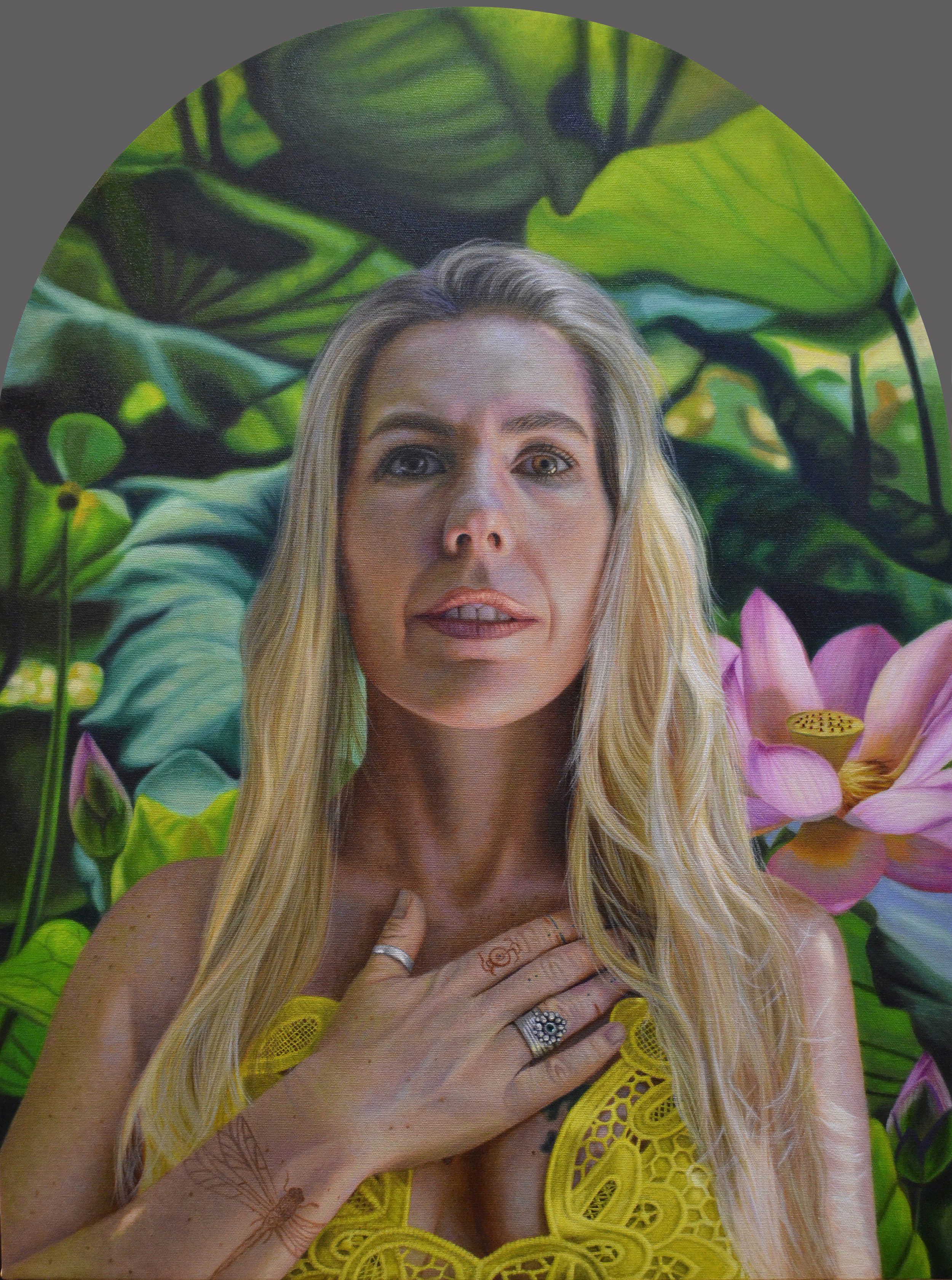
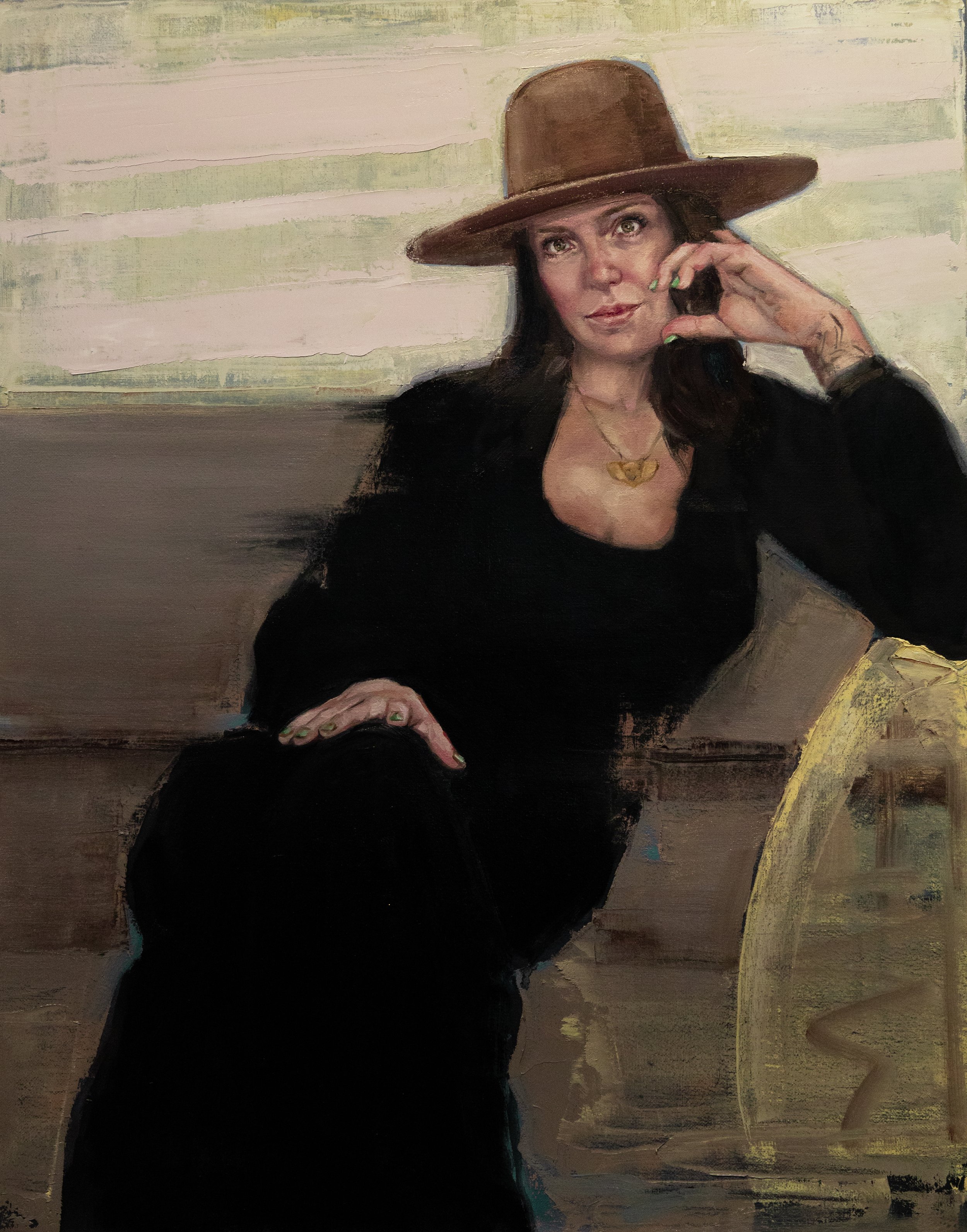
Diana Carolina Lopez | Kate’s Resilience, 2023 | Oil on canvas | 31 9/10 × 23 9/10 in | 81 × 60.8 cm
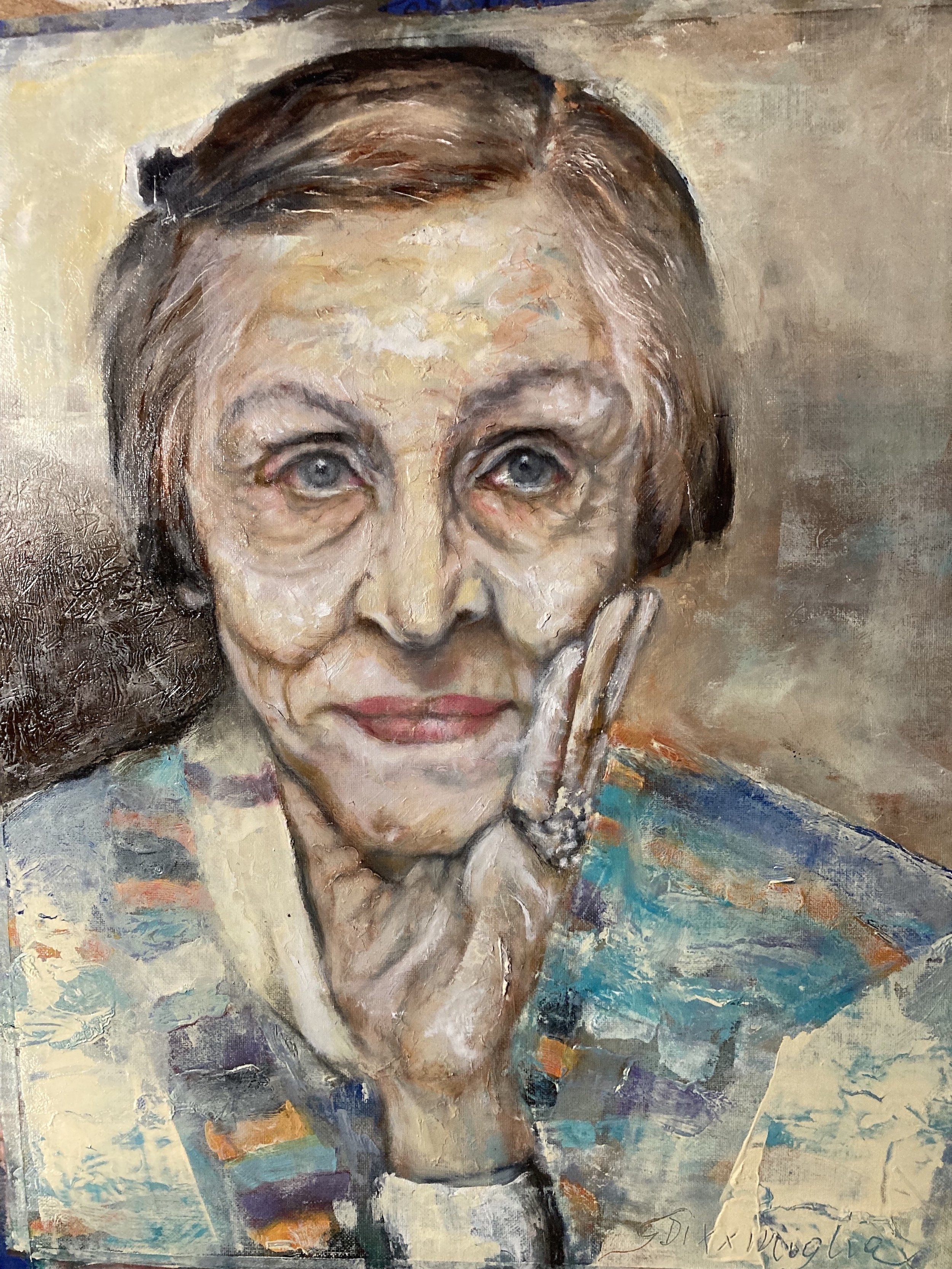
In the realm of painting, there's a profound beauty in artists painting their peers. This practice is more than just a mere portrayal; it's a tribute, an intimate dialogue between creatives who share a relentless impulse to express. The online exhibition "Artists Painting Artists" magnificently en- capsulates this concept, offering viewers a chance to witness one artist's perspective of another's essence.
Imagine a world where each brushstroke is an ode, where every color and line is a symbol of respect for a fellow artist's journey. In this unique form of portraiture, the artist is both a narrator and a participant, engaging in an unspoken conversation with their subject. It's akin to self-portraiture, yet here, the artist sees themselves through the eyes of another, providing an external viewpoint that is often enlightening.
The exhibition leads us through various narratives, each portrait unfolding a story that beckons us to explore deeper. There's a certain magic in the gaze captured by these artists. It invites us to ponder, to lose ourselves
in the depths of the subject's character. What lies behind those eyes? What stories do they tell? These are questions that resonate throughout the gallery.
Historically, the art world is rich with examples of artists painting their contemporaries. These portraits are not just mere records; they are tes- taments, eternalizing the honor and reverence of being the subject of a fellow artist's canvas. They forge a bond across time, connecting the past, present, and future in a continuous thread of artistic admiration.
As you delve into this exhibition, let each portrait intrigue you, drawing you into the narratives they weave. Each piece is a journey into the heart of creativity, a celebration of the artistic spirit that connects us all. This is not just an exhibition; it's a homage to the enduring bond between artists, a tribute to the shared passion that fuels their creative souls.
- Sergio Gomez, MFA
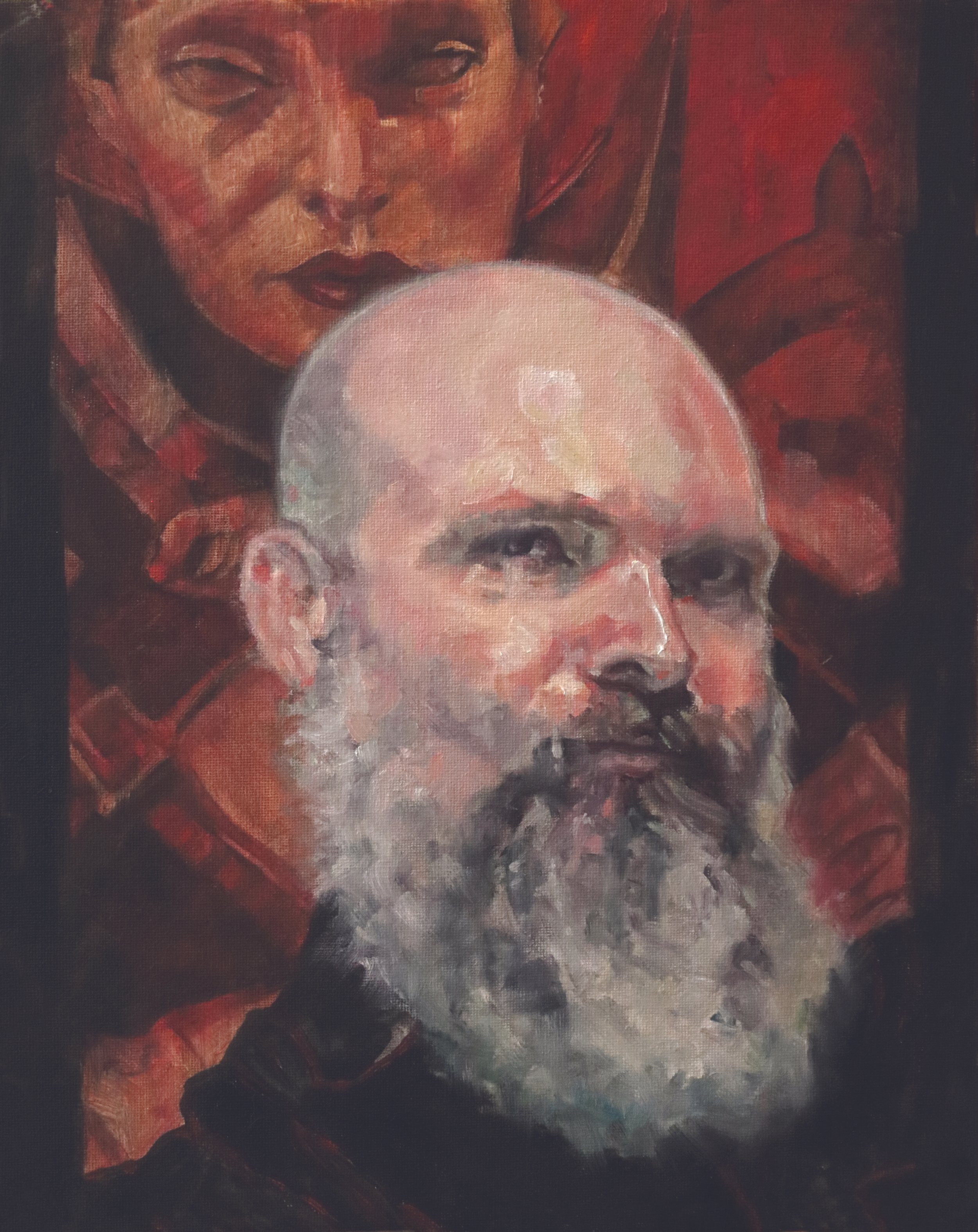
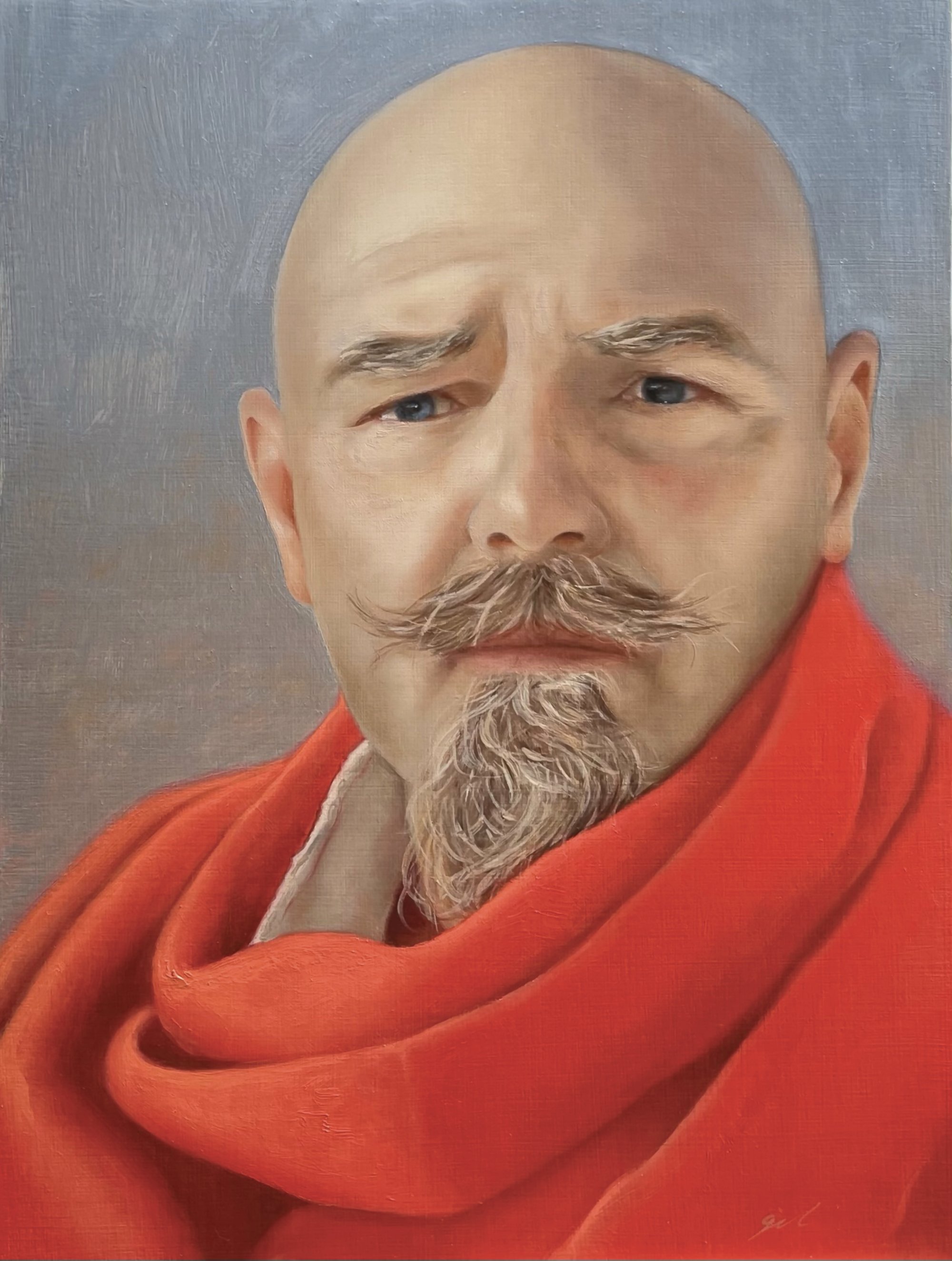
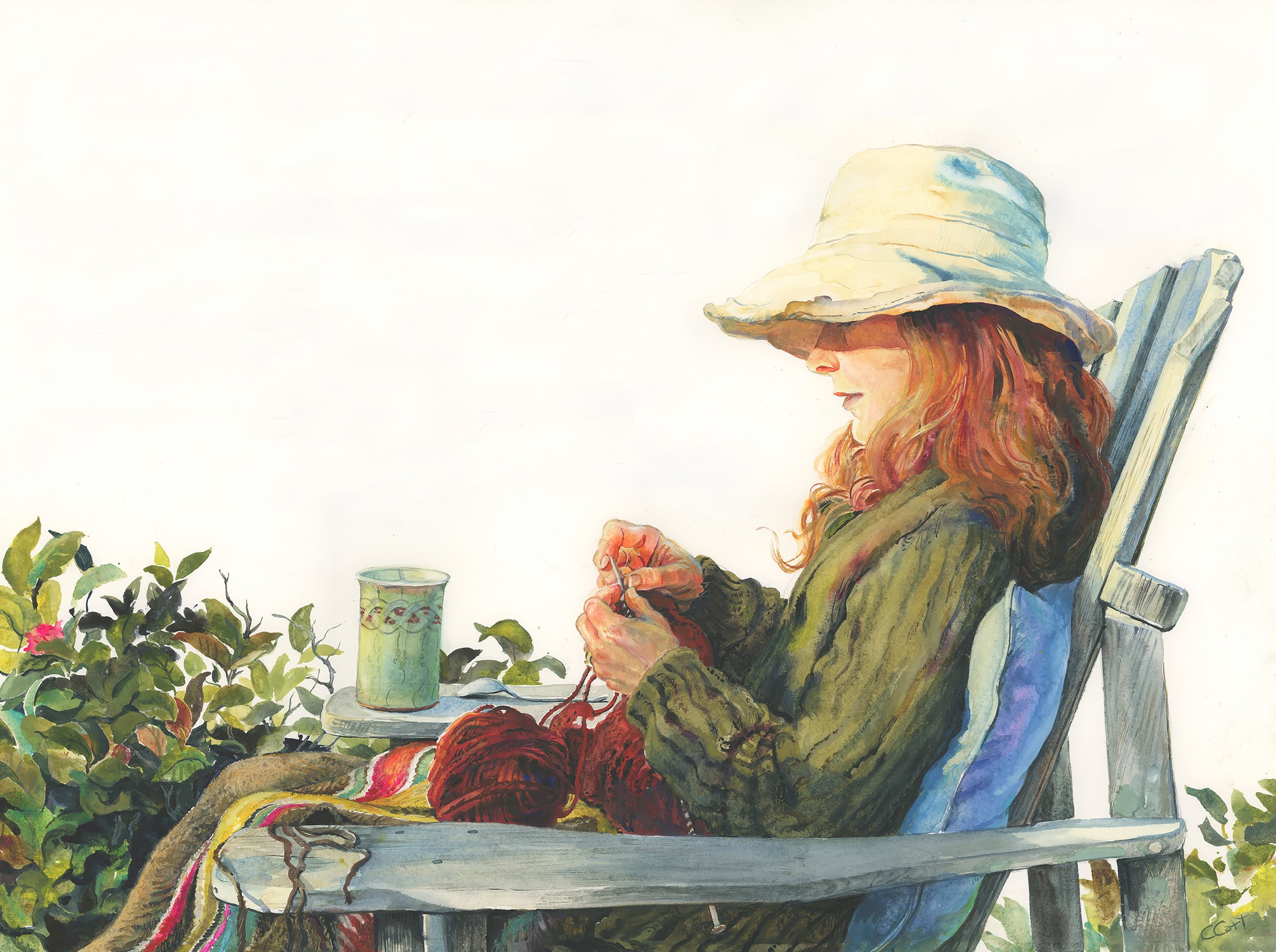
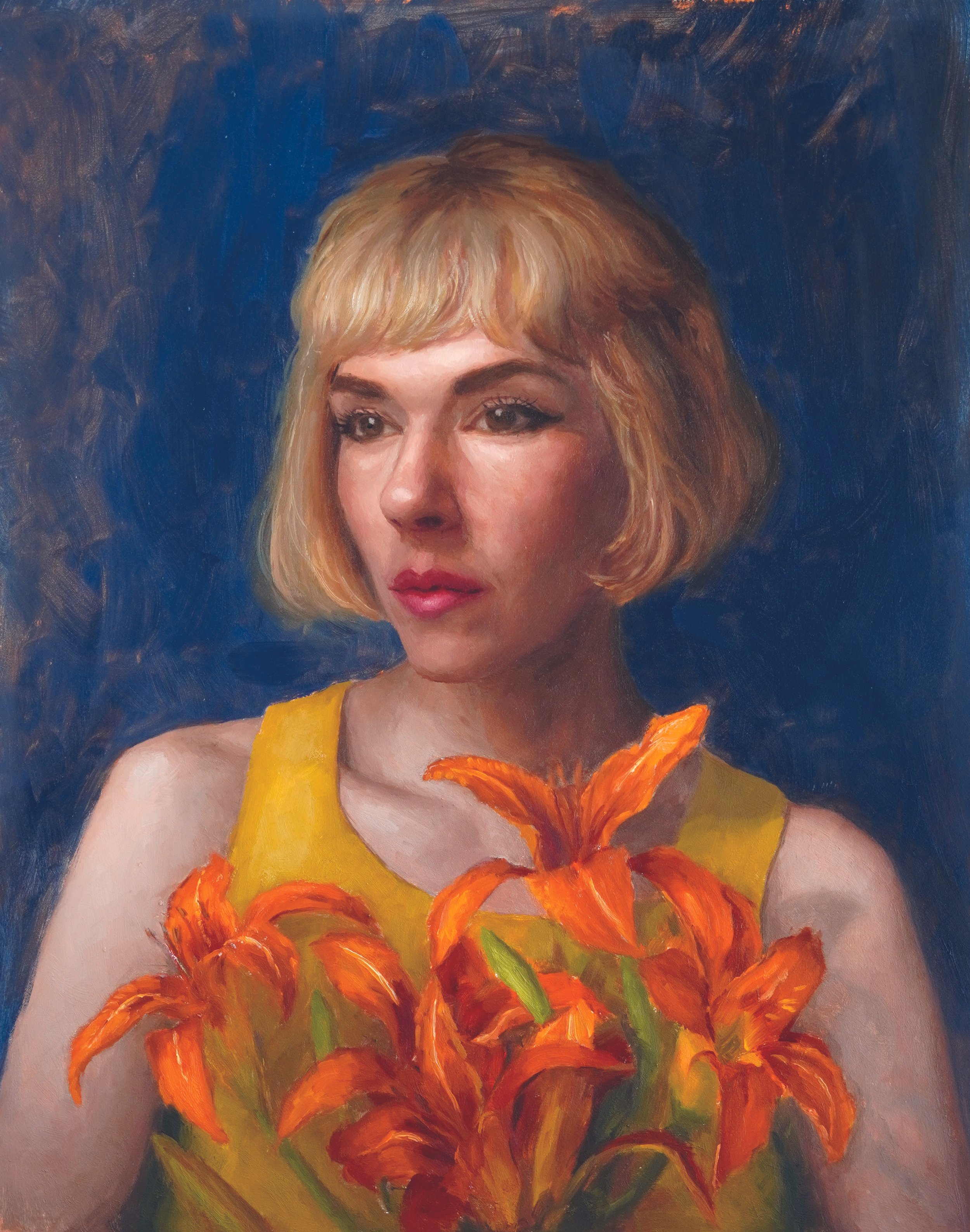
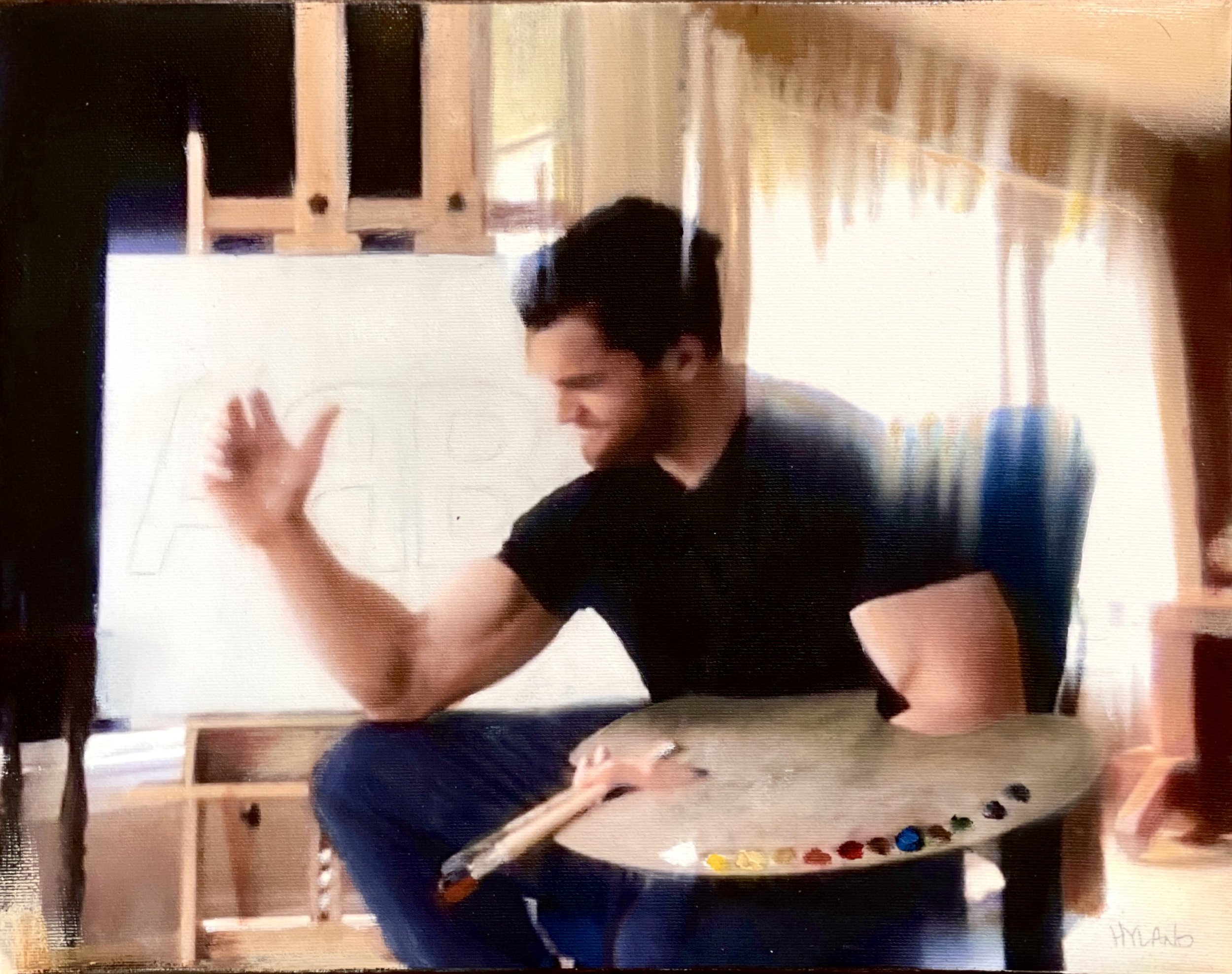
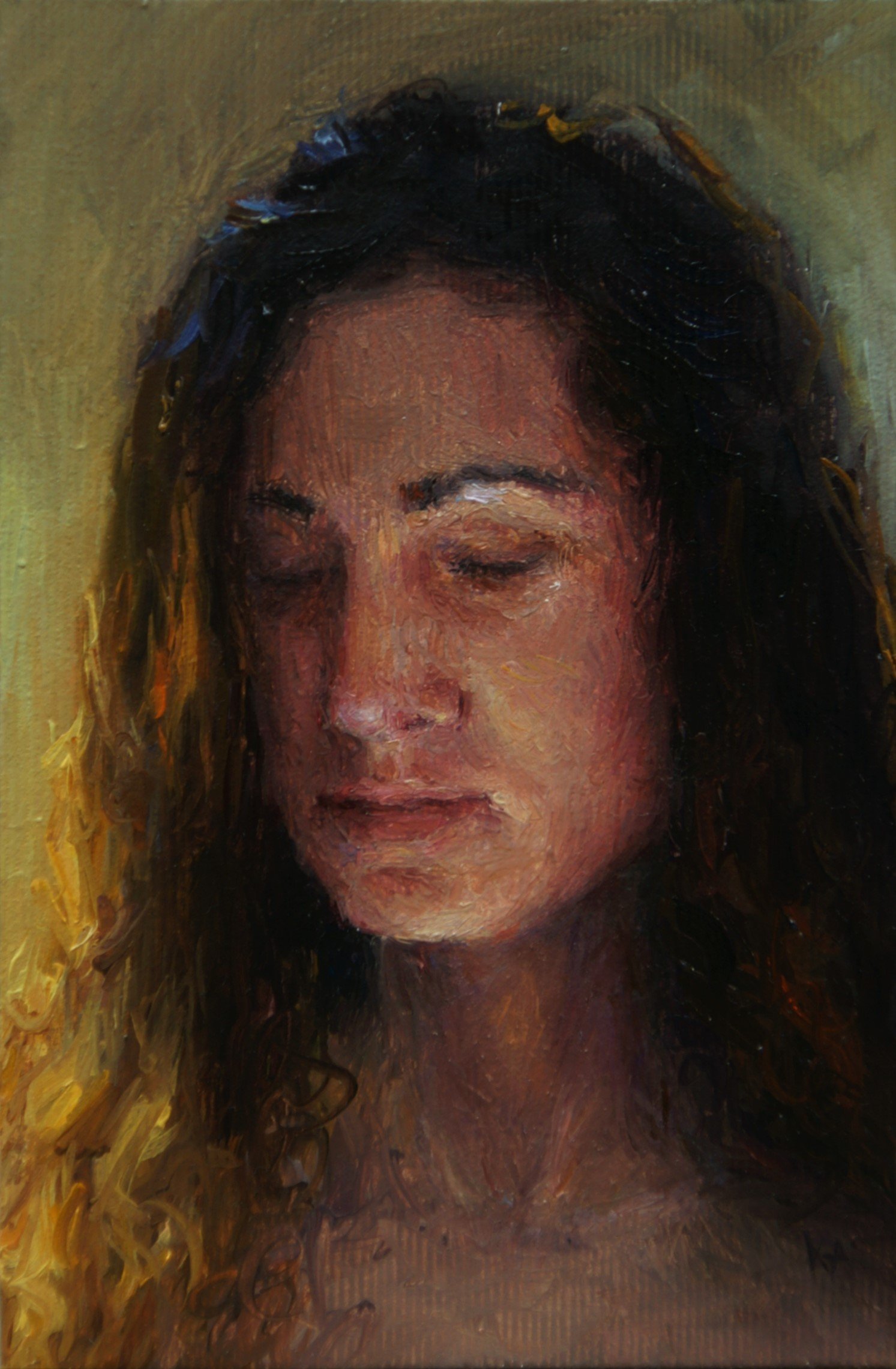
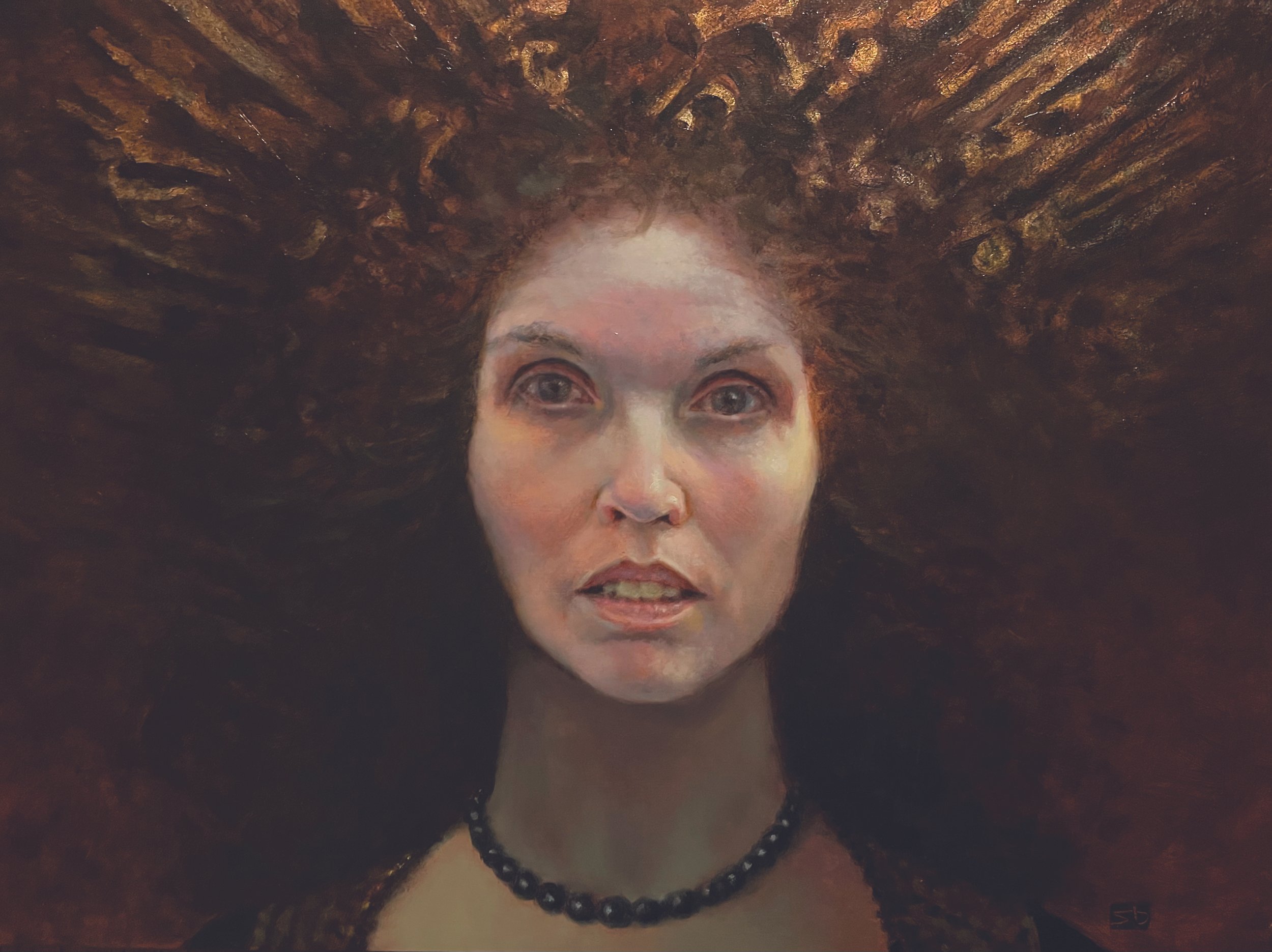
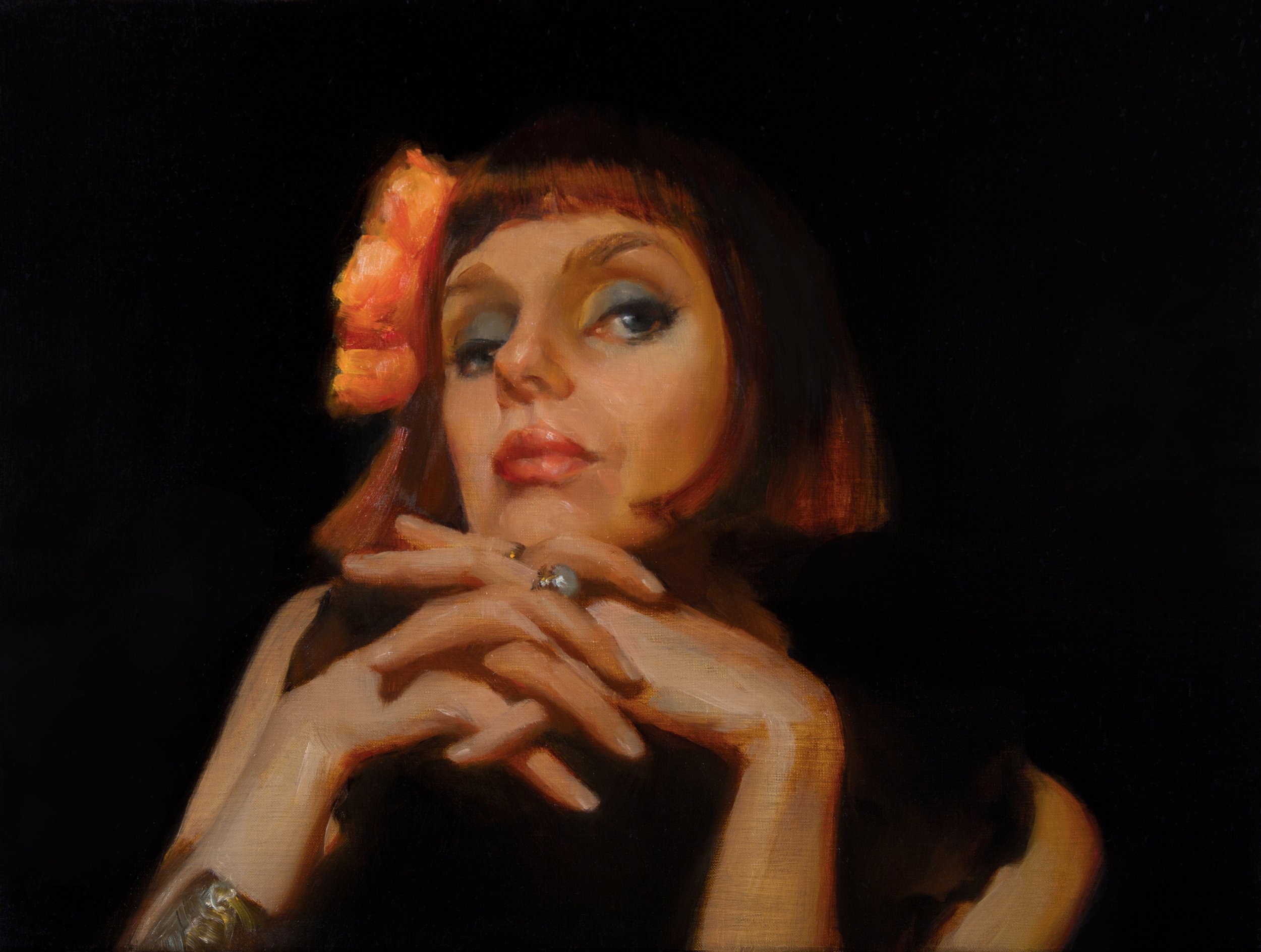
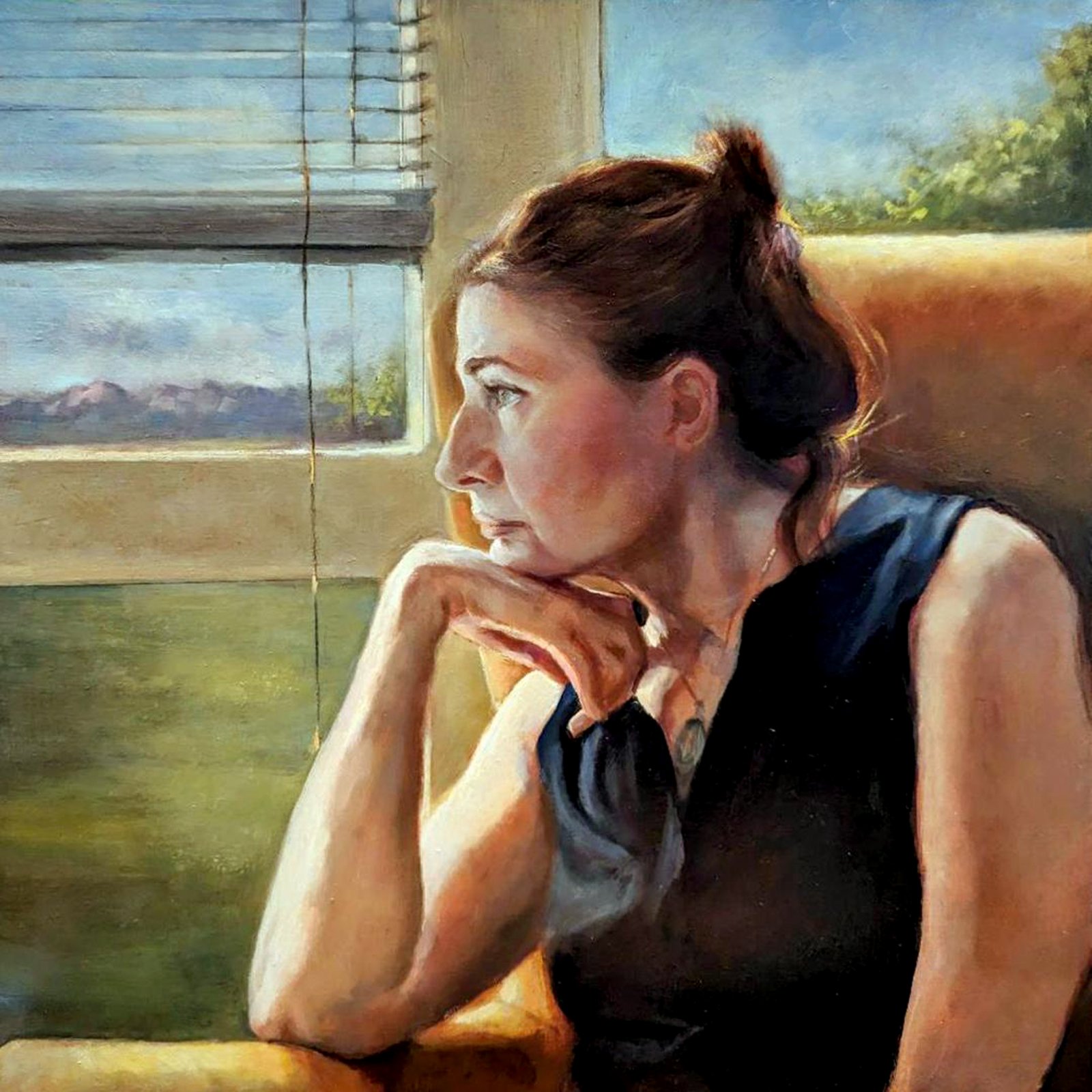
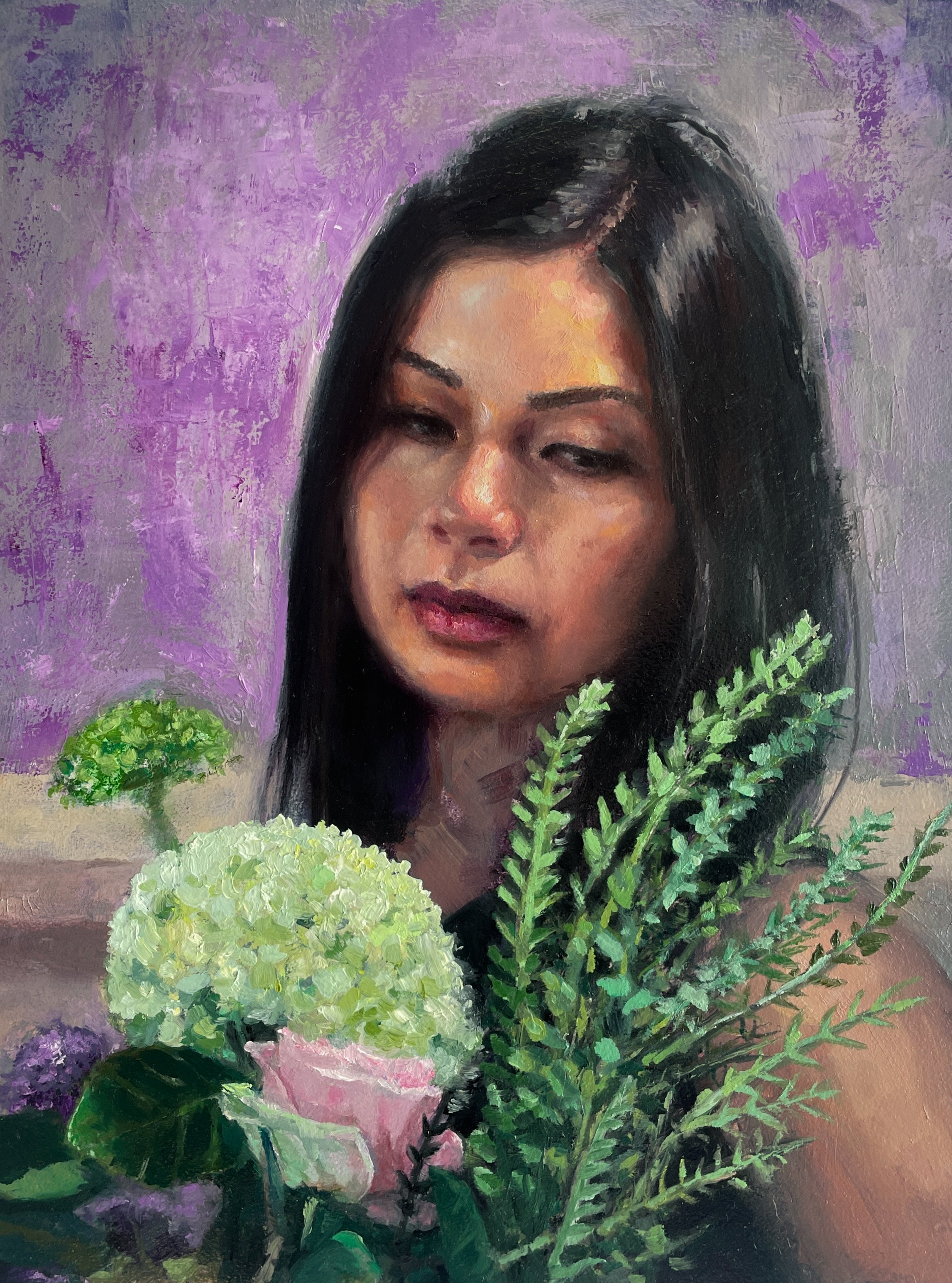
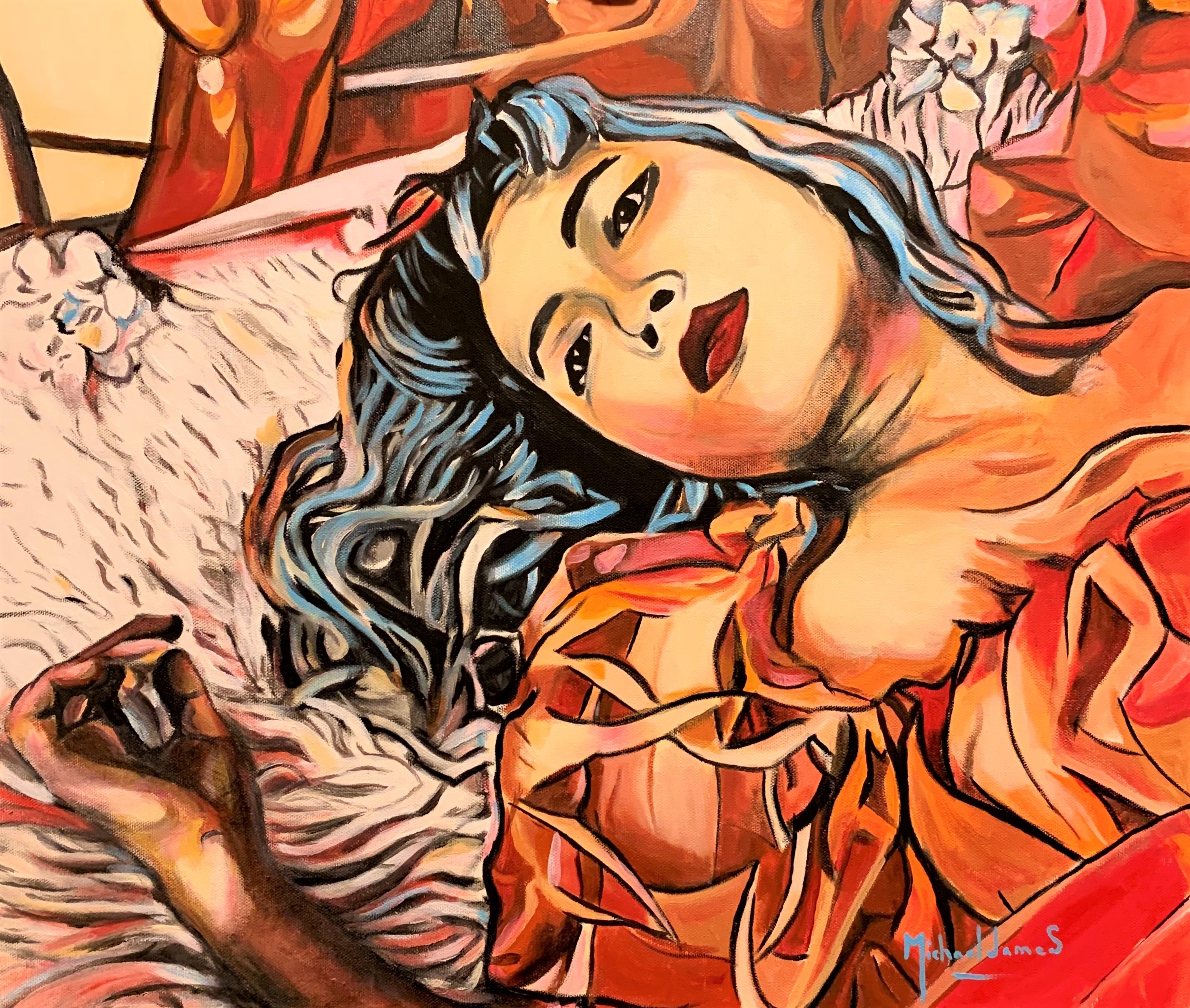
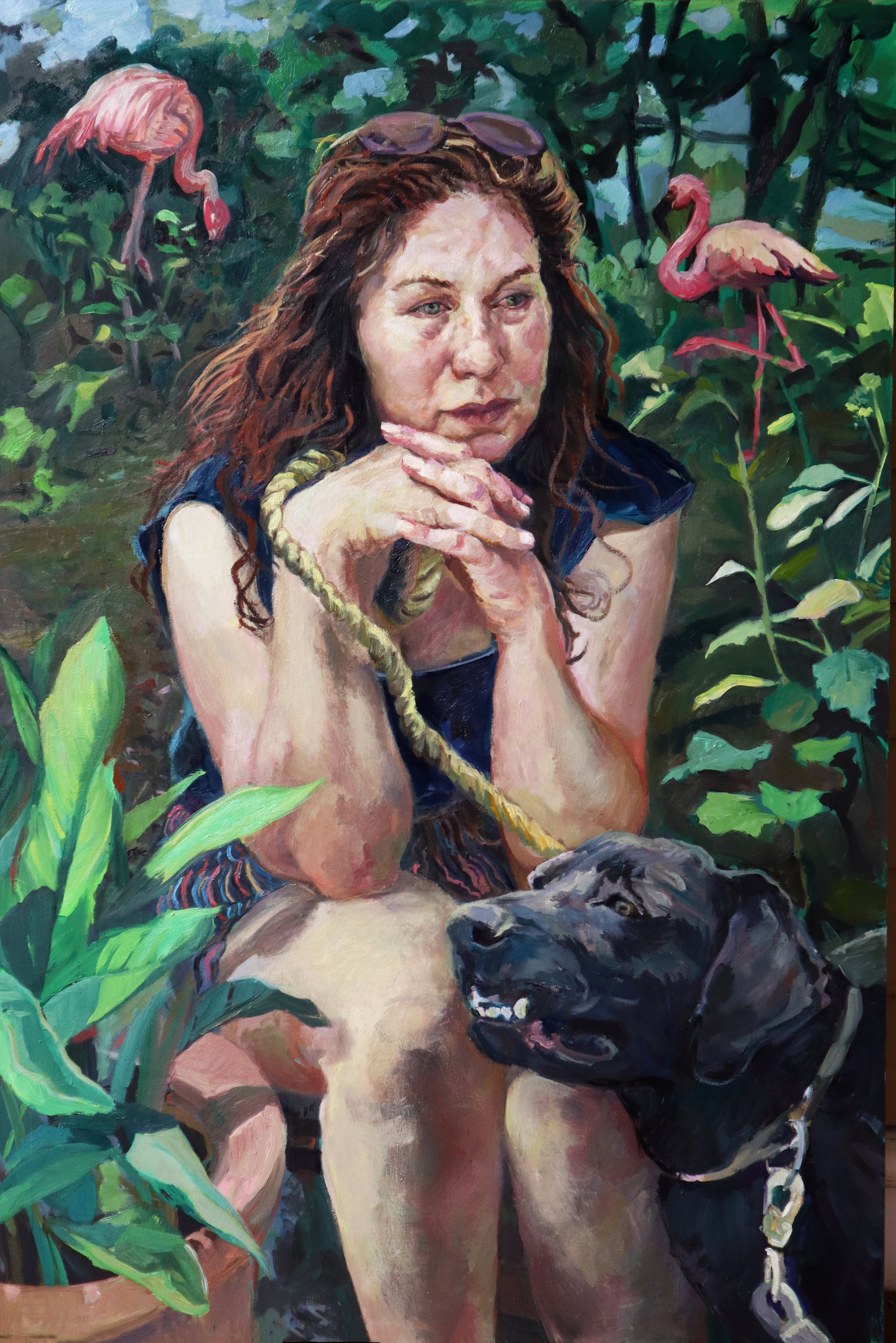
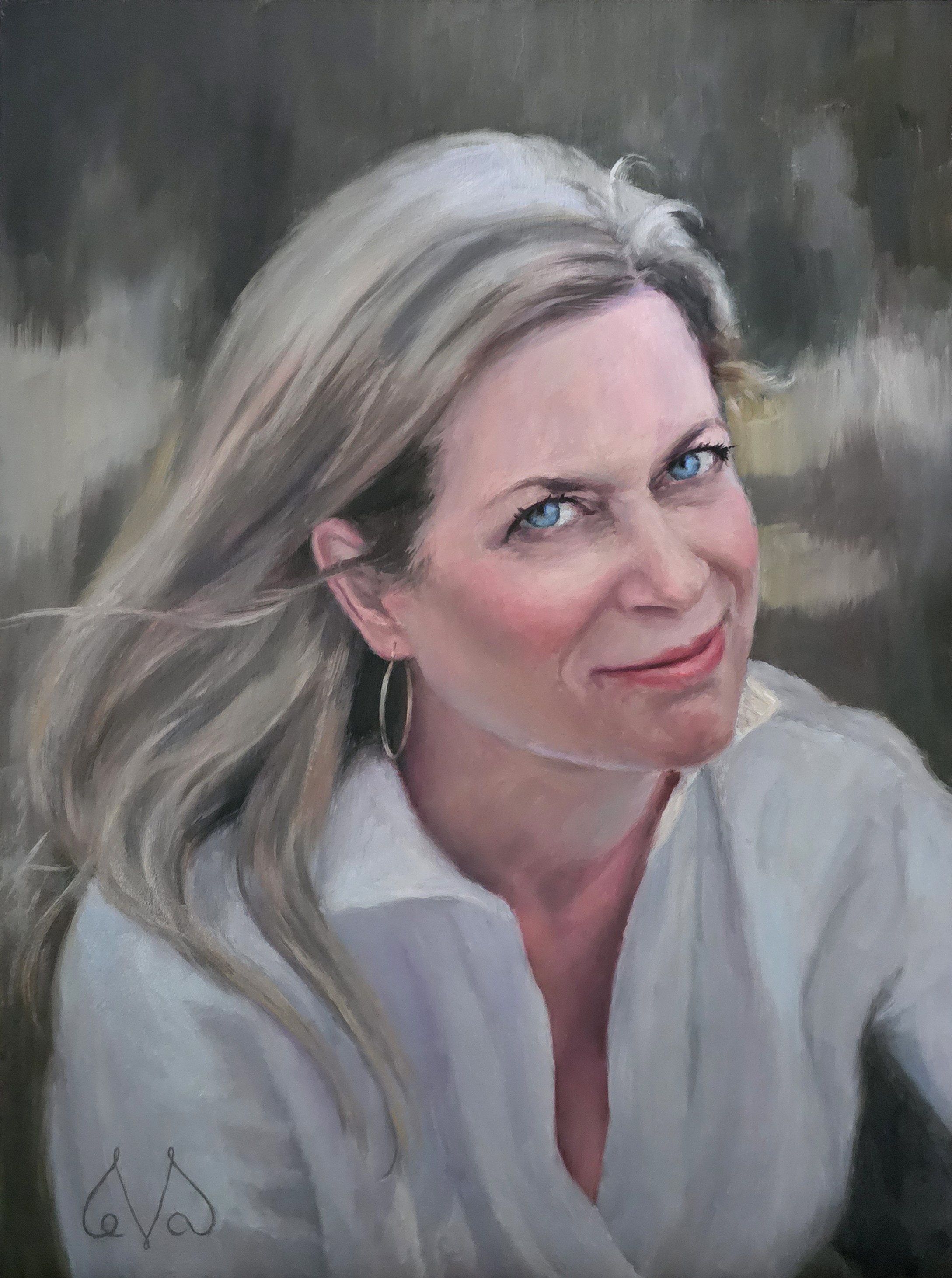
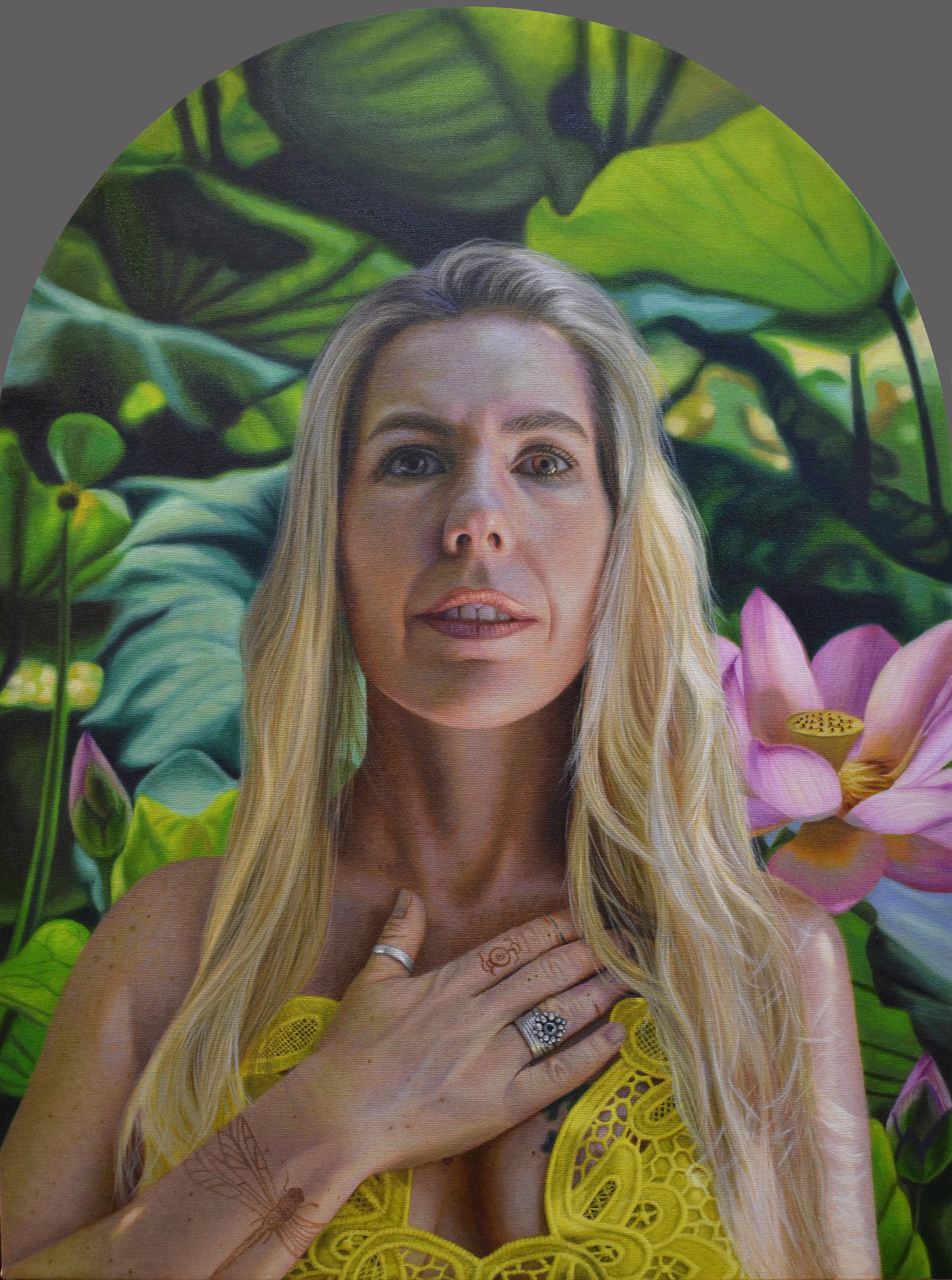
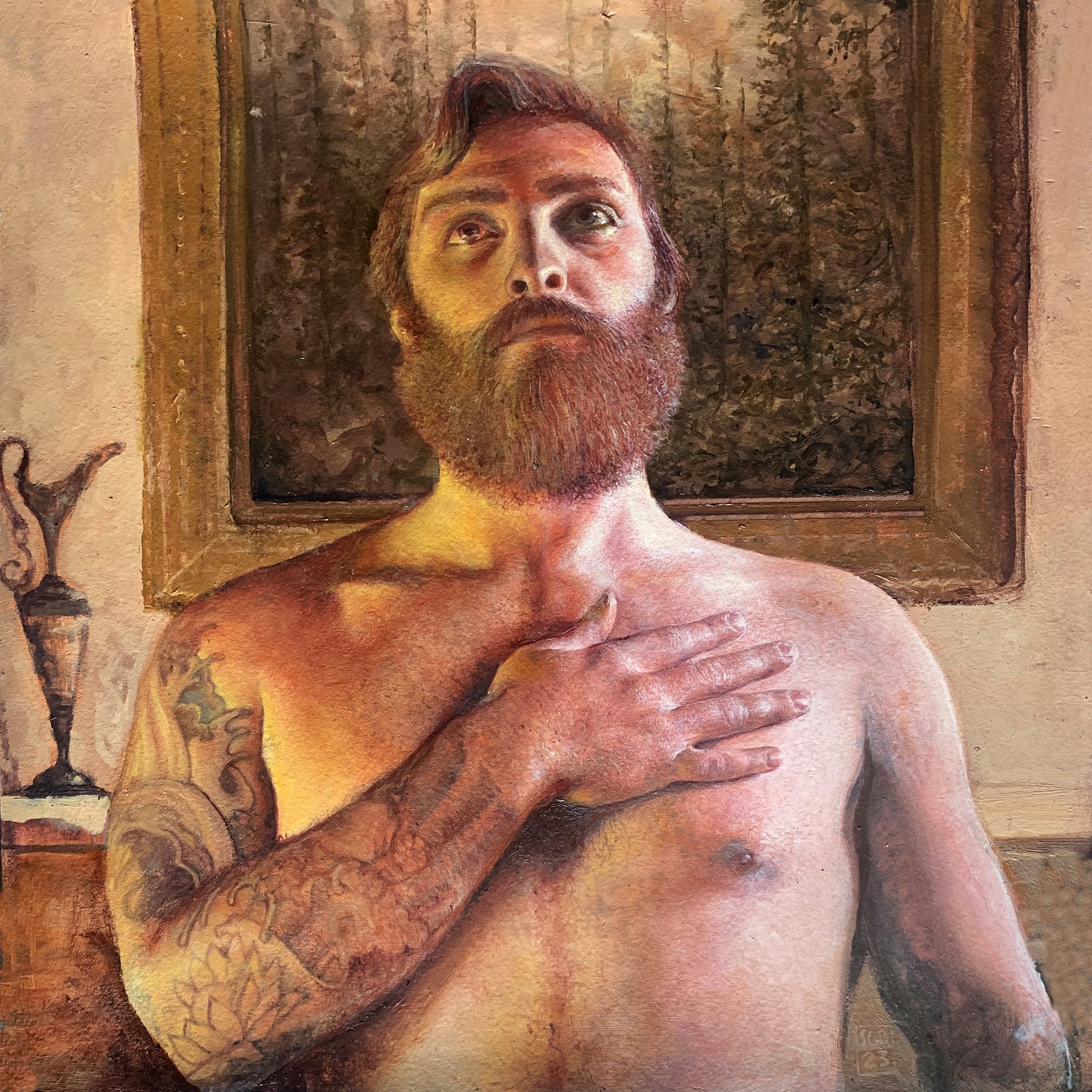
Erica Calardo
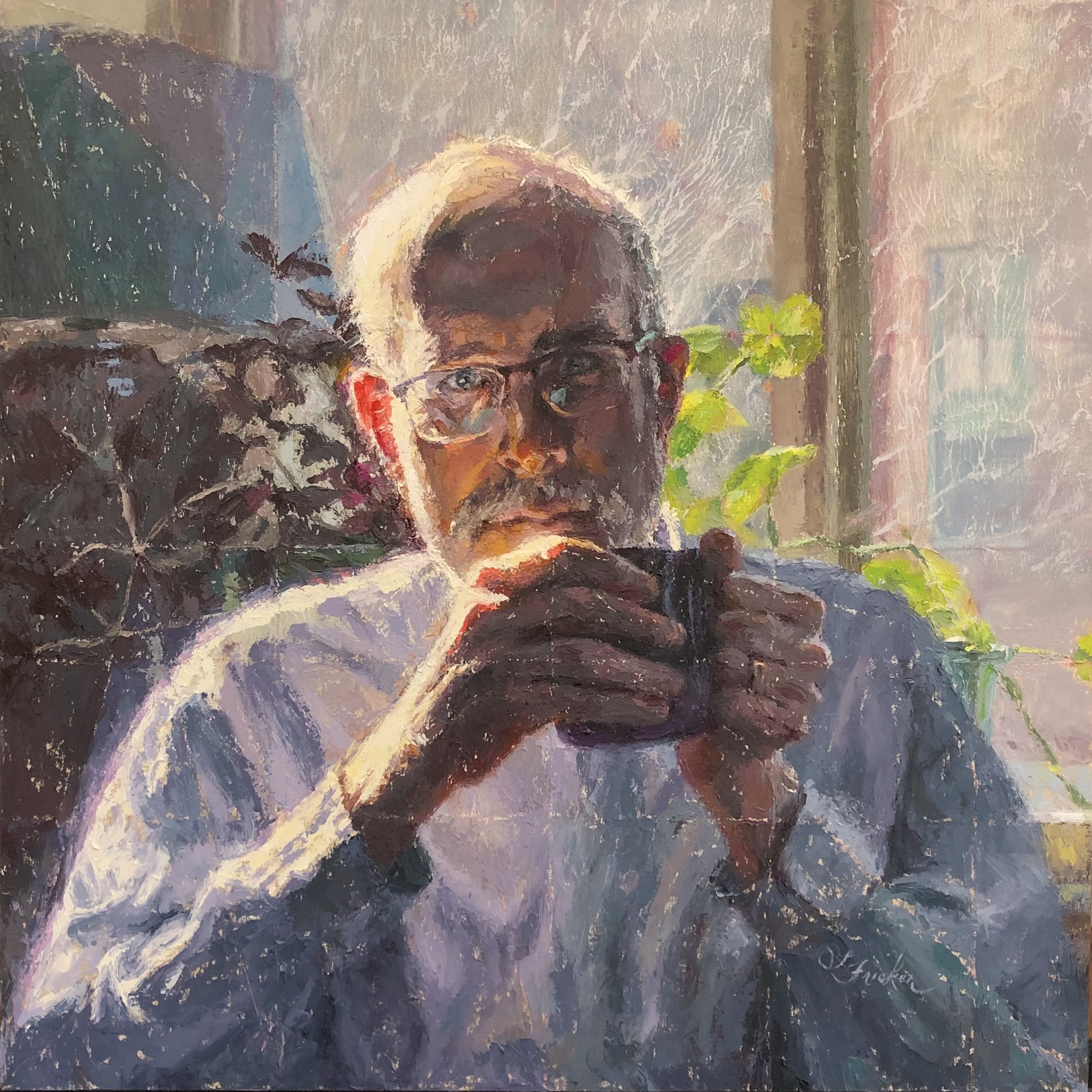
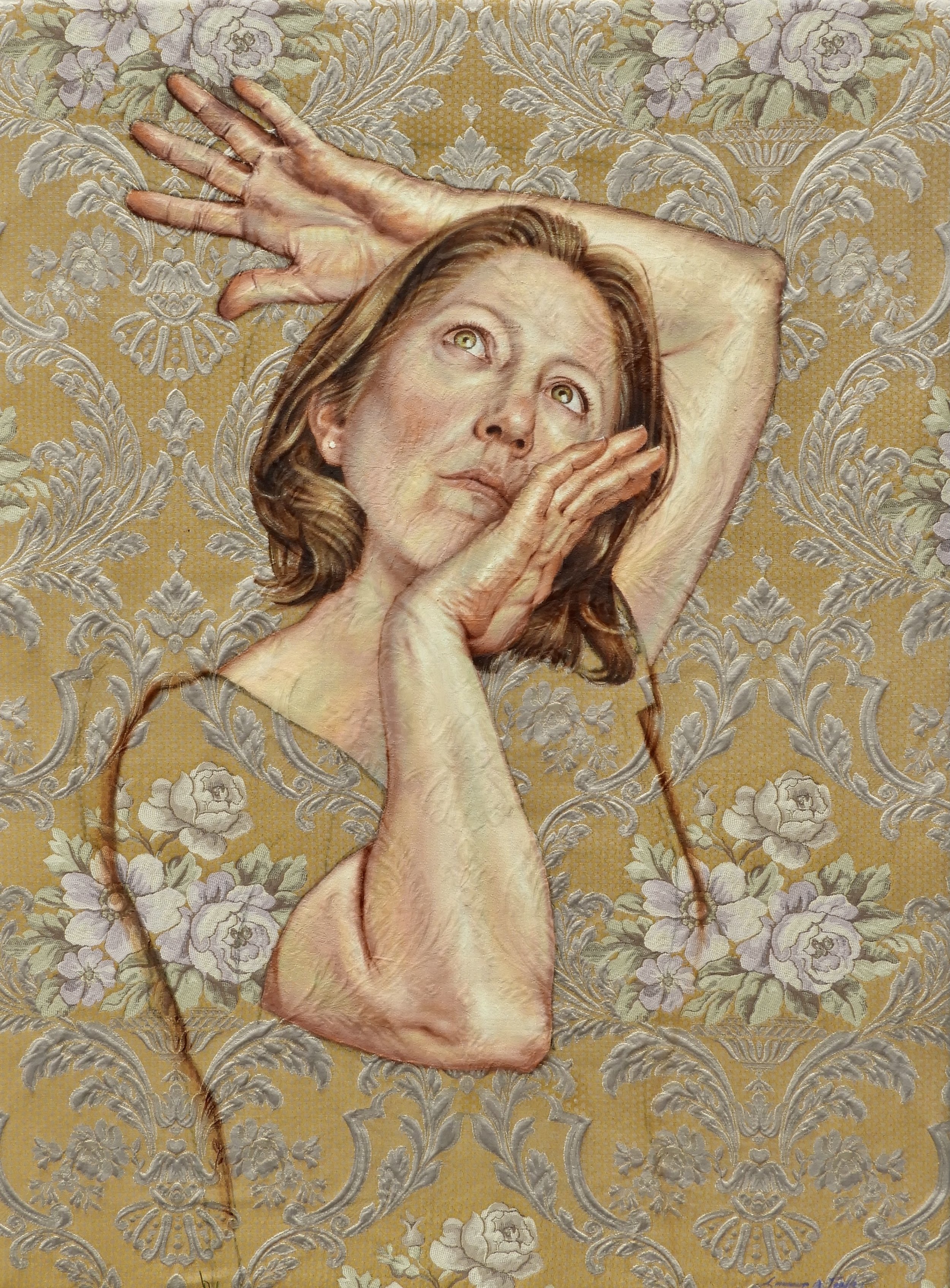
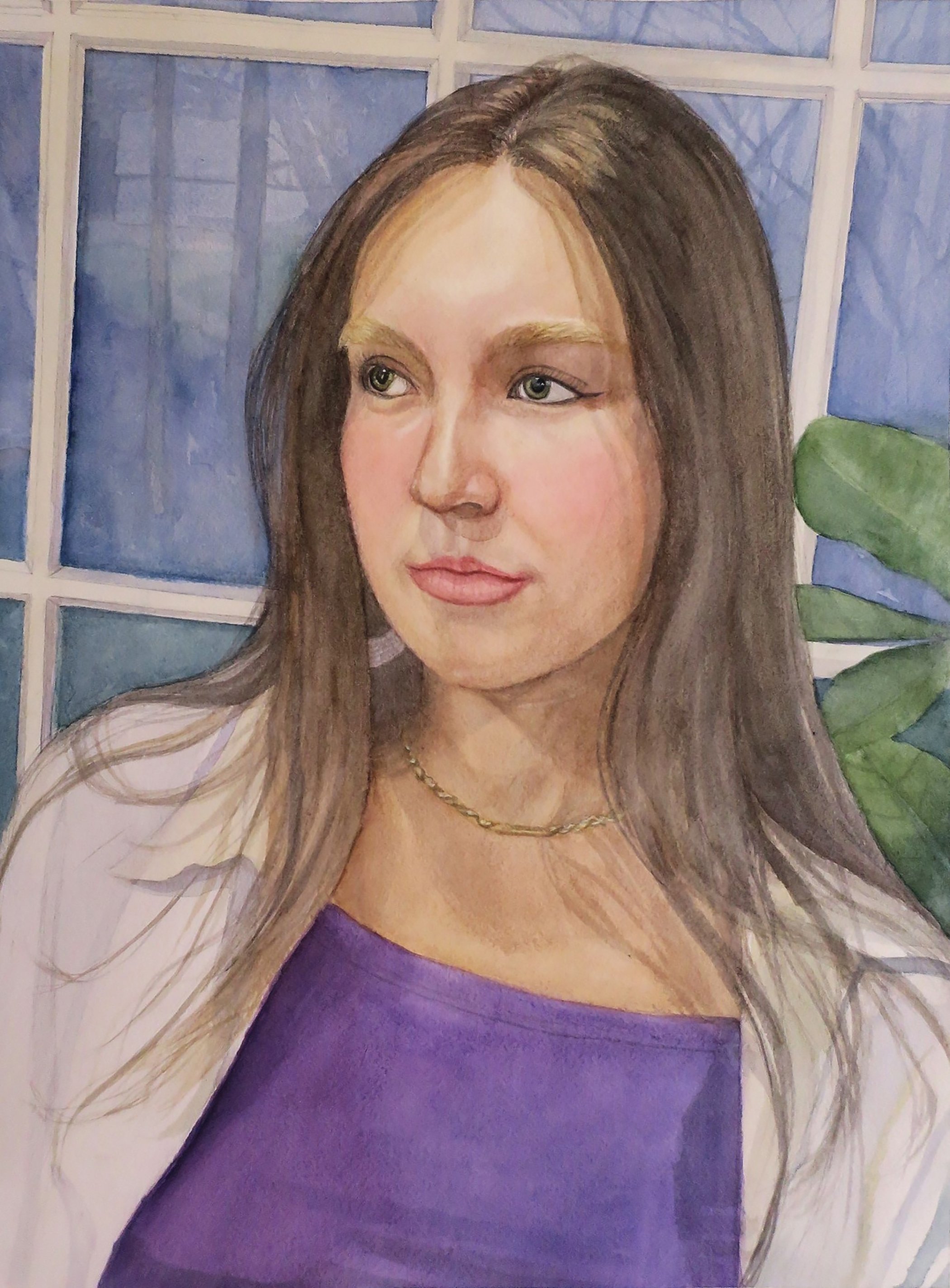
Erica Calardo is a figurative painter living and working in Italy. Her works in oils, watercolors, and pencils are windows on the solitude of lost souls. She explores the realm of Beauty, Grotesque, and Magic, by creating eery oneiric feminine figures who tell tales of long forgotten dreams, of an imaginary timeless past.
Deeply rooted in the Italian Tradition, her technique is inspired by the Renaissance and Mannerism old masters (Leonardo, Bronzino, and Lavinia Fontana above all). She is mostly self-taught and has learned her skills from old dusty books. She has recently studied academic painting with Italian master Roberto Ferri.
Since 2010, she has showcased her work in galleries in Italy (Mondo Bizzarro, Studio21), and abroad (La Luz de Jesus - LA, Auguste Clown - Australia, Modern Eden, Swoon, Flower Pepper, WWA, and Spoke Art, Distinction - USA, Pinkzeppelin - Berlin among others). Erica's paintings have appeared in several magazines and books, like Miroir Magazine, Beautiful Bizarre, Il Manifesto, Inside Art, Italian Pop Surrealism, Illustrati.
Lorena Lepori | 10 QUESTIONS →

LORENA LEPORI
Lorena Lepori's figurative oil paintings have a narrative based on the representation of feminine figures beyond gender, relating to everybody who can express the power of femininity. She uses cross-dressing to reach out and create iconic alter egos to expand and embrace a hidden part of her models’ personality through look transformation. She relies on myths, fairytales and clichés challenging the traditional representation of the matters, re-introducing them in a contemporary setting, mixing old and new symbols to relate more with universal concepts.
What is different from your art work than other artists working in contemporary realism?
I believe intentions are what makes every work unique. Mine are unpredictable, sometimes. I am mostly inspired by personal memories, abstract feelings and references from movies and music I grew up with. This combination of elements characterizes what I produce.
How important is process versus the end result?
In my case the two are deeply connected. Once the right idea hits me, the creative process evolves quickly; subjects, backgrounds, outfits and props are already in the picture before I touch the brush. They are so clear to me, that ,rarely, I found something different from what I have planned on my canvas.
What is your ultimate goal when creating contemporary realism?
Make the viewers curios about the references and amuse them with the twist I like to add in the composition.
What do you like best about your work?
In the process I like the attention I give to the concept. In the end, I like to see the materializing of my abstract idea.
What do you do you like least about your work?
I would love to be more spontaneous, less obsessed with technical details.
Why contemporary realism?
I consider myself a pragmatic soul, but nothing trigs me more than realistic figures, amazingly executed, immersed in the abstraction of an idea.
Which are your greatest influences?
My very first love was Tamara De Lempicka, flamboyant colors and beautiful women in glamorous and swoony poses. I think I got my imprinting from her, and that would explain the focus of my attention into feminine figures.
Caravaggio, and his incredible dramatic work, definitively represents a level I have always aimed to. Last but not least, Gustave Klimt who stimulated my curiosity with his ethereal pale women, wrapped in symbols and flat fabric.
What is your background?
I used to be a cartoonist and illustrator in my twenties. Life drove me away from that world for several years. Only in my forties I went back to my original passion, and I started to train myself as a painter, with the help of artist friends and a lot of self-teaching. It is now 9 years that I am totally committed to oil painting. And I love it!
Name three artists you'd like to be compared to in history books.
I would love to see my name mentioned next to the three artists named above, that would be of course very ambitious and not very humble.
Which is your favorite contemporary realism artwork today?
A huge masterpiece by Sergio Martinez - The portrait of Desire
Gemma Di Grazia | 10 QUESTIONS

1. What is different from your art work than other artists in contemporary realism?
Unlike still life, landscape painting or botanicals, my flowers are my live models. They have personality, express emotion and have a narrative. The story of my flowers is a dialog between color and the shapes they create; and the conversations can be harmonious, complementary, or energetic.
2. How important is process versus the end product?
The process of painting provides such joy. I love the fluidity of the oil paint, and the satisfying control of my brush. The discovery of the palette as it reveals itself is like watching an engrossing movie. Time doesn’t exist when I’m painting, I’m simply in a zone, a headspace of hundreds of intentional decisions flowing from my mind. The end product is, as some say, “when I stop painting.” To conclude a painting is to finish a good book: resolved and better for the experience.
3. What is your goal when creating contemporary realism?
My goal is to sell my work, so I may afford to continue painting! I heard Audry Flack say recently that art is healing; that can be for the artist and the viewer. Flowers are life-affirming, and beautiful. Beauty itself is healing, whether creating or appreciating it.
4. What do you like best about your work?
My new series of floral paintings fuse representational florals with elements of design. It is exciting and hopeful to make work with the goal of expressing beauty.
5. What do you like least about your work?
I have many more ideas than I can paint. Editing is crucial. My painting process takes time, so I never have enough.
6. Why contemporary realism?
I enjoy painting what I see, then putting it through my filter and express the beauty.
7. Which are your greatest influences?
My parents, who were artists.
8. What is your background?
A family of artists contributed to my early interest in art. My grandmother, mother and father all attended Cooper Union for art. My mother was a painter and my father, Thomas Di Grazia was a published illustrator and painter. I attended LaGuardia High School of Music & Art and then earned a B.F.A. from Hunter College. I also studied at S.V.A., Parsons, and the Art Students League of New York.
9. Name 3 artists you’d like to be compared to in the history books:
Instead of artists from history, I’d rather be along side the many artist friends whose work I admire.
10. Which is your favorite contemporary realism artwork today?
It is difficult to choose just one particular favorite contemporary realism painting, but some of my favorite contemporary artists are: Xenia Hausner, Hope Gangloff, Audry Flack, and Janet Fish.
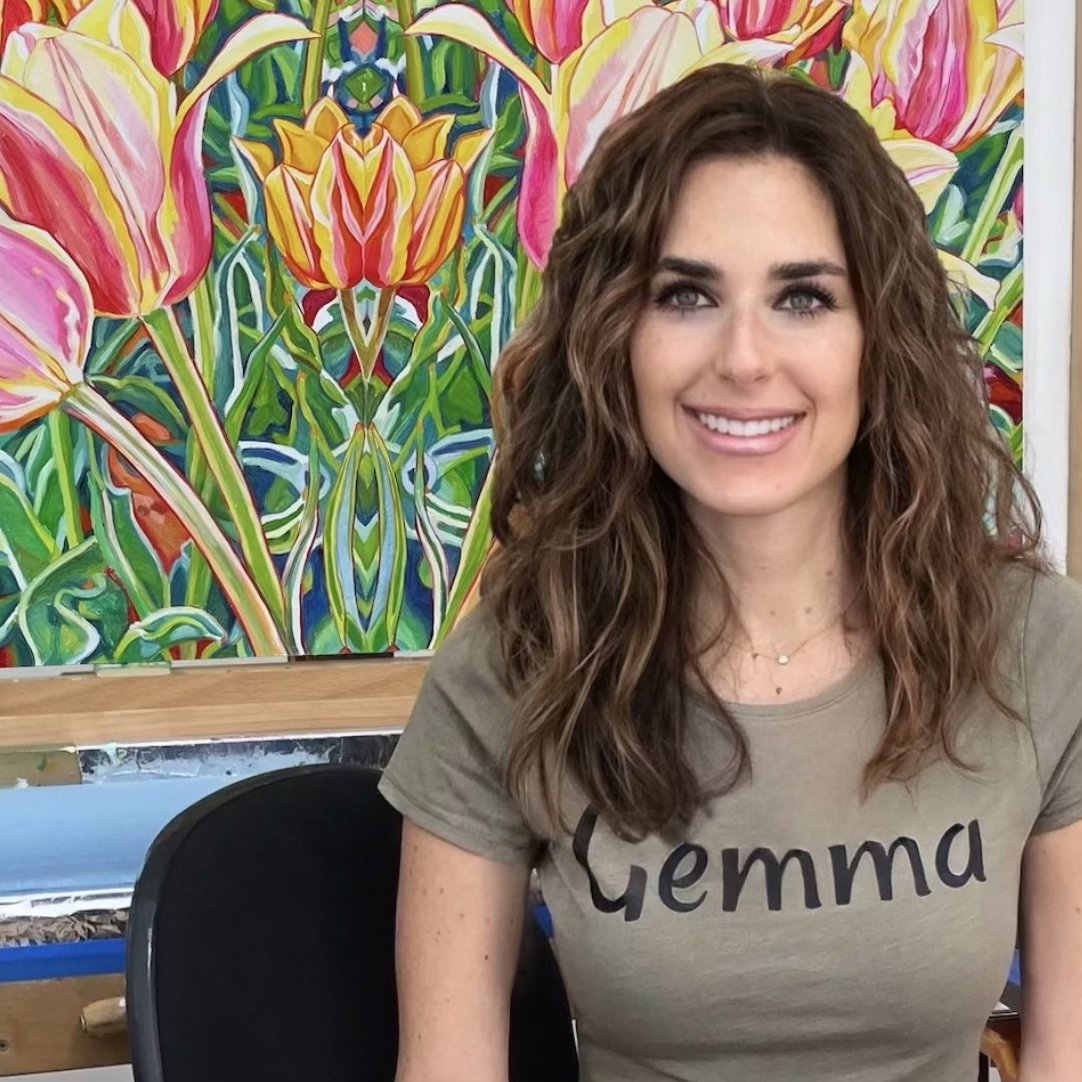
Di Grazia’s representational paintings are a celebration of color, light and form. Her compositions exhibit formal aesthetic elements, whether using soft pastels or oil paints, she uses a luminous and vibrant color palette that transform the formal foundation into something exciting and dynamic. Her work seeks to evoke the life-affirming beauty inherent in the natural world, and reveal what is extraordinary in the familiar. Ultimately, it’s not the subject matter that interests Gemma, it’s the tone, the gesture, color, light, scale and composition, that continue to absorb and inspire her.
Featured


Michael Van Zeyl | 10 QUESTIONS
1- What is different from your art work than other artists working in contemporary realism?
I think my work looks different because I work in three picture planes, a foreground, midground and background and they are clearly separated by dimensional feeling. I like to play with texture and use color harmonies to push the near too far feeling. I think the individual elements of my paintings are realistic but the overall composition is imaginative.
2- How important is process versus the end result?
I spent so much time developing a process with oil paint using material surfaces that were mostly handmade. I hoped to create textures that were not seen before. Being a painting teacher, I surrounded myself with more people who were focused on technique and HOW to paint. When you have a show and you discuss your work with more non-painters you learn they are talking about and focus on the final image and WHAT you painted.
3- What is your ultimate goal when creating contemporary realism?
To paint my truth but ultimately connect with a wide enough audience which make my paintings immortal.
4 -What do you like best about your work?
It is a reflection of my thoughts.
5- What do you do you like least about your work?
How long it takes me to call it complete.
6 -Why contemporary realism?
Because when I walk out of every museum and art fair I visit that is the genre that stays with me and can’t stop thinking about.

Field of Lilies, 2018
Oil on panel
20 × 30 in | 50.8 × 76.2 cm
7- Which are your greatest influences?
I’m going to go with the living ones because I had the opportunity to study with all of them starting with David Leffel then Steven Assael and weekend with Bo Bartlett.
8- What is your background?
I went to art school with a focus on illustration and design. I began painting after art school at the Palette & Chisel Academy where I was able to paint with dozens of great artists and talk art talk art 24/7.
9- Name three artists you'd like to be compared to in history books.
I like Vermeer for his thoughtful picture making, I like Thomas Dewing for his etherial quality and made up color harmonies and I like Degas because when you think of dancers you automatically think of him.
10- Which is your favorite contemporary realism artwork today?
Daniel Sprick’s Four Horsemen of the Apocalypse.
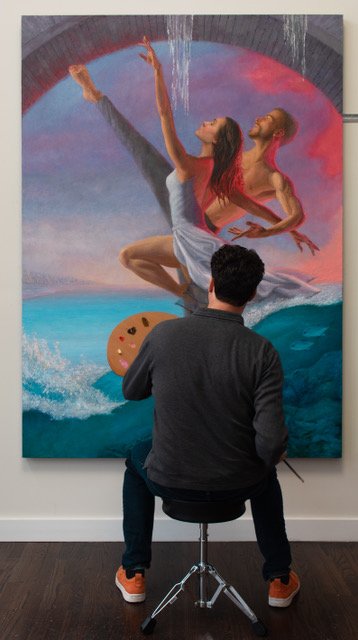
MICHAEL VAN ZEYL
Michael Van Zeyl is a full-time artist living and working in Chicago. His formal training began at the American Academy of Art, continuing on at Chicago’s Historic Palette & Chisel Academy. His art has been featured in several publications such as: American Art Collector, PoetsArtists, and American Artist magazine. Michael’s work is already appreciated in many public and private collections, such as the United States District Court, University of Chicago and was the 2014 recipient of the Dorothy Driehaus Mellin Fellowship for Midwestern Artists.
Lorena Lepori | 2022 Year in Review

Lorena Lepori's figurative oil paintings have a narrative based on the representation of feminine figures beyond gender, relating to everybody who can express the power of femininity. She uses cross-dressing to reach out and create iconic alter egos to expand and embrace a hidden part of her models’ personality through look transformation. She relies on myths, fairytales and clichés challenging the traditional representation of the matters, re-introducing them in a contemporary setting, mixing old and new symbols to relate more with universal concepts.
Was 2022 a good year for you?
In terms of productivity I am very satisfied. I am a compulsive painter. I managed to create 12 medium sized pieces plus one on its way that will hopefully be ready before the end of this month. So that would make it 13. My new lucky number!
My work has also been published in two main art magazines, selected for two online exhibitions with 33 contemporary gallery, and I also had my first experience as a painting teacher which was great since the interaction with students gives me the opportunity to grow more.
Last but not least, this year I had the privilege to be included with several of my works in the Lunar Codex Project headed by Dr Samuel Peralta.
Were you included in any shows?
Two of my postcard size works were part of the Online Exhibition ‘Mujer’ curated by Didi Menendez. My painting ‘Periodt’ is part of the online show ‘Exertion’ curated by Daniel Maidman and ‘Unheard’ has been included in the online show ‘Seeking Madonna’ curated by April Carter.
Were you published in any art magazines or periodicals?
This year one of my gigantic pieces from my 2021 collection about Drag Queens impersonating feminine clichés, ‘The Barbie Doll’, was featured in the November/December Issue of Fine Art Connoisseur as part of the Today’s Masters section ‘Dressed to impress’.
One of my most recent piece “Periodt” was published in American Art Collector as part of the Show Preview curated by Daniel Maidman ‘ Extertion’
How has social media affected your daily practice?
Social media are always fun, mostly because you can have an immediate feedback. The idea of assigning a soundtrack on a specific painting to emphasize the mood of the work is also a little game that I enjoy playing. All of this despite the infamous algorithm which I hardly comprehend, so especially in the last months, it was very hard to get all the views and the engagement I expected to achieve with my posts. It’s entertaining though, so I will keep playing with it!
What are you looking forward to in 2023?
My wish list could be quite long, but to sum it up: being accepted as a finalist at international ARC Salon would be a great achievement- Also, the growing interest in my work will at some point convert in to more sales. I think 2023 is perfect for that!

Carlos Fentanes | Year in Review

Was 2022 a good year for you?
I had a very specific goal for 2022 and it was being included as a Finalist in the 16th ARC Salon, and I achieved it. So in this sense was a very good year, I didn’t have a goal for selling art or having a show.
I like when this happens: you set a very detailed goal and you achieved it.
What were some of the highlights in your art career?
My work was included in 4 Art Catalogs that will be part of The Lunar Codex that next year will be deposited on the moon. My work “Sunbath” was in the show Painting The Figure Now 2022 curated by Dr. Samuel Peralta at the Wausau Museum of Contemporary Art.
I am finalist in the prestigious 16th ARC Salon with my piece: Self Isolation or the Unsung Story of How Dreams Unconsciously Interfered with my Daily Life in two categories, Drawing and Figurative
My first collective show in Ireland in the Art Show Pandemic curated by Conor Walton with my piece “Self Isolation in the Manner of an Ex Voto with music of Bob Dylan” I was in two Online exhibitions at PoetsArtists: Mujer and Desperately Seeking Madonna.
What were some of the pitfalls?
No sales, only a print from Saatchi Online. I was rejected 14 times from shows, publications, public art, grants but I don’t know if is entirely bad, in some ways it means that I was very active sending submissions.
I also felt disappointed when my work was not included in the show “Is this a photograph?” My follower growing in TickTock has been null for six months, I think I have been shadow banned there.
Did your art sell?
No, but that was not one of my goals.
Were you included in any shows?
Mujer, PoetsArtists
Painting the Figure Now, WMOCA
Pandemic, Sol Art Gallery, Dublin Ireland
Desperately Seeking Madonna, PoetsArtists
Were you published in any art magazines or periodicals?
I was published in the catalogs of the art shows
How has social media affected your daily practice?
I have been shadow banned from TikTok and my posts are constantly censored because of nude content. My followers have grown organically on Instagram but on TikTok my followers haven’t grown in the last 6 months.
It was not a good year for me on my social media channels.
What are you looking forward to in 2023?
I want to participate on the Salt Springs Art Prize for Canadian Artists and I’m also interested in the show Painting the Figure Now 2023 curated by David Wilson and Kiki Kim. And if I am lucky enough, and my work started to gain traction, I could be included in an Art Fair.
Debra Lott | 2022 Year in Review

Debra Lott [b.1951] is an American figurative artist from South Florida, now based in Louisville, KY. Her work focuses on figurative paintings that empower women and reflect upon the human experience. Her portfolio includes socially conscious themes that communicate human values and emotions. Lott completed her undergraduate degree at Palm Beach Atlantic University and received her Masters of Art in Teaching Art from Florida Atlantic University. She studied privately under Graham Ingles, EC Comic illustrator.
Lott has practiced oil painting and portraiture while instructing art classes since 1971. Selected exhibitions include: Evansville Museum of Fine Art, KY, Owensboro Museum of Fine Art, KY, 33 Contemporary Gallery, Chicago, Eastern Kentucky University, Xavier University, Cincinnati and Wausau Museum of Contemporary Art, Wisconsin.
Selected awards include: International Artist Magazine Art Prize Competition, Finalist Award, American Women Artists Spring Show, Outstanding Figurative Award, 16th International ARC Salon Competition, Finalist, Portrait Society of America, Member’s only Competition, Finalist, and Save Art Space- Solo Public Art Exhibit installed in Louisville, KY and Seattle Washington. Recent publications include International Artist Magazine and New Visionary Magazine. Lott is a grant recipient from Kentucky Funds for the Arts and three-time recipient from Kentucky Foundation for Women. Notable collections include Norton Cancer Institute and Family Scholar House of Louisville, KY.
Debra Lott is among a select group of artists to have their artwork going to the moon (digital and analog technology in time capsules) and the first of women artists to have her painting on the lunar surface. The Lunar Codex is the first project to put the work of women artists on the Moon and also represents the first figurative realist art on the lunar surface. Lott’s work was selected by Samuel Peralta the payload coordinator and curator for the Lunar Codex.
Was 2022 a good year for you?
2022 was a good year for my art career as many of my personal art goals were realized. An important event for me was having my painting, Passage selected as a finalist in the figurative category of the 16th International Art Renewal Salon Competition.
What were some of the highlights in your art career?
I’m among a select group of artists to have their artwork going to the moon (digital and analog technology in time capsules) and the first of women artists to have her painting on the lunar surface. The Lunar Codex is the first project to put the work of women artists on the Moon and also represents the first figurative realist art on the lunar surface. My painting, Blue Heron Dreams was selected by Samuel Peralta the payload coordinator and curator for the Lunar Codex.
Were you included in any shows?
My work was selected for an exhibition at the Owensboro Museum of Fine Art, KY and The Cressman Center, University of Louisville. In the month of October, I had a solo exhibit at PYRO Gallery in Louisville KY. I exhibited 15 of my paintings including five new paintings in a new series titled, Tangled Threads.
Were you published in any art magazines or periodicals?
I was delighted to open the new, beautiful Visionary Art Collective (Spring Issue 2) and see a two-page spread featuring my bio, artist statement and two paintings.
Emma Kalff | 2022 Year in Review

Emma Kalff is an American visual artist based in Colorado. She is a representational oil painter whose work recreates the surreal atmosphere of dreams. A road trip across the USA inspired a series of works that resulted in her first solo exhibition in Telluride, CO. Additional recognition followed, and in 2022 the artist’s work was featured in Southwest Art magazine 21 Under 31: Young Artists to Collect Now. Kalff studied at the New Orleans Academy of Fine Arts.
Was 2022 a good year for you? What were some of the highlights in your art career?
This year I was published in Southwest Art's "21 Under 31: Young Artists to Collect Now", Aesthetica magazine, as well as in American Art Collector. I am so thrilled about being published in these magazines - it's certainly an elevation of my career. It gave me the push I needed to go into painting full-time.
How has social media affected your daily practice?
Social media is a lot to keep up with! Often I find that I just want to paint when I'm in the studio, but I end up having to film and photograph a lot of the process for social media content. I'm happy to be able to share my process at the same time though. It's a bit of a double-edged sword.
What are you looking forward to in 2023?
I'm very excited to continue working on my current series of paintings, Holding Your Horses. I have spent the last few months building up a large portfolio of work, and I look forward to building relationships with gallery owners in the Southwest and beyond.
Jeff Mathison | 2022 Year in Review

Was 2022 a good year for you?
Yes, very good!
What were some of the highlights in your art career?
My best news of 2022 was acceptance of “The Influencer” into the American Watercolor Society 155th Annual Exhibition at the Salmagundi Club in New York City.
“The Return” received a minor prize at the Philadelphia Watercolor Society Works on Paper show.
“The Veteran’s Journey” received the The Stafford Family Award for Outstanding Portrait at the 41st annual Adirondacks National Exhibition of American Watercolors, NY.
What were some of the pitfalls?
The major pitfall of the year was realizing at the closing reception of the American Watercolor Society that only 2 out of 100 watercolors, created by some of the best painters in that medium, were sold!
Did your art sell?
A non-figurative painting “Tangle” was accepted into the Houston Watercolor Society 45th annual show. I succeeded in selling that after the show to a local buyer for my best sale of the year, $1000.
Were you included in any shows?
“Oak Tattoo” was accepted into the Lore Degenstein Gallery 13th Annual Figurative Drawing and Painting Exhibition. There were 500 entries in this national level show. It’s one of the rare shows that doesn’t shy from nude figures so I was especially pleased to to be accepted from hundreds of other applicants.
“Smile Awhile”, a plein air painting of a tow truck being used to advertise an ice cream stand, was accepted into the San Diego 2022 Plein Air Exhibition.
“The Three Artists” was accepted into the Pittsburgh Watercolor Society Exhibition. The Society awarded me signature membership for having been accepted into three of their shows.
Were you published in any art magazines or periodicals?
Another fine honor was that ”Facing the Storm", was featured in April 2022 Fine Art Connoisseur magazine, in “The Timeless Appeal of Horses” portfolio.
How has social media affected your daily practice?
I’m not great at marketing but my posts on Instagram do bring some attention from many people I would not reach otherwise.
What are you looking forward to in 2023?
In 2023, I will continue aiming for the major watercolor society shows. I aspire to signature membership at NWS or AWS.
ARTIST STATEMENT:
I have always been an artist. Raised in the Philadelphia suburbs, I graduated from Penn State in 1972 with a BFA degree. I so enjoyed the combination of town culture and woodsy countryside, that I never left Centre County, Pa.
I’ve worked with many media and subjects. In recent years I settled on watercolor as my primary tool. I enjoy the way it has a mind of its own and I have to collaborate with it to earn a good painting. I paint landscapes, both plein air and from photo. I also work a lot with the figure, from life or photo.
I continue to work as a freelance illustrator, specializing in illustrated maps for books and other publications. I recently provided over 30 illustrations for a popular book on genetic manipulation, "A Crack in Creation", by Jennifer Doudna and Sam Sternberg. In 2007, I created new maps for a reissue of the Princess Bride, by William Goldman.
Vicki Sullivan | 2022 Year in Review
What were some of the highlights in your art career?
My painting The Stolen Songline of Miss Roselands 2 year Old, was selected as a Finalist in the Kennedy Prize for Beauty. The Salon des Refusés is the S.H. Ervin Gallery’s ‘alternative’ selection from works entered into the annual Archibald and Wynne Prizes & was also a Semi-finalist in the Doug Moran prize for Portraiture.
My work was also included for a fourth time in an Exhibition at the MEAM Museum in Barcelona.
I was given the commission to paint the retiring Principle of Mentone Grammar School, Mal Cater and also Former Judge Alan Smith for the Riverhead Court, in New York.
Did your art sell?
I sold quite a lot of paintings, heading all over the world and was included in some great collections.
Were you published in any art magazines or periodicals?
My work was published in International Artist magazine and American Art Collector magazine as a Third Prize winner of their competition “Favourite subjects” and had three paintings featured in Fine Art Connoisseur magazine. I was also published in the Sydney Morning Herald, the Age Newspaper and the Herald Sun Newspaper, all huge broadsheet newspapers.
What were some of the pitfalls?
My pitfall this year was a literal one, I fell over while plein air painting on the beach and broke my foot, so I spent time on crutches and in a moon boot but I am thankfully recovering now.
How has social media affected your daily practice?
Social Media has been great this year with quite a few paintings finding new homes from me posting them on social Media.
What are you looking forward to in 2023?
In 2023 I am looking forward to travelling to the USA where I have been invited to film a portrait demonstration video with Streamline and I am looking forward to meeting Eric Rhodes and being interviewed by him. Then, a friend and I will be travelling to New York and Boston to visit art galleries and crawl our way around some of the best paintings in the USA.
All in all a lot has been happening this year and next year will be a fun adventure.

Vicki Sullivan’s paintings draw from a deep appreciation of beauty. Sullivan is a contemporary classical realist combining the aesthetics of the old masters with a modern edge. Finding her inspiration in people and nature Sullivan chooses oil paint as her medium. Her love of vibrant and opulent colour often requires employing many layers of paint to make her colour lavish and glowing as if from the inside. Chiaroscuro brings drama to her work, which often uses symbolism while exploring the universality of myth and emotional memories. Her work aims to stir the imagination and create an emotional connection with her viewer.
Alexandra Telgmann | 2022 Year in Review
Was 2022 a good year for you?
It was an awesome year
What were some of the highlights in your art career?
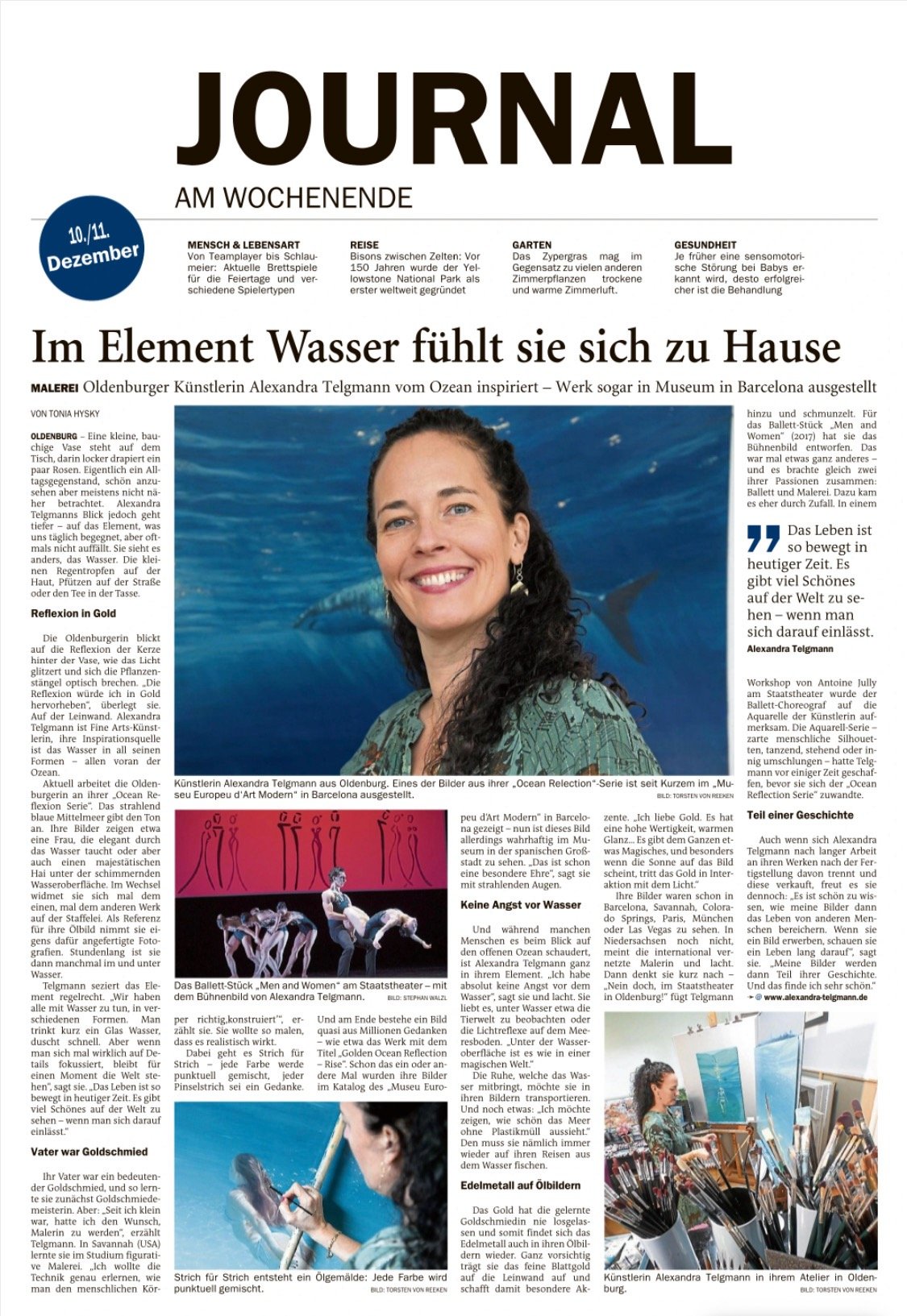
Exhibition at the Meam Museum, Semi Finalist in ARC 16 Salon, huge article in the weekend journal in the local newspaper, finalist in the member only competition of the Portrait Society of America
What were some of the pitfalls?
Working very hard and now I´m a bit exhausted.
Did you art sell?
Yes I´m pretty happy with all my sales and I have a lot new art collectors.
Were you included in any shows?
MEAM show and upcoming show with gallery Artelibre and the Pictor gallery in New York.
Were you published in any art magazines or periodicals?
Yes in our cross regional newspaper in the cover page of the weekend journal.
How has social media affected your daily practice?
Since reels are the new thing, I tried to film a lot more this year than taking photos and I still have additional material to cut. Also, I created an artist statement video.
What are you looking forward to in 2023?
The show at the Pictor gallery, to start more great paintings, creating NFTs, to sell prints, submitting to magazines, being the best version of myself and getting better every day
Alexandra’s work specializes in the natural interaction between the female body and the element of water. The deep connection between the artist and the sea is visible in many of Alexandra's paintings. For her, the sea is a decelerating place of power that creates inner peace and at the same time reflects states of consciousness of one's own life. This intention always flows into her work.
The beginnings of Alexandra Telgmann's artistic work were influenced in her childhood by her father, an important goldsmith artist. After successfully completing her master's degree in goldsmithing, she studied portrait and nude painting at the College of Art and Design in Savannah/ USA and gave her artistic career a new direction. Numerous international and national exhibitions in Charleston (South Carolina), Las Vegas, Colorado Springs, Paris, Munich and Leipzig followed her first solo exhibition “Laconella” at the Pinnacle Gallery/Savannah USA. Her oil paintings are currently represented by the Grand Bohemian Gallery in Charleston /USA and the 33rd Contemporary Art Gallery in Chicago.
Painting the Figure Now: Exploring the Human Condition

The human figure is easily the most relatable of fine art subjects, but it is also easily the most complex. That complexity is not just from learning how to accurately paint the human anatomy, but also in deciding how to convey the emotion, life and experience of the figure to fit the composition. Add to that an artist’s individual style—ranging from conveying all the details to fixating on the atmosphere—and you have a multitude of elements that bring the image to life.
In the annual Painting the Figure Now exhibition, presented by PoetsArtists at the Wausau Museum of Contemporary Art, the human experience is on full display. This year’s show, happening July 7 through October 2, is guest curated by art collector Dr. Samuel Peralta who says the addition of Now to the title is the true anchor and theme of the show.
“Figure painting has a long and historical tradition—but for these series of exhibits, the art has to have a perspective that’s contemporary, compelling and current,” says Peralta. “The PTFN series present Polaroids in brushstrokes, as it were, of the human condition Now.”
In selecting the just under three dozen works, Peralta turned to works with a symbolic undercurrent or narrative that allow the viewer to explore the painting. “Including this doesn’t have to be an overt or conscious process—it can emerge subconsciously during composition and be available to be inferred from the finished piece,” he explains. “For me, the question to ask was: Was the artist successful in conveying that intention to me through their portrayal of the human figure?”
What resulted is a show that demonstrates, for Peralta, that work with “the vocabulary of modern accoutrements remains true to its historical, even classical, traditions.” Many of the artists with paintings in the show have atelier training where life drawing and painting classes were at the core of their curricula. Or they take inspiration from great masters—past and present—but with an eye for the contemporary world in which they are living. And, perhaps, something that should be noted is the paintings of the past were once present too.
There are some artists participating, such as Megan Elizabeth Read, who are outside of the box and didn’t grow up surrounded by the arts or have formal training. Instead, their own work has been an evolution through time and experience.

American, b. 1982
Nobody Showed Me Which Way To Go, 2022
Oil on linen
60 × 40 in
152.4 × 101.6 cm
Read says, “I was always drawn to figurative work as a child; it was really the only thing that interested me and since I have no formal training or background in the arts it made sense when I began creating my own work I would simply gravitate toward the type of imagery I was most moved by.” From a technical standpoint, Read’s artwork has become more simplistic over time and she leans into a minimalistic approach to the materials that helps manage her process.
“More importantly, this need for reduced ‘noise’ and chaos in my real life is directly reflected in my paintings in that they tend to contain large canvases and are generally fairly simple compositionally,” she explains. “There is a lot of room to breathe there and creating these spaces helps me feel less fragmented. Less pull in too many directions. It’s like I am painting away the clutter and chaos.”
Since she started painting, Read has evolved the narrative in her artwork but has found some themes to weave their way through her oeuvre such as “the search for identity and the concept of constructed identities, the need for and fear of vulnerability, and this idea of multiple selves.”
Her work in the show, Nobody Showed Me Which Way to Go, plays into the themes because the work is about “the loneliness and confusion of being dropped into this world without a map or support system and the struggle to find one’s way under these conditions. About dragging yourself along amidst the beauty and terror we are faced with every day,” Read shares. The imagery comes from her personal experience of this feeling this. Growing up she was surrounded by cows, and sees herself reflected in them, so they are a nod to constructed identity and figuring out how to move through life.

American, b. 2003
Play Time (Getting Undressed), 2022
Oil on panel
28 × 24 in
71.1 × 61 cm
Annie Louise Goldman is a young artist at the start of her career, and what direction she will take is still unfolding, but for now a passion for the figure has propelled her to new discoveries. Growing up Goldman did family portraits, and at age 13 she wanted to take a life drawing class. She enrolled in an art school in San Carlos, California, which she attended until she was 17 studying under artists such as Noah Buchanan.
“I learned about Baroque painting from Noah, and when I started was really fixated on composition, lighting and drama,” she says. “I also was doing Bard copies in a very 19th-century academic style. That’s been really influential as over the last couple of years I’ve started to explore a more contemporary side of art such as the work of Florine Stettheimer and Alice Neel.”
As a student currently at Laguna College of Art + Design, Goldman has started to develop narratives that are connected to her experiences. They are often very intimate narratives, and that’s reflected in how she approaches her work. Everything she does is derived from life drawing, but to get the right composition she will now take photos of her models, who are usually also friends. The narrative can come to life as she’s photographing, or there are times Goldman has a fully developed idea before the shoot starts.
In most of her work, Goldman wants to show the connection people have with one another. Her selected painting, Playtime, is an intimate moment of a couple undressing one another. Goldman says, “At the time we took the photos, the two women were a couple,” says Goldman, “so I was able to capture an intimate moment. The title reflects the innocent looking image, but it has sexual undertones…it isn’t portraiture or about specific people. It’s meant to reflect however the viewer is coming at the image.”

The idea that classical figurative imagery can hang next to any interpretation of the figure in exhibitions today is something that artist Chris Cart says allows artists to have more freedom in expression. This can come back to the figure itself, because instead of having a tight, classical image, the artist can interpret the mood or emotion in the way that suits the composition.
Cart’s work In the Waters eloquently combines multiple figures in a surrealistic move among the waves. The painting, which he says is about love, community, mindfulness and life as a dance, was started over a decade ago as a tightly rendered naturalistic piece, that was sanded down and repainted several times. The “blue lady” came in early, and maybe at first was subconsciously what Cart needed to experiment with the artistic process. A while ago he began to play with using multiple styles in one canvas and created what he calls “mashups in paint.” In the Waters as a result is a harmonious intertwining in composition and style.

“To me, artist has always meant depicting life as I see it around me,” says Anna Cyan. “Painting the Figure Now is in some ways about building a bridge across time—drawing on the long history of showing the body through paint but using this language to examine the here and now. Painting is a dialogue, not just with the past, but also with the future.”
Vulnerability is a theme that often appears in Cyan’s artwork, but this spring it came into focus on an even greater level and as a reflection of the present. “I am from Ukraine, and as I worked on the painting [that’s in the show], war coverage brought home how fragile the human body is, and the immensity of violence and destruction that can threaten it,” Cyan explains. “Initially, the painting was going to have a much lighter sky, but as the war unfolded, smoke started creeping in, and the overall tonal range got darker. So now the painting is called Smoke. When I look at it, the sound of air raid sirens plays in my mind, and it’s as though the character hears them too, in her world. They are distant, but there.”

Erica Calardo sees the exhibition as a chance to focus on the greater reawakening in the art world to relearn how to depict the figure—using Old Master techniques and skill, but painting for our times. Calardo shares the initial sentiment of the figure being “the most challenging subject within representational arts. Both technically and theoretically.” For her, reflecting humans in a realistic rather than idealized manner is important.
Reverie is Calardo’s first painting of a male figure and she wanted to depict him more than just as muscular and grand, full of physical strength and power.” Instead, the work is about intimacy and dreams, showing the man as someone who can have true and rich feelings. “My painting shows a person deep in dream and meditation, caught in his reverie,” she explains. “It is a very intimate and simple composition.”

American, b. 1976
They Said The Answer Was 42, 2022
Oil on cradled wood panel
24 × 18 in
61 × 45.7 cm
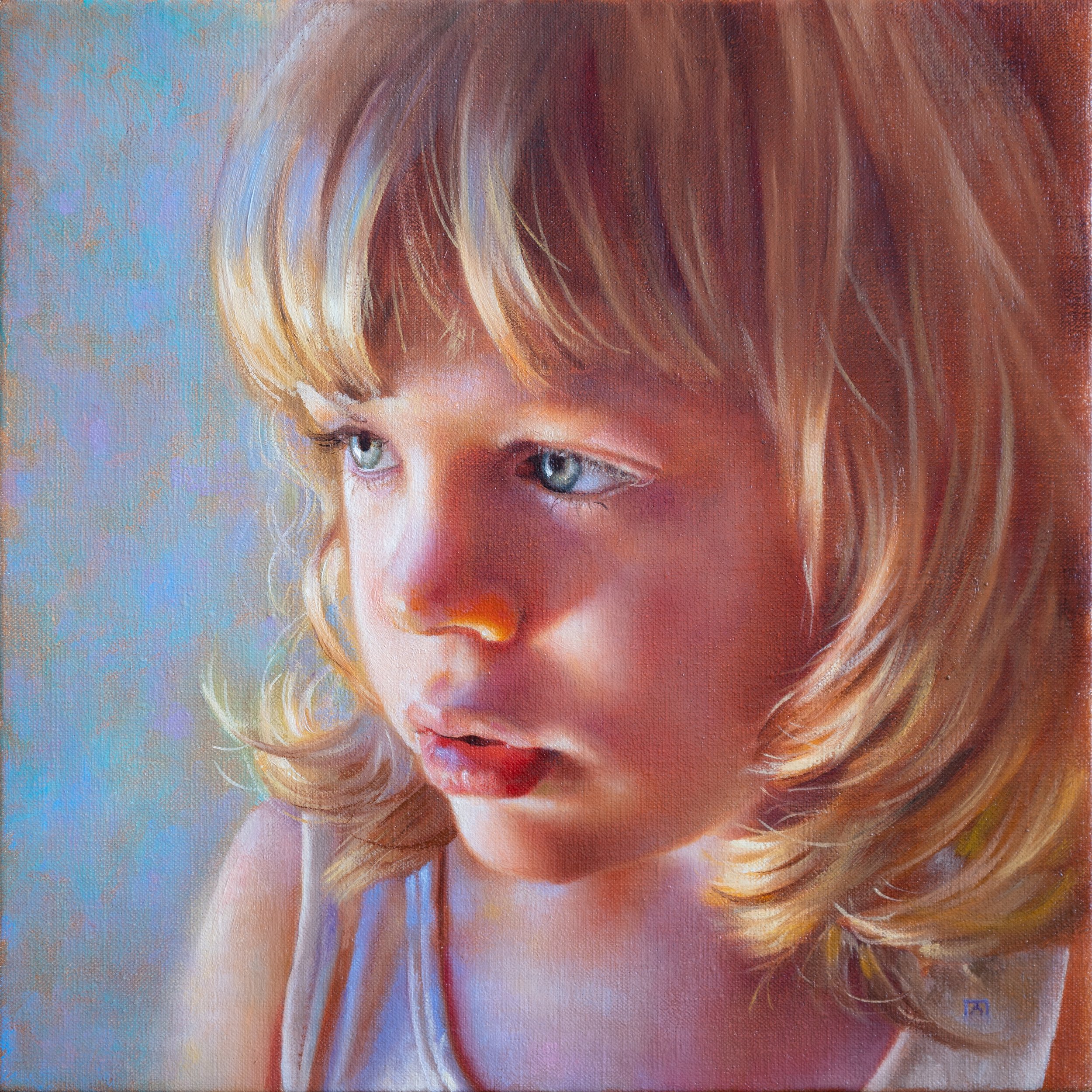
Connecting to the “now” through modern fashion and topics is a highlight of Amy Gibson’s artwork. While always about the human condition, her most recent paintings focus on children and how they look at the world still with wonder and excitement. And it’s a reminder to the adult viewers to remember how they once saw the world as well.
Gibson’s painting They Said the Answer Was 42 is about technology and information overload for children today as they are exposed to news, social media and more at a fast rate. “That made me think back to the late 1980s when social media didn’t exist and I read a book called The Hitchhiker’s Guide to the Galaxy,” says Gibson. “The character was able to ask the all-knowing computer created by advanced aliens a question. He wanted to know the ultimate question of life, the universe and everything. The computer told him that the answer was 42. That left him even more confused. I feel like kids are feeling this way. They don’t know the questions to ask in order to filter through all of the chaos so they can actually find an answer. This is leaving them filled with anxiety and ambivalence.”
Each painting in the show condenses the theme by intimating a moment or expression of the human form. However, when viewed altogether, Painting the Figure Now “traverse[s] the range of emotional responses for each individual work” says Peralta. “We will see the gestural and expressionist range of the human face and body by seeing the collection as a whole.”
Along with the show at Wausau Museum of Contemporary Art, the works are available to purchase through 33 Contemporary’s Artsy page, and digitalized images will be included in a time capsule on the moon via Peralta’s Lunar Codex project.
“The Polaris time capsule will be launched via SpaceX Falcon Heavy rocket in 2023/24 and deposited on the Lunar South Pole via the Astrobotic Griffin lunar lander, which will also be carrying NASA’s VIPER rover to the moon,” says Peralta. “With the three time capsules of the Lunar Codex archiving art, writing, music and film from over 20,000 creatives from over 100 countries around the globe, the [PTFN 2022] artists will be joining the most expansive contemporary cultural exposition ever launched from Earth.”
About the Author
Rochelle Belsito is an experienced art writer and editor, having worked for International Artist Publishing for over 11 years in several positions. She served as managing editor for all five of the company’s titles for over seven years, and her most recent role was executive editor of American Art Collector, American Fine Art Magazine and International Artist. Currently she is a freelance contributing editor at Art & Antiques magazine and writes and edits for various other industries.
Featured Artist: Pegah Samaie
What do you believe to be your roll as an artist?
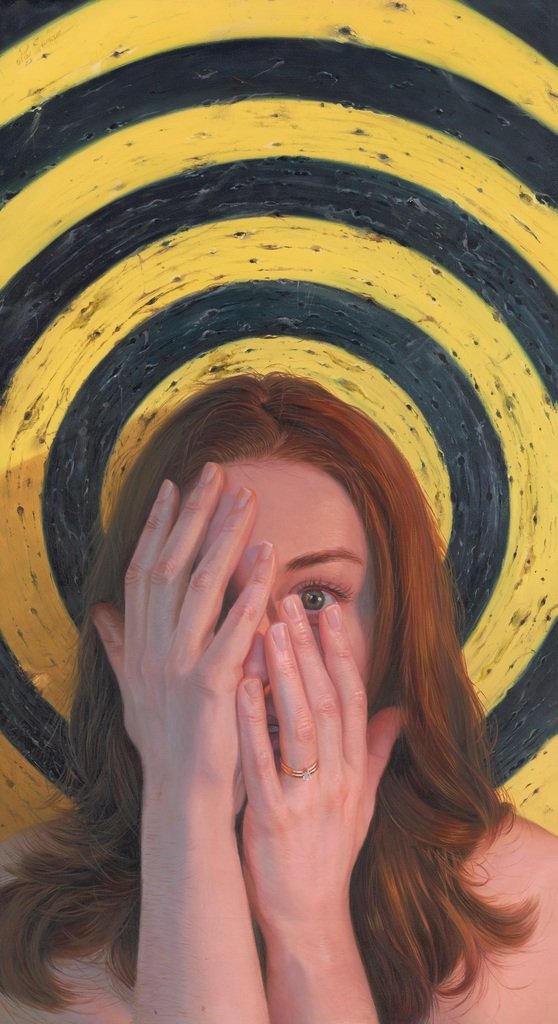
Like many female realist artists, I have a passion to be a voice for myself and other women.Through all my paintings, I am looking for myself. They are from me and part of me. I am also representing the everyday lives of women who are isolated within their society. This isolation stems from powerful limits imposed on them by the culture at large—a culture they also define as mothers. I am studying and sharing their emotions and feelings in the form of lines and colors in my paintings. My ideas sometimes take the form of women’s pain or suffering and sometimes take the form of their pleasure.
What informs your work currently?
My paintings represent two main chapters in my life as they relate to women: one of oppression and one of opportunity. The first part covers my childhood in Iran, and the second covers my life after I immigrated to the USA and since I became a mother. Both phases provided impetus for my own introspection and discovery around what it means to be a woman. So, what is life for me as a woman? The meaning of life and my purpose for living used to be a mystery to me. They often still are, but now I use my past experiences consciously and subconsciously to express the reconciliation I am navigating with all the storms of my life and identity. I am recovering, reclaiming, and redesigning what it means—to me—to be a woman.
My art gives voice to the harsh experiences and societal constraints of Middle-Eastern women. It encompasses psychological aspects of their suffering under the oppression of government, religion, and men. As a creative woman, I faced much difficulty in my attempts to exercise any kind of freedom and independence. The first twenty-three years of my life in Iran were entrenched in wars, violent protests, and revolutions. The sum of these experiences shaped my ideology of life and art. My perception of the role of women in society is no longer ruled by submission or fate. It is sustained by the resiliency and strength of women. My discovery of these attributes in myself have influenced my way of talking about and painting women. I am looking to express this kind of freedom. I want to interpret and translate my emotions and experiences without fear of reprisal and even in the face of retribution. Painting is the expression of my internal emotions in response to the external world.
What is one of the biggest lessons painting has taught you?
Dairies, fragments, experiences, suffering, pain, happiness, and observations enable all artists to explore themselves. To understand better how surrealist artists approached the meaning of self, Chadwick provides this interesting explanation of self in Mirror Images: Women, Surrealism, and Self-representation:
We are born with a nuclear core of personality, which is the seed from which a cohesive structure called self begins to form during the second year of life. This process unfolds gradually through the interaction between biology and environment. The self under normal circumstances grows, matures, and remains flexible all of our lives. But first, all of its parts need to work in unison, as a well-integrated mechanism; only then can we sense our self as whole and not have to think about it. Otherwise we experience the self as unintegrated, fragmented, unbalanced, incomplete, even empty, and we go about our lives self-absorbed, attempting to sustain a sense of cohesiveness in artificial ways by attaching ourselves to someone or something we believe will provide the means to keep us whole. Without a sense of self, we attempt to establish self-objects, relationships that mimic the ones we had or wish we had in infancy, when we were as one with the people around us. (Chadwick 88-91)
When I stepped onto my artistic path, like many surrealist artists, I began to know myself and my paintings as mirrors of self, or as the reflections of my feelings in the response of the society. I started to paint my history and started to imagine myself in the free world. And then, I started to reflect myself in all my paintings.
What excites you about figurative art today?
I enjoy looking at subjective figurative art pieces that represent an artists’ feeling of life experience. They are rich with historical, realistic, or surrealistic meaning. I am attracted to stories and the opportunity art offers to silently express emotion to the outside world.
